
Cannon Falls council approves rezoning, conditional use permit and related land approvals for proposed data center after heated public comment
Get AI-powered insights, summaries, and transcripts
Subscribe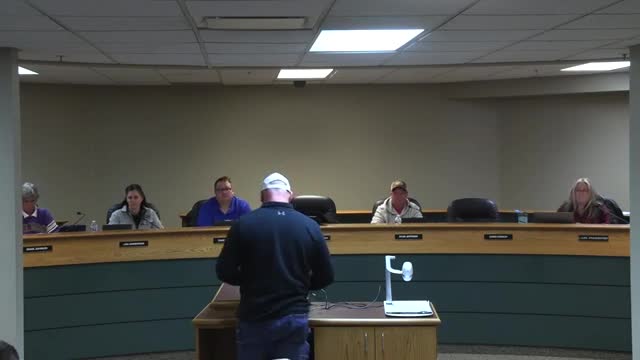
Summary
After more than an hour of public comment both for and against, the Cannon Falls City Council approved rezoning, a conditional use permit, final planned-unit development, variances and a preliminary plat related to the Cannon Falls Technology Park and a proposed data center.
The Cannon Falls City Council on Oct. 21 approved rezoning and a set of permits and plats tied to the proposed Cannon Falls Technology Park and a data center project, after more than an hour of public comment that included both construction-trade support and residents’ warnings about water, noise and long-term local impacts.
The approvals included Resolution 2835 (rezoning from urban reserve to general industrial), Resolution 2836 (conditional use permit for data centers, substations, overhead transmission lines and building height), Resolution 2837 (final planned unit development), Resolution 2838 (variances from city code), and Resolution 2839 (preliminary plat for Cannon Falls Technology Park). Council members voted to approve the rezoning and the related land-use items; several votes were recorded as passing by margins the council read aloud during the meeting (majority approvals were reported as 4–1 in multiple votes).
The items matter because the votes clear key local regulatory hurdles for a large industrial project that commenters said could reshape local utilities, tax revenue and neighborhood character. Supporters emphasized short-term construction jobs and longer-term tax base growth; opponents raised concerns about water use, noise, electricity costs, and limits on the city’s ability to control future expansion.
Proponents at the Oct. 21 public-input slot included Cannon Falls resident and electrical-construction worker Jason Reed, who described data centers as “really good construction projects to work on” and said “this project would help families of workers from many states” and could employ “up to 1,200 people.” Jason Siebenaler, who said he is a professional carpenter foreman working on a Rosemount data center, told the council that a comparable project provided “2 to 3 years of steady work right here at home” and hundreds of onsite construction employees plus “200 permanent jobs that stay on-site.” Joshua Collina, business representative for Iron Workers Local 512, also urged approval and said trade jobs generated by such projects benefit local families and local public revenues over time.
Opponents said the environmental and fiscal risks were not resolved. Resident Nora Felton, who identified her address and said she farms in Randolph Flats, questioned projected tax benefits and water availability, noting that “the land is still in Dakota County” and that local taxes and utility rates already are rising. Anna Lindell told the council she submitted a petition with “over 500 people” from the Cannon Falls area opposed to the data center and warned about potential electricity-rate increases that she said have been reported where other data centers were built. John Wilcox, citing decades of experience with server rooms and equipment, cited noise and generator emissions as specific quality-of-life concerns. Several speakers, including Shamaya Speck (who said she works for the Minnesota Department of Natural Resources but was speaking as a resident), asked whether the AUAR (alternative urban area-wide review) and development agreements include enforceable limits on future expansion and whether a full environmental impact statement would be required if the project’s scope changed.
Council discussion repeatedly returned to the development agreement and permit conditions as the mechanism to address the concerns raised. At least one council member who voted for the approvals said that, having opposed the conditional use initially, their focus shifted to securing stronger contractual protections once the use was approved. Staff and council referenced negotiation points including a 250-foot residential setback, expanded tree buffers, engineering conditions and the inclusion of noise standards and escrowed penalties in the development agreement.
Votes at a glance - Resolution 2835 — approving rezoning from urban reserve to general industrial: motion moved and seconded; council announced the motion passed (reported 4–1). (Refer to transcript segments for first and last mentions.) - Resolution 2836 — approving conditional use permit (data centers, substations, overhead transmission lines, building height): motion moved, roll-call votes were read into the record during the meeting (Chad Johnson: yes; Cronenberger: yes; Diane Johnson: no; Zimmerman: no); council announced the motion passed. (Refer to transcript segments for first and last mentions.) - Resolution 2837 — approving Tract final planned unit development: motion moved and approved (reported 4–1). - Resolution 2838 — approving variances from city code sections for the tract: motion moved and approved (reported 4–1). - Resolution 2839 — approving preliminary plat for Cannon Falls Technology Park: motion moved and approved with conditions (reported 4–1).
What the council approved are land-use and entitlement steps; none of the recorded motions in the meeting itself created operational permits or specific utility approvals for an end user. Several residents asked the council to require clear, enforceable thresholds in the AUAR, development agreement, or zoning language to trigger additional environmental review — for example, a commitment to require a full environmental impact statement (EIS) if the project grows beyond the AUAR assumptions. Shamaya Speck asked the council to clarify whether the AUAR “contain[s] enforceable mechanisms or conditions that limit the scale or scope of the data center project” and whether the city would “commit to requiring a full environmental impact statement, EIS, if [the developer] proposes expansion beyond the AUAR.”
Council members and staff said they will continue negotiating and monitoring compliance. One council member summarized the post-approval approach as focusing on the development agreement, engineering requirements, and monitoring to protect the city’s interests. Staff noted that the planning commission’s recommendation and township input were part of the record; planners said township representatives and the township environmental consultant participated in earlier conversations and that some township-requested changes were incorporated into the development application.
Background and next steps The items approved on Oct. 21 clear zoning and plat steps; future actions — including final engineering approvals, development-agreement execution, any required utility permits from county or state agencies, and potential review triggers if the project proposes expansion — remain to be completed. Multiple public commenters requested that the city either require additional environmental study now or adopt firm thresholds in the development agreement to trigger further review. The council and staff said they will continue to monitor compliance and enforcement through the development-agreement process and future permit reviews.