Get Full Government Meeting Transcripts, Videos, & Alerts Forever!
Get email alerts on the Zoning Amendments topic
No spam. Unsubscribe anytime.
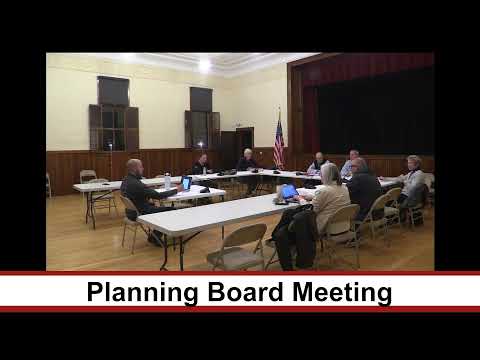
Swanzey planning board outlines zoning warrant articles including wetlands rewrite, ADU changes and possible duplex rule changes
Summary
At its Oct. 23 meeting, the Town of Swanzey Planning Board reviewed proposed warrant amendments that would replace the Wetlands Conservation District, implement state-required ADU changes tied to HB 577, consider allowing two-family (duplex) dwellings by right in some districts, and budget for a zoning ordinance audit.
The Town of Swanzey Planning Board discussed a package of proposed zoning warrant articles at its Oct. 23 meeting that would replace Section 7 of the town zoning ordinance to rewrite the Wetlands Conservation District, implement state-mandated changes to accessory dwelling unit rules, consider allowing two-family dwellings by right in some districts, and budget for an ordinance audit and consultant.
The board’s presenter said the package contains nine, possibly ten, amendments and that the full language of the proposed Section 7 replacement would be available for inspection at the town clerk’s office and posted online. The draft revision to the Wetlands Conservation District would adopt revised permitted uses, a conditional-use procedure and a cross-reference to New Hampshire statutory wetlands definitions (RSA citation discussed in the packet). Planning staff and board members reviewed small editorial and reference changes, including whether a definition cross‑reference should point to the definitions subsection or the district-boundary subsection and whether to change pluralization for consistency.
Why it matters: the changes would restructure how wetlands are defined and how land area and buffers are counted for minimum lot-area calculations; because wetlands and buffers can affect lot yield and permitting, those changes could affect development potential on some parcels.
Other amendments discussed included multiple changes required by HB 577, the state law governing accessory dwelling units (ADUs). The board’s draft removes local mandates that an ADU have an interior connecting door and removes parking rules that required a separate parking space per bedroom; instead, the draft follows the state direction limiting parking requirements and would include a technical note in the ordinance referencing the state mandate if the warrant article fails. The presenter also said both attached and detached ADUs (DAUs) would be permitted by right where single-family residences are allowed, with a single ADU allowed per lot without further additional approvals.
Board members debated housing-focused amendments the presenter described as proactive measures to increase local housing supply. They discussed moving two-family (duplex) dwellings from a special-exception use to a permitted use in the Rural-Agricultural and Residence districts, and a separate proposal to increase the allowed multifamily density in the Residence district from 3 units per acre to 12 units per acre (the presenter said the 12‑unit figure was intended to match other districts). Several board members urged caution on raising multifamily density and asked for more time to consider impacts to infrastructure, schools and the character of neighborhoods; members noted sewer capacity limits in parts of town and the difference between areas served by public water and sewer versus parts (including West Swanzey) without public water.
The board also discussed standardizing the town’s definition of ‘‘multifamily’’ (currently framed as three or more units) and whether the Business district’s different threshold (five units) should remain. The presenter said the business district’s five-unit treatment was chosen to preserve business-zoned land, while other members noted second-story housing over storefronts is a different use profile than standalone multifamily housing.
A state-mandated parking change under consideration would simplify parking requirements to one space per unit for single- and two-family dwellings and one space per unit for multifamily buildings, replacing the ordinance’s prior formulas based on bedrooms.
The board briefly considered a possible future warrant article to reduce the Residence district minimum lot size from one acre to one-half acre (proposed minimum frontage 75 feet). Members discussed that such a change would expand the number of legally buildable lots but flagged constraints where public water and sewer are required and septic/well capacity matters. Several members said the board should await any state mandate before acting, while others urged planning now to prepare for likely statewide changes.
Budgeting and ordinance audit: the presenter said the 2026 budget will include funds for an ordinance audit and consultant to comb through the zoning ordinance, correct inconsistencies and identify legal risks. Board members debated whether to hire an outside professional to perform a one-time audit and make recommendations, or to attempt a section-by-section rewrite internally; several members said a consultant can offer an outside, objective review and help avoid legal pitfalls. The presenter said any recommended ordinance changes from a consultant would still require planning board review and, where required, a town‑meeting ballot vote.
No formal votes were taken on the proposed warrant articles at this meeting; the discussion will continue at future meetings with a fuller board present. The planning board did approve the Oct. 9 minutes and adjourned later in the meeting.
Ending: Board members asked staff to circulate the full proposed warrant language and to continue the discussion at upcoming meetings when more members are present. The presenter said the full text would be posted online and available at the town clerk’s office ahead of any warrant vote.