Lifetime Citizen Portal Access — AI Briefings, Alerts & Unlimited Follows
Public commenter warns county of carbon-capture pipeline risks, cites documentary
Loading...
Summary
At the Oct. 16 committee meeting a regional director of the John Birch Society presented concerns about carbon-capture pipelines, eminent domain and potential impacts on farmland, and referenced a documentary titled Unearthing the CO2 Pipeline.
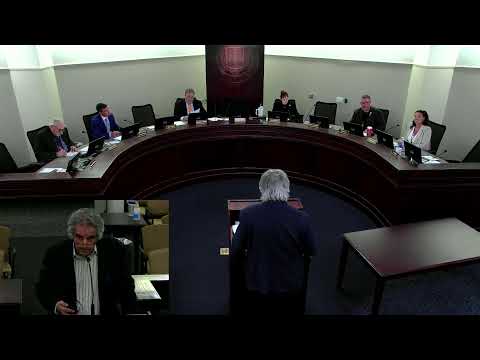
Dave Giordano, Northeast regional director of the John Birch Society, addressed the committee Oct. 16 during a public presentation to raise concerns about planned carbon-capture pipelines that he said could cross the region.
Giordano identified himself as living in South Jersey, working in the area and representing people from Easton; he said he was calling in the producer of a documentary, Unearthing the CO2 Pipeline, to assist during the presentation. He described the documentary’s accounts of farmers and county officials in other states and raised several policy and safety concerns: that some pipeline bills allow companies to secure rights over private land, that eminent domain could be used to convey land interests to private companies, and that pipeline construction and operation have damaged crop yield and farm operations in cases shown in the film. He said the documentary contained interviews with farmers and county commissioners who reported threats from the private company Summit if local governments enacted strict pipeline ordinances.
Giordano discussed a Pennsylvania bill he said passed Aug. 31 (he named Gene Yaw as the sponsor) and said counties could resist pipelines through local ordinances; he also referenced federal incentives (he cited the 45Q tax-credit program and said Representative Scott Perry had introduced legislation to repeal or limit that funding). He warned about potential emergency-response implications if a CO2 pipeline were to fail, citing a case described in the documentary where a release led to widespread hospitalizations; he asked whether local emergency-response agencies have plans for a pipeline release.
Giordano connected the pipelines to broader international and policy discussions during his remarks, referencing Agenda 21/Agenda 2030, the Intergovernmental Panel on Climate Change (IPCC) and the World Food Alliance as part of the context he described; those broader remarks were presented as the speaker’s interpretation of policy history and documentary material rather than as committee findings.
The committee session transcript records Giordano’s presentation and offers no committee response beyond listening and a few clarifying questions. The producer Giordano attempted to bring into the call did not appear on the record. No formal committee action, vote or staff directive on pipelines was taken during the meeting.
Sources: Public presentation and questions during the Oct. 16 Energy, Environment and Land Use Committee meeting (public comment).