Get Full Government Meeting Transcripts, Videos, & Alerts Forever!
Get email alerts on the Dual Credit topic
No spam. Unsubscribe anytime.
Interim committee studies North Dakota dual-credit costs, funding and access
Summary
Lawmakers and state education officials reviewed how dual-credit courses are offered and paid for in North Dakota, heard differences in subsidized vs. unsubsidized tuition rates, and reviewed Bank of North Dakota scholarship use and program costs. The committee plans follow-up in March.
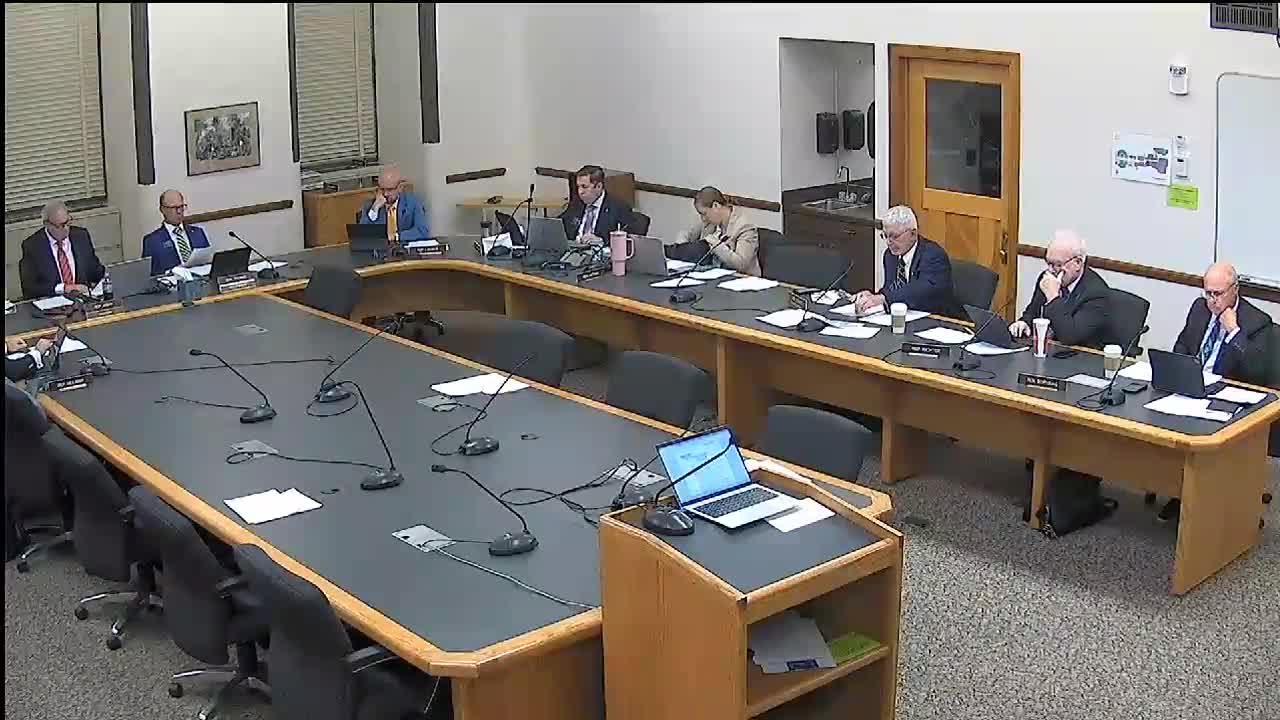
BISMARCK, N.D. — Lawmakers on the interim Education Committee on Tuesday examined how North Dakota’s dual‑credit program is delivered, who receives funding for it and what state money accompanies college credit earned by high‑school students.
The committee heard presentations from Legislative Council staff, the North Dakota University System (NDUS), the Bank of North Dakota (BND) and the Department of Public Instruction (DPI) as part of a statutorily required study of dual credit. Testimony described how dual credit is administered, the handful of per‑credit tuition rates in use, and a $1.5 million tuition scholarship for low‑income students administered by the Bank of North Dakota.
The issue matters to districts, legislators said, because dual‑credit enrollments are included in the higher education funding formula and also because local schools and colleges both incur costs when they deliver college‑level classes in K–12 settings.
“Dual credit gives students an opportunity to have some experience, some familiarity with a college course,” NDUS Deputy Commissioner Lisa Johnson told the committee. “With responsibility comes cost. If you're responsible for this, you bear the cost of maintaining that responsibility.”
What dual credit is and who may offer it
Committee documents and NDUS testimony defined dual credit as a college semester course taken through a two‑ or four‑year institution that yields both college credit and one half unit of high‑school credit. The Legislative Assembly directed a study of which institutions may offer dual credit, where courses can be provided, and what state funding supports them (Legislative Council memo referencing section 46 of Senate Bill 2003).
Board of Higher Education policy recently opened the possibility for the University of North Dakota and North Dakota State University to offer dual credit in their respective counties (UND in Grand Forks County; NDSU in Cass County). The nine other public institutions maintain longstanding service regions and typically provide dual credit through memoranda of understanding with local schools.
Who teaches and how rates differ
Committee members pressed NDUS staff about two common delivery models. When a high‑school teacher delivers a college course as part of the high‑school workload, NDUS says the college receives a subsidized tuition payment from the state system (described in testimony as $87.24 per credit in NDUS presentations). When the college’s faculty—or an adjunct hired by the college—teaches the course, the college receives an unsubsidized rate (stated in presentations as $153.96 per credit).
NDUS also noted a small inconsistency in materials distributed to the committee: one slide showed a subsidized rate of $89.43 per credit. The system told lawmakers the difference reflects prior tuition freezes and rounding in different documents; NDUS officials said they would reconcile materials for the committee.
Under the current practice, the local high‑school administrator generally arranges which college a high school will work with; many high schools have an historical relationship with a nearby institution. A single subsidized rate was adopted systemwide more than a decade ago to avoid local competition and billing confusion, NDUS staff said.
Funding and formula treatment
NDUS told the committee that dual‑credit student credit hours are included in the higher‑education funding formula on the same basis as credit hours produced by traditional students. The system reported, in legislative materials, tens of thousands of dual‑credit student credit hours over recent biennia and said those hours accounted for a modest share of total credit‑hour production and formula funding.
Dave Kresbach of the NDUS system office explained that differences in funding per credit among institutions stem from the way the 2013 formula aggregated base funding levels for research universities, four‑year campuses and two‑year campuses rather than legislating an individual rate for each campus.
Bank of North Dakota scholarship and who it serves
Jennifer Bickel, education market manager at the Bank of North Dakota, outlined the Bank’s dual‑credit assistance program, which targets low‑income sophomores, juniors and seniors and was sustained after the Bank’s initial federal grant funds were exhausted. The Bank now uses fees earned through the student loan guarantor program and similar internal fee sources to fund the scholarship.
Bickel said that in the 2024–25 academic year the Bank approved funding for roughly 1,364 course enrollments and covered about $535,000 in course costs. Over the last five years the Bank reported it spent about $1.76 million, supported roughly 2,400 students and averaged about $1,000 per student.
“Within our program we had roughly 1,364 classes approved through our program, and we had covered approximately $535,000 in those course costs,” Bickel said. She added most aid covers general‑education choices such as composition and public speaking and that participation is concentrated in students’ senior year.
Equity and policy questions lawmakers raised
Lawmakers pressed officials on several recurring questions: why the subsidized rate exists, how a school decides which institution to partner with, and whether the current allocation—where the college that verifies instructor qualifications and maintains student transcripts receives the subsidy—best serves students.
Sen. Thomas suggested exploring a centralized approach to administering subsidized payments to capture administrative efficiencies and to align funding with who actually provides instruction. NDUS acknowledged other states use centralized payment models and said a centralized system could be discussed, but emphasized that many rural schools prefer working directly with local institutions they have relied on for decades.
Next steps
Committee leaders said they plan to revisit dual credit in March and asked NDUS to bring more detailed cost and enrollment data, including a breakdown of how many dual‑credit sections are taught by K–12 instructors versus college faculty, and to invite several institutions to present their administrative costs for delivering dual credit.
“Next March we’d like to invite representatives from Lake Region, Valley City State, North Dakota State College of Science to present on what their costs are to administer their dual‑credit courses,” Committee Chair Representative Jonas said near the meeting’s close.
Why this matters
Dual credit affects high‑school students’ college costs and readiness, local school schedules and staffing, and the funding calculus for higher education. Lawmakers signaled they will probe whether the state’s current mix of subsidized payments, formula treatment and scholarship supports is delivering intended benefits to students while also being administratively efficient for schools and colleges.
Ending
The committee, assigned by the Legislative Assembly to study dual credit, will take additional testimony in March and expects NDUS, DPI and several institutions to return with more granular financial and program data. For now, the meeting underscored both the program’s popularity and the policy choices—rates, payment recipients and scholarship targeting—that remain unresolved for some lawmakers and local partners.