Get Full Government Meeting Transcripts, Videos, & Alerts Forever!
Get email alerts on the Public Finance Investments topic
No spam. Unsubscribe anytime.
Retirement and Investment Office reports strong returns, outlines expansion of internal investment program
Summary
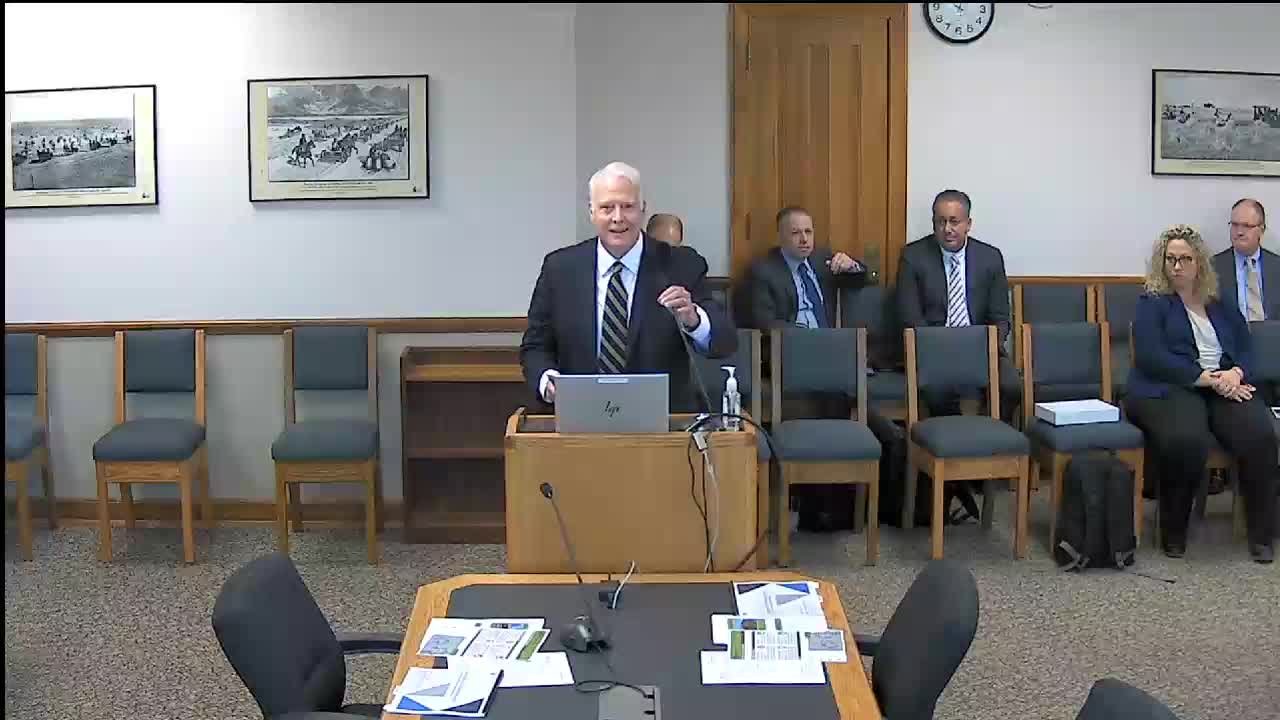
Scott Anderson, chief investment officer at the Retirement and Investment Office, told the Legacy Fund Advisory Committee the Legacy Fund and related plans outperformed policy benchmarks and described an expanding internal investment program intended to reduce fees and improve returns.
Scott Anderson, chief investment officer of the Retirement and Investment Office, reported to the Legacy Fund Advisory Committee that the Legacy Fund’s long‑term returns exceeded policy benchmarks and described an expanding internal investment program designed to lower costs and improve return per unit of risk.
Anderson told the committee that on a 10‑year basis the Legacy Fund returned 7.1 percent versus a 6.4 percent policy benchmark, and that “the actual portfolio that we implemented beat the policy benchmark by 70 basis points.” He said the office has seen especially strong market returns in 2025 and that those gains were reflected in the Legacy Fund’s results.
The committee heard a multi‑part plan for internal investing. Anderson said the office already uses a cash overlay to keep short‑term balances invested, and has begun internal indexing and enhanced indexing to capture returns now paid to external managers. He said the program will progress to enhanced active management where feasible and that, combined, those steps will reduce external fee leakage and transaction costs.
Anderson gave examples of expected savings and performance effects. He said cash overlays had generated roughly $12.5 million of incremental return compared with holding unallocated cash. He projected approximately $2 million of annual fee savings once the office completes enhanced indexing for targeted assets, and described an estimated $300,000 in recurring annual operating savings tied to bringing a Treasury‑Inflation‑Protected Securities portfolio in‑house.
The CIO outlined staffing and scale: the office has expanded investment staff in recent years and is currently managing several billion dollars internally. Anderson said the internal program is already managing about $3.6 billion and that the team expects to broaden that as the overall enterprise grows. He told the committee the internal team had produced “about a million dollars of excess returns over the benchmark” on the liquid portfolios managed so far.
Committee members pressed Anderson on governance, footprint and reporting. Senator Beckenall and Representative Kempenick asked how much of the in‑state investment allocation was visible in asset‑category reports; Anderson said the “in‑state investment” amount is embedded in diversified real assets on the breakdown he presented and committed to include clearer breakout numbers in future presentations. Representative Bosch asked whether the large cash balance shown at June 30 reflected a pending earnings transfer; Anderson clarified the June 30 snapshot preceded the July 1 earnings payout and that the payout had been roughly $686 million.
Anderson also described risk controls for internal active management, noting that some complex mandates will remain with external managers. He said internal strategies are designed to substitute for higher‑cost external mandates where the office can match or exceed net returns after fees. “There are certain set of strategies that we're just more efficient at performing internally than we are externally,” he said.
The presentation closed with Committee questions about staffing and budget. Anderson confirmed the office will present fully burdened personnel cost estimates for any future staffing requests and said the office will continue building operational capacity for enhanced indexing and internal active mandates.
The committee did not take any formal investment votes during Anderson’s report; the session continued with presentations from infrastructure and in‑state fund managers.