Get Full Government Meeting Transcripts, Videos, & Alerts Forever!
Get email alerts on the Transportation And Statement Of Facts topic
No spam. Unsubscribe anytime.
Lakota Board debates a draft 'statement of facts' tied to bond; K–12 busing left as tentative
Summary
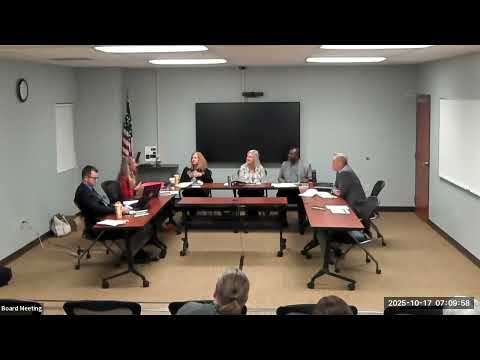
The Lakota Board of Education spent its Oct. 17 special meeting reviewing a draft “statement of facts” that would summarize the district’s commitments to the community if voters approve a proposed facilities bond, and debated whether the district should promise K–12 busing as part of that document.
The Lakota Board of Education spent its Oct. 17 special meeting reviewing a draft “statement of facts” that would summarize the district’s commitments to the community if voters approve a proposed facilities bond, and debated whether the district should promise K–12 busing as part of that document.
Dr. Wakeley, the district superintendent, told trustees the draft is meant to be a community-facing document that “says it's commitments to the community,” including financial implications and program changes tied to the master facilities plan. “We’ll be approving that if this is passed; this is our financial implication that we are committing to with the district,” Dr. Wakeley said.
Why it matters: the statement would sit alongside previously approved financial resolutions and is intended to communicate what the public can expect if the bond is approved. Several trustees expressed concern about committing to operational details — especially K–12 busing — before independent routing and cost data are complete.
Board members emphasized that the district already has resolutions covering the legal and financial mechanics of a bond, and that the statement of facts would be an additional layer of commitments to the public. The draft includes items drawn from the district’s presentations — projected operational savings, enhanced programming, a reduced building footprint (described in the draft as a reduction from 21 to 16 buildings), and an OFCC funding assumption identified in the draft as 32 percent of eligible costs. The draft also describes possible transportation changes and cautions that busing changes are “not confirmed at this time.”
Superintendent discussion and transit data needs Dr. Wakeley and staff described ongoing work to evaluate routing and logistics if the district were to expand busing beyond the currently anticipated K–8 coverage. The draft references a routing estimate that, in the district’s present footprint, would require roughly 30 additional buses to provide high-school (grades 9–12) service “as is today.” Dr. Wakeley reiterated: “In our current footprint, in a fiscally sound manner, it is not possible.”
Staff said they have engaged Peterman (the district’s transportation provider) on routing and have also retained an independent routing consultant previously affiliated with OSBA to produce a separate analysis; staff estimated another four to six weeks before that data package is available. Trustees and staff said they want all routing options quantified — including nonstandard ideas such as multiple bus garages or staggered bell times — before authorizing any firm statements about guaranteed K–12 busing.
Trustees divided over timing and tone Trustees gave multiple reasons for caution about adopting a binding statement now. Some said the draft contains language that is appropriate as “possible” or “may” language but would be irresponsible to convert into a definitive commitment before the independent routing audit and fuller financial detail are finished. One trustee said, “I am not comfortable with we are absolutely bringing back K–twelve busing if this bond passes. It feels disingenuous to me.” Another trustee said the reduced building footprint makes K–12 busing a more feasible possibility than in past years but still requires clear parameters and community input.
Board decision and next steps Board members declined to place the draft statement of facts on Monday’s agenda for a vote. Instead, trustees agreed it would be safer to: (1) add the draft slide to the standard bond presentation that staff use during public meetings, (2) post the draft language in the district FAQs and website, and (3) delay any formal board action until after the independent routing data are received and trustees — including those not present for the special meeting — have opportunity to review it.
Staff said the district will continue to refine the draft and will share the comparative documents and data staff used to reach their recommendations. The transportation routing study and the independent analysis are expected to be the primary inputs that will determine whether staff bring a firm K–12 busing recommendation back to the board.
Details mentioned during the discussion - Draft describes an OFCC (state facilities funding) assumption of roughly 32 percent of eligible costs; staff said the OFCC commitment is tied to the district’s capital expenditures and that timing and spending affect the outcome. - Draft references a reduced footprint (from 21 to 16 buildings) and associated reallocation of staffing and space; staff noted square footage figures and a high-level staffing plan exist but were not included in granular detail in the draft. - Routing analysis: Peterman provided initial routing estimates; an independent consultant is preparing a separate study. Staff estimated 4–6 weeks to assemble routing options for trustee review.
The board did not take formal action to approve or adopt the draft statement of facts at the special meeting.
Ending note: Trustees asked staff to share the underlying comparatives and data used in the presentation (including Department of Education comparisons and internal staffing projections) and to brief board members who were not present before any vote is scheduled.