Get Full Government Meeting Transcripts, Videos, & Alerts Forever!
Get email alerts on the Pfas In Agriculture topic
No spam. Unsubscribe anytime.
Maine officials outline PFAS response, $60 million fund and support for affected farms
Summary
State agriculture and public-health officials described how the PFAS Response Program and the $60 million PFAS Fund are identifying contaminated farms, advising mitigation steps, supplying technical and financial help, funding research, and planning blood testing and mental-health services for affected people.
Maine Department of Agriculture, Conservation and Forestry (DACF) officials outlined the state's approach to PFAS contamination in agricultural settings and described programs funded through a $60 million PFAS Fund during an advisory committee meeting. DACF's PFAS response director Megan Hennessey and PFAS Fund director Beth Valentine explained how the state identifies impacted farms, recommends mitigation, provides financial and technical assistance, and is supporting research and health follow-up.
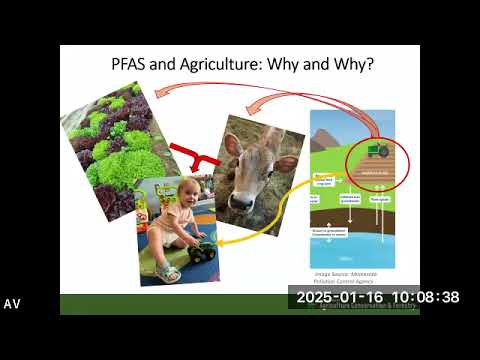
The discussion matters because PFAS compounds can move from land-applied biosolids into soil, crops and animals, and the state is balancing public-health protections with efforts to keep farms viable. "Our team's goal is to protect consumers by identifying PFAS contamination, pursuing strategies to reduce or eliminate PFAS from the food supply and providing technical and financial assistance to retain farm viability," Megan Hennessey said.
DACF officials described the program's work since initial dairy and water detections in 2016 and the establishment of the PFAS Fund by statute in July 2022. The state adopted rules to implement the fund that became effective March 17, 2024, and the advisory committee has developed subcommittees on financial assistance, land stewardship, research and health. Beth Valentine said the fund's plan was developed through public meetings and rule-making and that implementation has continued since the rules took effect.
State scientists and staff summarized how sites are prioritized and what "impacted farm" means in practice. Maine DEP categorized sites into tiers based on historical biosolids application records and likely risk; higher-tier sites tended to show higher PFAS concentrations. DACF said it uses conservative soil screening levels for agricultural scenarios: 6.4 parts per billion for PFOS in soil and a drinking-water screening level of 20 parts per trillion for the sum of six PFAS compounds. Action levels for animal products on the books include 210 parts per trillion in milk and a 3.4 parts per billion PFOS threshold used for beef.
Hennessey described on-farm steps the response team takes: gathering farm-specific information, creating a sampling plan, collecting and paying for laboratory tests, validating results across agencies, and giving tailored mitigation recommendations. She said the agency has collected more than 3,000 samples, logged over 30,000 staff hours on the response effort, and provided roughly $3,200,000 in indirect support to farms through the response program.
Common mitigation measures include identifying and separating clean feed, choosing crops with lower PFAS uptake (for example, corn instead of grass for certain fields), using infrastructure such as high tunnels to change water use patterns, and temporarily deparing animals by providing clean feed so contamination declines before processing. Hennessey highlighted variability within fields and the importance of higher-resolution sampling methods (30-grid incremental soil methodology) to avoid missing hot spots created by uneven biosolids spreading.
The PFAS Fund offers multiple financial tools through a single master application and a navigator program with University of Maine Cooperative Extension to help producers access resources. Fund programs include: an administrative cost grant (a single $3,522 payment to compensate farms for time spent responding), income-replacement payments for up to 24 months of lost income (nonconsecutive months allowed), payment or reimbursement for professional and technical services (business planning, engineering, legal), infrastructure funding (projects above $150,000 are handled by the PFAS Fund; smaller infrastructure under $150,000 is managed by the response program), and loan-assistance support for fees tied to guaranteed loans or environmental-site assessments. Since March 2024, Beth Valentine said the fund has made direct financial assistance payments (amount not specified in the meeting transcript) and that most spending so far has been income replacement, administrative grants and professional services.
On land stewardship, the fund can acquire impacted commercial farmland at fair market value as if uncontaminated, pay due-diligence and closing costs (subject to typical title/ lien clearances by the seller), and aims to return parcels to agricultural use where feasible. Melissa Hamlin said sellers may offer whole parcels or portions for purchase and that the department's land advisory panel scores properties to prioritize acquisitions if demand exceeds program capacity.
Research is a core fund element. The fund will award major grants ($100,000'$500,000) and targeted grants (up to $100,000) for projects on PFAS behavior in agricultural settings, plant and animal uptake, management practices (for example, till vs. no-till), remediation and safe disposal of PFAS-contaminated materials. Maddie Bruno said the fund's first major grant round will undergo peer review with awards announced in spring 2025; researchers working on on-farm questions and studies relevant to Maine farms receive additional scoring weight.
Health components discussed include plans for blood testing for people at addresses with qualifying water or soil results (water above 20 parts per trillion or soil above residential remedial action guidelines) when the source can be linked to land application of biosolids. The design intends to let a person's primary care provider order and receive test results; the department will not collect individual medical records, and there will be no out-of-pocket cost for eligible people. Maine CDC will make PFAS blood results a notifiable condition so toxicologists can follow up on elevated results and provide guidance.
Valentine said the fund is also developing mental-health supports for affected farmers and residents, including counseling, peer support, wellness training and potentially a hotline; DACF contracted Farm First to assess existing resources and recommend implementation steps. The department is also seeking statutory changes (LD 130) to permit leasing of acquired land and to direct proceeds from sales or leases back into the PFAS Fund, and will seek rule amendments to refine research caps, scoring and income-replacement details if the legislature grants leasing authority.
No formal votes or final committee actions were recorded during the presentation. Committee members invited public comment and took one question about research on disposal methods for PFAS-contaminated plant material; staff confirmed that disposal and destruction methods are within the fund's research priorities and encouraged researchers to review the request-for-applications.
Officials closed by asking for public feedback on program priorities and noting continued interagency coordination among DACF, Maine DEP and Maine CDC as investigations proceed.