Bountiful victim advocate reports 96 crime victims, 661 services in six months; council discusses outreach and grant uncertainty
Loading...
Summary
Bountiful City victim advocate Colette Rampton told the council the office provided 661 services to 96 victims between July 1 and Dec. 31, including 47 domestic violence victims and 32 pretrial protective orders. Council members asked about outreach, collaboration with Safe Harbor and possible federal grant freezes.
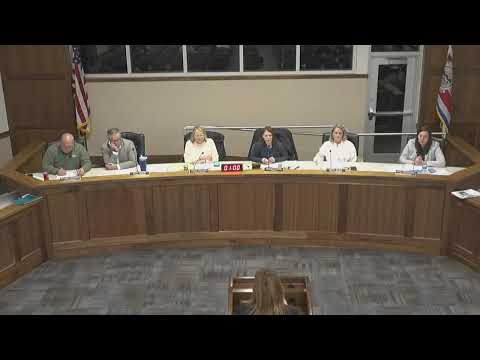
Colette Rampton, Bountiful City’s victim services advocate, presented the city’s biannual report at the Jan. 28 council meeting and described services delivered under a federal Victims of Crime Act (VOCA) grant. Rampton said the office served 96 victims from July 1 through Dec. 31 and provided 661 separate services, including safety planning, court accompaniment and assistance with victim reparations applications.
Rampton provided a breakdown of incidents: 47 domestic-violence cases; one sexual-assault case; one child physical-abuse case; one DUI-related victim; 11 stalking or harassment cases; 10 violations of protective orders; 19 property-damage victims; and two theft victims. She said the office assisted with 32 pretrial protective orders and 13 sentencing-related protective orders, and that victims were referred to the Utah Office of Victims of Crime for reparations when appropriate.
"We are federally funded, for the Victims of Crime Act of 1984," Rampton told the council, describing the scope of services and referral options such as payment for mental-health care or lock changes through state reparations. She noted two program tools the office uses: VINE, the victim-information-and-notification system that alerts victims when an offender’s custody status changes, and Safe at Home, which provides a substitute address for survivors to protect privacy.
Council members asked about trends and outreach. Rampton said there has been a slight upward trend in protective orders in the last six months compared with the prior six-month period but did not provide a percentage on the record. She told the council she was "in the process of applying for, renewing for 2 years" the federal grant and had not been notified of any changes following an announced federal freeze earlier that day.
Committee members asked about the use of lethality-assessment protocols (LAPs). The council was told that officers complete the lethality assessment every time they respond to an intimate-partner domestic-violence call and that assessment data are recorded in police reports. Council members and staff discussed referral links to Safe Harbor, the regional domestic-violence service provider; Rampton said she regularly refers clients to Safe Harbor and that the organizations have collaborated on individual cases but that Safe Harbor is often busier and provides shelter resources Bountiful does not.
Council members thanked Rampton for the work, asked staff to consider additional public outreach, and discussed the possibility of contacting congressional representatives if a VOCA grant were frozen. No formal council action was taken; the presentation was received and the council requested follow-up information on outreach and the grant renewal status.