Get Full Government Meeting Transcripts, Videos, & Alerts Forever!
Get email alerts on the Open Meetings Executive Minutes topic
No spam. Unsubscribe anytime.
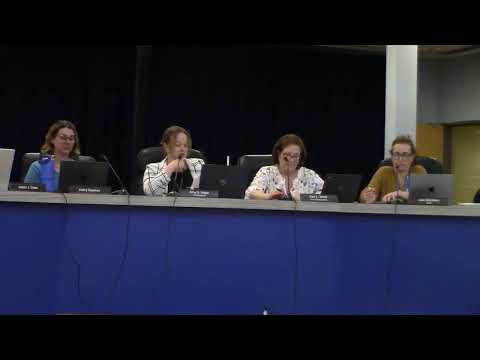
Cumberland school committee rejects motion to unseal executive-session minutes, 2-5
Summary
A majority of the Cumberland School Committee voted against a motion to unseal executive-session minutes no longer covered by exemptions, after a lengthy discussion about Open Meetings Act guidance and privacy exemptions.
The Cumberland School Committee considered a motion to unseal executive-session minutes that members said may no longer meet statutory exemptions, but the motion failed 2-5.
Members debated guidance the committee received from the Rhode Island Attorney General's Office and from an OMA (Open Meetings Act) training attended earlier in the spring. Committee member Michael Dean moved to “unseal all the executive minutes that are no longer bound by the exemptions.” The motion was seconded by Michael Bacon. Committee members then took a roll-call style count; the motion failed by a 2-5 vote.
Supporters of unsealing cited attorney general guidance that minutes sealed while litigation, property negotiations, or investigations are pending should be unsealed once the reason for sealing no longer applies and that, where possible, public bodies should disclose reasonably segregable portions after redaction. Dean said the committee had requested guidance in March and that the AG’s office favored transparency and advised unsealing when exemptions no longer apply.
Members opposing immediate unsealing argued that many executive session topics remain legitimately exempt under state law, including ongoing litigation, school security, personnel, and student privacy. Committee member (and attorney) William Adams emphasized that sealed executive-session minutes are exempt from the Access to Public Records Act while sealed and that revealing negotiation strategy or security-related discussion can harm the public interest. Members also noted that some exemptions—security, student records, or attorney–client communications—may never properly lapse.
The committee did not unseal any minutes as a result of the vote. The transcript records the negative votes as from members Shay, Feather, Smith, Goldstein and Vogel; Dean’s motion and Bacon’s second were recorded but did not carry. The committee discussed a process to review executive minutes one by one to determine where redaction followed by unsealing would be appropriate when applicable.
The matter may return to a future meeting after staff and legal counsel prepare a more detailed review of specific sealed minutes and identify which files, if any, could be released after required redactions.