Get Full Government Meeting Transcripts, Videos, & Alerts Forever!
Get email alerts on the Noise Ordinance topic
No spam. Unsubscribe anytime.
Amherst committee narrows proposed noise rules, strikes vibrations clause and tables two ordinances for redrafting
Summary
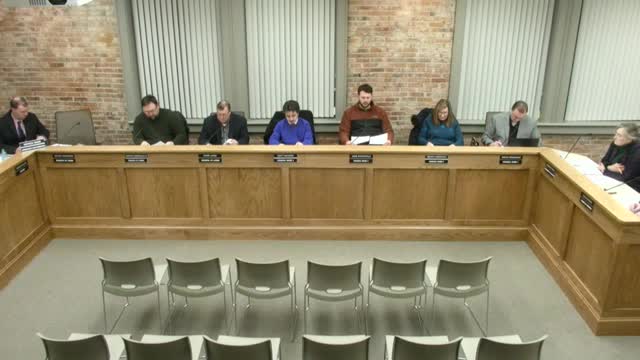
Council members on the Amherst Police & Fire Committee on Feb. 17 approved a series of revisions to proposed noise ordinances but sent the drafts back to staff for redrafting.
Council members on the Amherst Police & Fire Committee on Feb. 17 approved a series of revisions to proposed noise ordinances but stopped short of final adoption, sending both related ordinance drafts back to staff for redrafting.
The committee voted to remove the phrase exempting “all holidays observed by the city,” approved changing an exemption that had listed “police” to a broader “emergency/safety services” designation, and inserted a time‑weighted‑average (TWA) clause that measures continuous noise over a 15‑minute period. The group also voted to strike a smaller subsection addressing vibration measurement after members and staff said the city lacks calibrated equipment and reliable enforcement language. After several amendments, the committee voted 6–1 to table both ordinance items (file numbers 25‑04 and 25‑05) for further revision by the law department and city staff.
Why it matters: The two ordinance drafts amend sections of the city code that set permissible outdoor sound levels, exemptions and enforcement procedures. Committee members repeatedly debated numeric decibel thresholds, how to measure noise in ways a court would accept, and limits to the city’s authority to regulate noise originating from state or federally regulated entities.
Committee discussion and votes
Councilman Janek, who presented the drafts, said staff incorporated feedback from the previous committee meeting and from the building official. The meeting opened with a staff‑provided decibel comparison chart from the mayor’s office intended to give the committee context for proposed numeric limits.
Several members objected that the draft thresholds were too low. Council President Masloka cited the World Health Organization guidance during the discussion, saying, “50 at night, 55 in the day, that is their recommendation.” Another committee member, who identified professional experience in occupational hearing conservation, cautioned that continuous exposure above 85 decibels can cause hearing damage and urged the committee to distinguish peak (instantaneous) readings from continuous measurements.
On exemptions and penalties
- Holidays: The committee considered and then voted to strike the draft exemption for “all holidays observed by the city.” The motion to remove that language passed unanimously (yes: 7, no: 0). The committee expressed concern that singling out “city holidays” could be constitutionally problematic and unfairly applied.
- Emergency/safety services: Committee members agreed to replace the draft’s narrow reference to “police” with wording covering “emergency services” or “safety services” so responses for both police and ambulance/fire calls are exempt. That change was moved and seconded and passed unanimously.
- Penalties and enforcement devices: The revised draft added a penalty provision that the law director said aligns with an existing companion ordinance (cited in the meeting as a nearby codified section). Members discussed whether readings from phone apps are acceptable evidence; staff said the city will obtain calibrated devices for enforcement and court use. One council member summarized the enforcement intent: officers retain discretion when responding to complaints, but calibrated measurements will be used where needed for prosecution.
Measuring noise: TWA and peak standards
Members debated whether the code should rely on a single decibel chart or require both peak (instantaneous) and continuous (time‑weighted) standards. Councilman Janek moved to add a time‑weighted‑average clause measuring continuous noise over a 15‑minute period; the committee approved the insertion unanimously and described it in the meeting as the “TWA clause.” Members and staff discussed the risk that short, repetitive, loud bursts could be “gamed” if only a continuous measurement is used, and several speakers urged building both a continuous standard and a peak/impact standard into the final draft.
Vibration subsection and technical concerns
A small subsection on vibration measurement was heavily debated. Several members and staff raised two recurring issues: (1) the city currently lacks calibrated instruments and procedures to measure earth‑borne vibrations in a manner that would sustain enforcement, and (2) railroad and federal activities (trains, aircraft) may fall outside local authority. Because of those concerns, a motion to remove the vibration subsection passed (recorded in the meeting as passing on a 5–2 margin). After that vote, a separate motion to amend the ordinance title so it reads to “establish noise‑related performance standards” passed 6–1.
Fireworks, construction and other exemptions
Committee members discussed existing state law on fireworks and noted the need to reconcile the draft with Ohio Revised Code provisions for public and private fireworks. Members also debated exemptions for city‑authorized public activities, night work for city contracts and whether private contractors working by city contract should be covered by an exemption. The law director advised that the scope and language of exemptions should be clarified so the ordinance remains enforceable and not subject to arbitrary, single‑person determinations.
Final procedural actions and next steps
After the amendments, Councilman Dembinski moved to table ordinance items 25‑04 and 25‑05 so the law department and staff could rewrite sections the committee had identified as unenforceable or unclear. The motions to table carried by roll call vote, each 6–1 (Councilman Janek cast the lone dissent on both tabling votes). The committee directed the law department to (a) revise the exemption language so that enforcement is not left to a single official’s discretion, (b) ensure penalty language is consistent with existing codified sections, and (c) prepare language for both peak and continuous standards and a recommended enforcement protocol, including calibrated measurement devices.
What the committee did not decide
The committee did not set final numeric decibel limits. Members suggested a range of options during the meeting — including referencing WHO and OSHA guidance — but agreed to have staff return with calibrated readings, a clearer chart for peak vs. continuous levels, and revised ordinance language that addresses enforcement, exemptions and measurement protocols.
Documents and authorities cited
Staff and committee members referenced the draft codified ordinances (identified in the meeting as sections 509.10 and 509.11), the Ohio Revised Code on fireworks, World Health Organization guidance on environmental noise, and Occupational Safety and Health Administration (OSHA) workplace‑exposure criteria during the technical discussion.
Next step
The committee tabled both ordinance drafts for revision; the law department and city staff are to return with clarifying language, calibrated measurement standards and a refined exemption framework before the committee schedules further consideration.