Get Full Government Meeting Transcripts, Videos, & Alerts Forever!
Get email alerts on the Education School Choice Esas topic
No spam. Unsubscribe anytime.
Senate Education Committee advances House Bill 199, a universal ESA proposal, after hours of public testimony and amendments
Summary
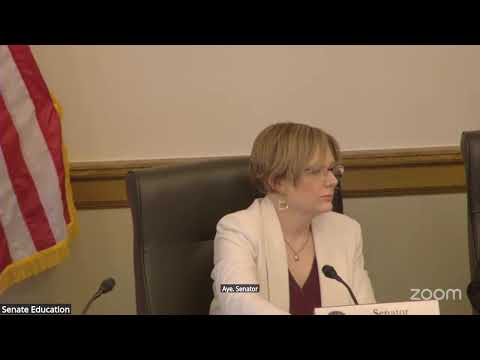
House Bill 199, the proposal to expand Wyoming’s education savings accounts into a universal program, advanced out of the Senate Education Committee on Feb. 12, 2025, by a committee vote to recommend passage as amended.
House Bill 199, the proposal to expand Wyoming’s education savings accounts (ESAs) into a universal program, advanced out of the Senate Education Committee on Feb. 12, 2025, by a committee vote to recommend passage as amended.
The bill, introduced in the House and presented to the committee by the House sponsor identified in the hearing as Representative Andrew, would rename the program the Wyoming Freedom Scholarship, remove the income cap that previously limited eligibility to households under 50% of the federal poverty level, increase the maximum scholarship from $6,000 to $7,000 per student and change the funding mechanism by directing federal mineral royalty (FMR) revenue into the ESA account. Representative Andrew told the committee the bill “makes this program universal to everyone” and that the change removes the 50% federal poverty cap and raises the scholarship amount to better match private tuition costs.
Why it matters: supporters say the measure expands parental choice and directs public dollars to families for qualifying education expenses; opponents say it risks the funding and constitutional protections for public schools and could strip resources from districts that must still provide education to remaining students.
What the bill would change - Eligibility: eliminates the prior income cap, making ESAs available to all Wyoming students rather than only lower-income households. - Scholarship amount: increases the ESA award to $7,000 per student. - Program name: the House sponsor proposed the name Wyoming Freedom Scholarship; during committee markup senators adopted an amendment to change the bill title to the Steamboat Legacy Scholarship Act. - Funding: the bill as drafted would use a portion of federal mineral royalty (FMR) proceeds to fund the ESA account; sponsors said that design was vetted by outside counsel to reduce constitutional risk. - Accountability: the bill removes a statutory requirement for a statewide or nationally normed assessment in its original draft; during committee amendment work senators restored language requiring either the statewide assessment or a nationally normed achievement exam for scholarship recipients.
Testimony and concerns The committee heard roughly two hours of in-person public testimony and numerous written comments. Testimony split sharply.
Supporters: parents, homeschoolers and choice advocates said the program would broaden options, particularly for families who pay taxes but choose nontraditional schooling. Sarah Rest, a military spouse who used an Arizona ESA program, told the committee her family’s ESA “completely changed our educational experience” and allowed access to programs they otherwise could not afford. Aaron Gillum of EdChoice summarized national research and said many states operate ESAs and private-choice programs successfully.
Opponents: teachers, superintendents and several education organizations warned the bill would drain money from the state’s school foundation funding and that the universal design raises constitutional risks. Tate Mullen, government relations director for the Wyoming Education Association, said the bill would “gut our school systems” and argued the state’s constitutional duty to provide an adequate and equitable public education would be jeopardized. Brian Farmer of the Wyoming School Boards Association highlighted the fiscal note, saying the bill’s estimated cost would be roughly $44.5 million per year once fully phased in and that the legislature must consider the impact on a school funding model already under strain.
Department of Education and implementation details Megan Degenfelder, State Superintendent of Public Instruction, and staff from the Wyoming Department of Education (WDE) described how the agency plans to implement oversight under current law and rulemaking. Degenfelder (correcting the transcript spelling used in testimony) told the committee she supports accountability provisions, including provider certification and use of an online marketplace vendor the department has contracted with to process purchases and to limit payments to approved providers. Trent Carroll, WDE chief operating officer, said the department is building a vendor-facing online marketplace intended to ensure funds are spent only on statutorily allowed education goods and services and that the department intends to complete the marketplace for the next school year if the statute changes.
Key implementation and oversight points described by WDE staff: - Provider certification: qualified schools and other service providers must apply for certification and provide assurances about curriculum and assessments. - Marketplace controls: the vendor platform would limit purchases to vetted providers and eligible expenditures; WDE staff said some specialized items may require a reimbursement process if they cannot be added to the marketplace. - Staffing: the department currently employs two ESA program managers and expects to rely on the vendor to scale operations; the department said it will consider additional staff if demand requires it.
Committee amendments and floor path During committee markup senators adopted several amendments: the committee restored an accountability requirement that scholarship recipients take either the statewide assessment or a nationally normed achievement exam; it removed procedural language the attorney general’s office had flagged as problematic; it tightened certification language for providers (specifying required subjects such as reading, writing, mathematics, civics, history, literature and science across K–12); and it adopted a non-substantive amendment changing the bill name to the Steamboat Legacy Scholarship Act.
Committee action The committee voted to recommend the bill “do pass as amended.” The committee motion was made from the floor during the hearing and the committee clerk recorded the final tally as 3 in favor and 2 opposed. The record shows the motion was moved by Senator Scott.
What remains unresolved - Funding and constitutionality: several witnesses and committee members raised constitutional concerns tied to the state constitution’s restrictions on the direct use of public funds for private or religious schools and to the diversion of revenue from the school funding system. Sponsors pointed to written legal advice and outside counsel who assisted in drafting; opponents said a court test is likely. - Fiscal exposure: the Legislative Service Office fiscal estimate cited during testimony projected the program could cost tens of millions annually at full enrollment; the department and school officials urged careful review of long-term fiscal impacts. - Assessment and accountability: while the committee restored an assessment requirement, stakeholders disagree on which measures will provide usable accountability for diverse providers (homeschools, private schools, tutors, etc.).
Next steps With the committee recommendation, House Bill 199 proceeds to the full Senate for further debate and possible floor amendments. Several senators said they expect continued amendment activity on the Senate floor and additional legal review of the funding design.
Ending note: the committee limited public comments to two minutes per speaker and closed in-person testimony after hearing many speakers; several dozen people remained on Zoom and were not heard before the committee began working amendments.