Get Full Government Meeting Transcripts, Videos, & Alerts Forever!
Get email alerts on the Municipal Procedure Training topic
No spam. Unsubscribe anytime.
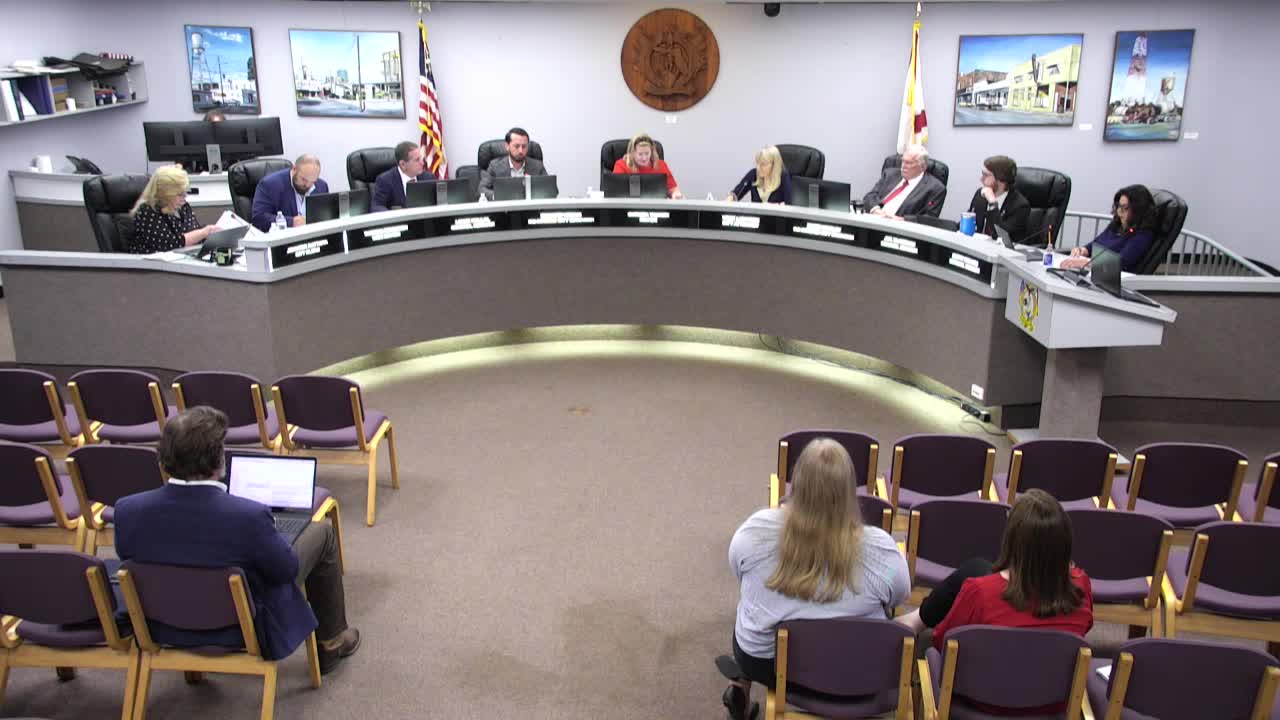
Brooksville council holds workshop on Robert's Rules, quasi‑judicial hearings
Summary
At a council workshop beginning at 6:30 p.m., Brooksville city officials received a refresher on parliamentary procedure (Robert's Rules) and legal requirements for quasi‑judicial hearings, including ex parte disclosures, postponements to a time certain, and the limits on relying on evidence gathered outside hearings.
At 6:30 p.m., the Brooksville City Council convened a workshop in which the city attorney reviewed parliamentary procedure and the rules that apply when the council acts in a quasi‑judicial capacity.
City Attorney Becky said the session would cover “two different things. One is parliamentary procedures, and we're also going to talk about quasi judicial hearings, because those are two things that, frequently kind of get overlooked.” The attorney described Robert's Rules of Order as the standard used by the council to structure debate and protect the rights of the minority while enabling majority action.
The presentation emphasized standard motion practice: a council member may “state the motion directed to the subject that is under consideration,” another member may say “second,” and the council proceeds to discussion and then a vote. Becky explained how amendments are handled: “If the amendment . . . is seconded, then you take a vote first on the amendment. And then if that passes, then a vote's taken on the main motion as amended.”
The attorney reminded members that votes can be taken by roll call or voice vote and advised the council to consult the clerk, saying, “Jennifer is really good at telling us when we're required to do a roll call and when it can just be a voice vote.”
Council members asked procedural questions. When a councilmember asked whether a motion to reconsider must occur immediately or could be raised later in the meeting, the attorney replied that for legislative actions (for example, adopting an ordinance or approving a donation) a change can legally be made later in the same meeting, though she cautioned that reconsideration after interested parties have left “is just not a great thing.” She added that reconsidering quasi‑judicial matters can be legally problematic if parties who testified are no longer present.
The training addressed postponements and advertising: the attorney said a period during which courts raised questions about postponing to a time certain without re‑advertising was later addressed by the Florida Legislature, and now councils may postpone an advertised hearing to a time certain announced at the hearing to avoid re‑advertising costs.
On quasi‑judicial matters — rezoning, variances, site plan approvals, special exceptions and similar development approvals — the attorney said different rules apply and the council “take[s] off [its] legislative hat and [puts] on [its] judicial hat.” She described routine quasi‑judicial procedures used in Brooksville: reading a written script to ensure statutory requirements are met, swearing witnesses, and calling for ex parte disclosures at the start of the hearing. She said members should report contacts or information they received before the hearing and forward substantive correspondence to the clerk for the record.
Becky stressed that decisions in quasi‑judicial hearings must be based on “competent substantial, fact‑based testimony or evidence” and not on popularity. On using information gathered outside the hearing — for example, driving by a site — she said members may do so to better understand materials but may not base a decision on those outside observations: “You are not allowed, under Florida law, to use that information that you gained outside the hearing as a basis for a decision.”
The workshop closed without public speakers. The mayor then moved to adjourn the workshop; a motion and a second were recorded and the council voted in favor. The council adjourned the workshop and scheduled its regular meeting for 7:00 p.m.