Get Full Government Meeting Transcripts, Videos, & Alerts Forever!
Get email alerts on the Sewer Infrastructure topic
No spam. Unsubscribe anytime.
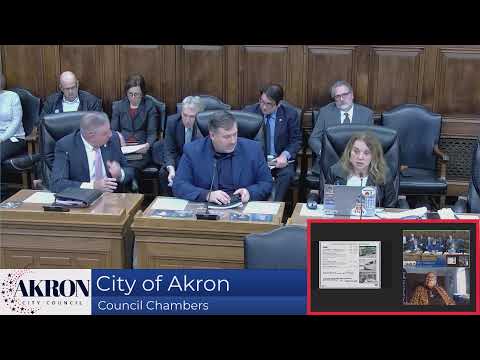
Akron committee reviews sewer capital budget, consent-decree tunnel work and real-time overflow control
Summary
City staff briefed the Committee of Planning and Economic Development on sewer capital projects including combined-sewer-overflow (CSO) real-time controls, ongoing tunnel construction, a storage-facility disinfection project tied to a consent-decree amendment, and multiple sanitary- and storm-sewer rehabilitation items.
The Committee of Planning and Economic Development met for a capital-budget review focused on sewer projects, where city staff described ongoing tunnel construction, continued investment in combined-sewer-overflow controls and a potential disinfection addition tied to a pending federal-court amendment to the city’s consent decree.
Helen Tomic, Staff member, opened the segment and turned the presentation to sewer operations staff. Mr. Luddell, Staff member, summarized the city’s CSO program and associated capital needs, saying the department has applied real-time control of outlets since 2017 and uses flow monitoring to “manage the dewatering and letting some of these fill to maximize our system to reduce overflows.”
The presentation said the north-side interceptor tunnel work is progressing: surface work is largely complete, crews are finishing drop shafts, a smaller 8-foot tunnel has begun mining and a 16.5-foot tunneling machine has arrived from Germany and is being assembled with mining expected to start in late winter. Staff described additional closeout requests and smaller local separation projects that remove combined sewers in portions of North Hill.
Officials discussed the Caugust Street storage facility and a proposed disinfection upgrade for the final cell before overflow. Mr. Luddell said the basin is about 9.5 million gallons and that the disinfection effort would “add some disinfection” in storms when the basin overflows. He tied the disinfection work and possible downstream high-rate treatment design to the city’s pending fourth amendment to the federal consent decree, saying the high-rate treatment line-item is for design only and “that will not happen unless we are successful in the 4th amendment.”
Staff reviewed several routine and emergency capital items: closeout costs for Case Avenue parking-lot work (noted as $20,000), ongoing CSO program-management funding (which covers consent-decree filings, bidding systems and program tracking), a five-year CMOM (Capacity, Management, Operation, and Maintenance) program that will TV (television-inspect) and clean sections of combined and sanitary systems through 2029, sanitary pump-station rehabs such as the Britton Road station, annual flow-monitoring and rain-gauge maintenance that supports real-time control, and lining/spot-repair projects funded in part through Ohio Public Works Commission (OPWC) awards.
Staff also described recurring emergency line items for cave-ins and collapsed sewers, force-main replacements on aging infrastructure (some pipes dating to the 1960s), and the renewable-energy facility upgrades and polymer-system replacement at the water reclamation facility. On plant work, officials listed closeout charges from a recent $55 million WRF headworks project and carryover electrical and control-system upgrades.
Council members asked technical and schedule questions about specific sites and acronyms; staff said several construction items will be bid in spring and carryovers will continue into subsequent years. No formal votes or policy actions occurred during the committee’s review portion covered in the transcript.
The committee moved on to water projects after the sewer presentation; staff invited members to submit questions and noted a public hearing and schedule for budget adoption in late January and February per the city charter.