Get Full Government Meeting Transcripts, Videos, & Alerts Forever!
Get email alerts on the Adoption Policy topic
No spam. Unsubscribe anytime.
Utah committee reviews draft adoption amendments focusing on out‑of‑state recruitment, fees and birth‑parent protections
Summary
Representative Katy Hall, sponsor of draft adoption amendments, presented a broad package of changes to Utah's private adoption law during the joint Senate/House Judiciary Interim Committee on Oct. 28, 2025.
Representative Katy Hall, sponsor of draft adoption amendments, presented a broad package of changes to Utah's private adoption law during the joint Senate/House Judiciary Interim Committee on Oct. 28, 2025. The draft—intended for further work before a possible vote—would change licensing rules for child‑placing agencies, increase transparency around fees and payments to expectant parents, expand counseling for birth parents and create a 30‑day court window to seek revocation of consent if consent was obtained by fraud, duress or undue influence.
Hall said there would be no vote on the measure that day because "we got it out so late" and staff and stakeholders still need to work through several policy points. "We feel like there's still a couple of policy points we're working through," Hall said, and asked committee members for feedback. She described the draft as an effort to address several problems raised in earlier committee meetings, including "out‑of‑state recruitment, concealing birth mother payments with opaque billing practices, [and] paternity circumvention." Hall warned the matter "is a delicate policy with a lot of emotions around it."
Why it matters: supporters and many committee members said the proposed changes are meant to protect birth parents from coercion and to increase transparency in what proponents described as a growing, costly adoption market. Opponents and some adoption providers urged caution, saying some provisions could raise costs or shift adoptions toward larger institutional providers.
Key provisions presented
- Licensing and nonprofit requirement: The draft would bar issuance or renewal of a license for a licensed child‑placing (bridal leasing) agency unless it is organized as a nonprofit, a change Hall said would "add a level of transparency" and could reduce costs by making finances open to public scrutiny.
- Advertising and cross‑jurisdiction compliance: The bill would require agencies advertising outside Utah to comply with the laws of the jurisdiction where the ad is placed; Hall said the intent is to prevent Utah agencies from targeting other states where the agency is not licensed.
- Consortium and data collection: The draft directs the Department to form a formal statewide consortium of licensed child‑placing agencies that meets quarterly, adopts bylaws and has independent staff support to improve data collection and reporting on adoptions.
- Independent counsel for birth parents: The bill would establish a right to independent legal counsel for birth parents, pre‑adoption, for advice about rights and consent. Cammie (Cammy) Orton, nonpartisan staff with the Office of Legislative Research and General Counsel, said the draft permits a parent to waive that right; she noted the legislature could add a prohibition on requiring a waiver if that is the policy choice.
- Limits on payments and expense rules: The draft would tighten what living and pregnancy‑related expenses may be paid for expectant parents, require many payments to be made directly to service providers (for rent, food, medical care), and limit cash transfers (with a suggested $500 cap for personal needs). Hall said the committee may adjust caps, time windows (for example, third trimester up to two months postpartum), or leave higher costs to court petitions in special cases.
- Transport and relocation restrictions: The draft would limit transporting expectant parents into Utah, prohibit transporting minors under 18 into the state, prohibit long travel after 36 weeks of pregnancy (pending medical guidance), and require return travel to be by the same means they arrived, measures Hall said were intended to reduce isolation and risks associated with late travel.
- Counseling and recovery time: The bill would expand counseling from the current allowance to three sessions before and three sessions after placement, and extend the statutory waiting period from 24 to 36 hours after signing consent to give parents more recovery time.
- Civil liability and enforcement: Orton explained that the draft expands civil liability beyond common‑law fraud to allow a parent to sue for negligence when agencies violate the adoption law sections (for example, improper transport or prohibited payments). The draft includes a form of statutory non‑economic damages modeled on recent social‑media litigation language to address harms that may be difficult to quantify.
- Revocation window: Hall described the bill's most consequential change as allowing a birth parent to petition a court to revoke relinquishment within 30 days after signing if the parent proves consent was given under duress, undue influence or fraud. "In our current statute, the general understanding in the public and industry is that in Utah, once you sign, there's nothing that can be done to undo your signing," Orton said; the draft would create a limited judicial remedy before an adoption is finalized.
Committee questions and concerns
Committee members probed practical effects and unintended consequences. Representative Michael Miller asked whether the independent counsel would be advisory only or whether an attorney paid by an agency could be required to provide litigation services; staff said the draft envisions pre‑adoption advice but courts could be used later if needed. Representative Abbott expressed concern about the advertising language's scope (whether it would import another state's full adoption law) and Hall clarified the intent was narrower—focused on advertising rules in other states.
Members also asked whether the draft applies to private adoptions broadly or only to licensed child‑placing agencies. Cammy Orton said most provisions target licensed agencies, though some statutory subsections (for example, an affidavit requirement) explicitly apply to licensed agencies and the sponsor agreed some clarifying edits are needed.
Public comment
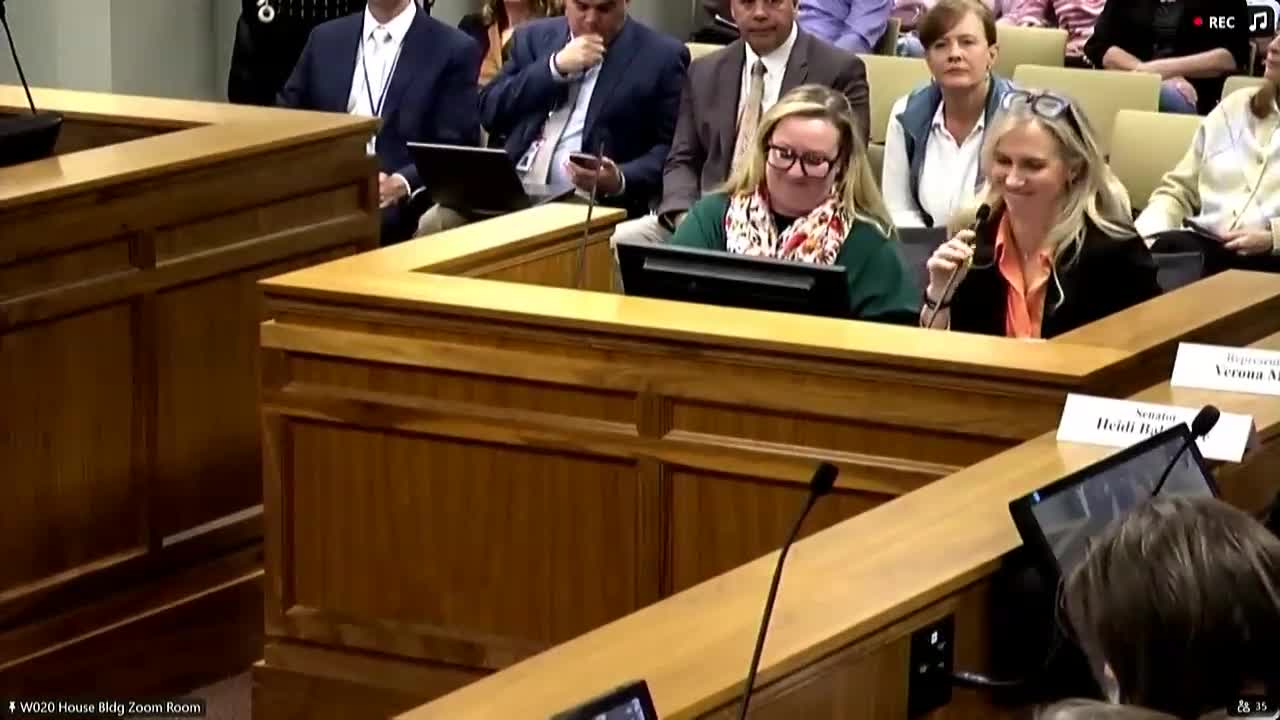
The committee heard nearly two hours of public comment. Supporters included adoption agencies urging stronger oversight and transparent fees; critics and birth parents described alleged coercive practices, isolation of expectant parents brought into Utah, and harm in specific cases. Representative Hall thanked speakers on both sides and reiterated that the draft was intentionally broad to elicit policy feedback.
What was not decided
The committee took no vote and made no formal referral. Hall said she would continue stakeholder meetings and expected to return with a refined draft by November. Several members urged focusing on core issues—particularly the revocation window and transport rules—while balancing costs and preserving access to ethical adoptions.
Speakers quoted in this article spoke during the committee presentation and public comment period. The draft remains subject to revision before any committee vote or bill filing.