Get Full Government Meeting Transcripts, Videos, & Alerts Forever!
Get email alerts on the Property Tax Relief topic
No spam. Unsubscribe anytime.
Committee advances wide-ranging property tax relief package that targets seniors, veterans and referendum rules
Summary
The Tax and Fiscal Policy Committee voted 10–3 to advance Senate Bill 1 with Amendment 17, a sweeping property-tax package that adds a taxpayer-facing DLGF portal, caps and a new formula for levy growth, new referendum rules and expanded deductions for seniors and disabled veterans.
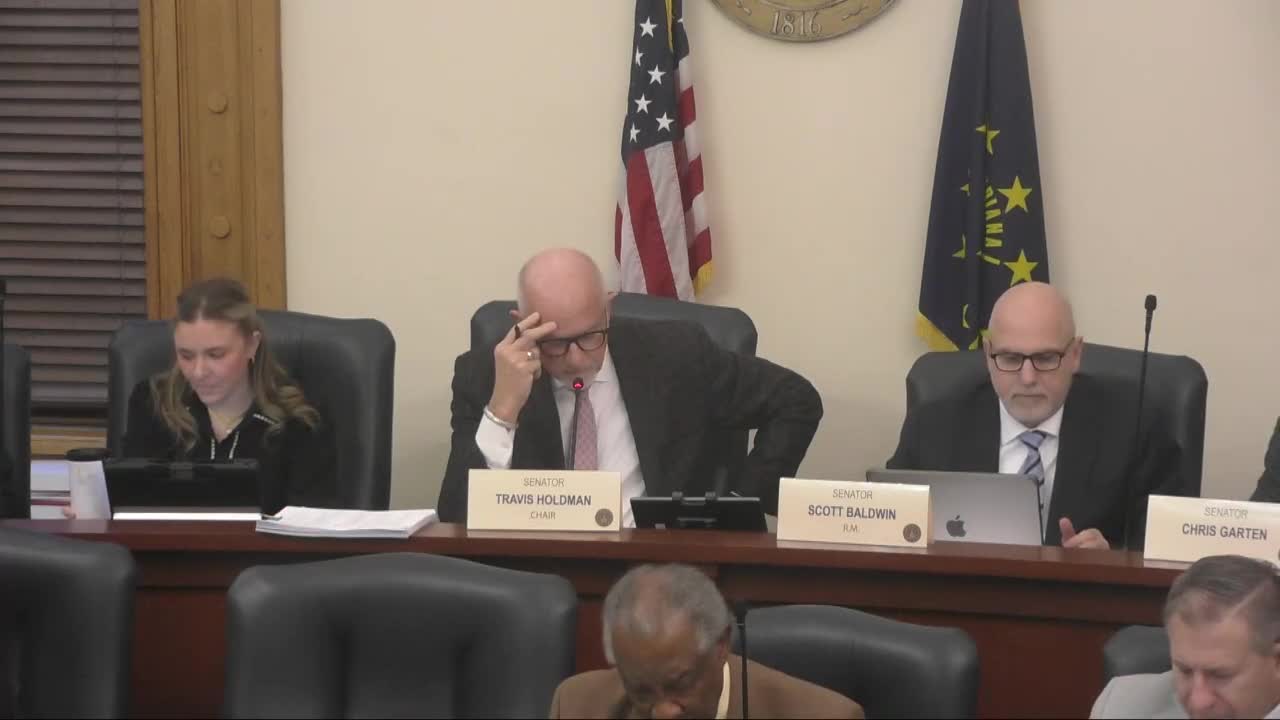
The Senate Tax and Fiscal Policy Committee voted to move Senate Bill 1 as amended (Amendment Number 17) after a detailed presentation and debate over changes intended to provide property tax relief while limiting impacts on local government finance. The committee recorded a 10–3 vote to advance the bill to the floor.
Chairman Holman opened the discussion saying the measure was developed with the governor’s office and that the committee tried “to be careful, to be responsible to the local units of government and at the same time provide some relief to taxpayers.” He noted the fiscal note attached to the amendment: roughly $289 million in the first year and climbing toward several hundred million in subsequent years, with committee members pointing to an approximate $687 million impact in year three once compounding is included.
Why it matters The amendment makes several substantial changes to state policy on property-tax funding and voter referenda. It (a) creates a taxpayer-facing property tax transparency portal to be developed by the Department of Local Government Finance (DLGF), (b) folds elements of two other bills into SB 1 to change how referenda function statewide, (c) caps the maximum levy growth quotient (MLGQ) for three years, and (d) expands targeted property‑tax deductions and credits for seniors and disabled veterans. Proponents said the mix of provisions seeks to balance taxpayer relief with local government and school funding stability.
Major provisions and committee debate - Transparency portal: Amendment 17 requires the DLGF to develop a “property tax transparency portal” that will let taxpayers compare their current tax bill to potential changes under proposed tax rates and submit feedback. The DLGF must make the portal available by Jan. 1, 2026, under the amendment.
- Referendum timing and ballot language: Sponsor Senator Buchanan said the amendment changes referendum timing so levy-based referenda appear only in November of even-numbered years (when turnout tends to be higher). The amendment also requires levy questions to state how many dollars the local unit seeks to raise rather than only asking about a rate. Committee members discussed “cooling off” periods (generally a one-year restriction on renewals) but noted exceptions for school operating and school safety referenda.
- Debt/GO bond cooling-off and emergency exceptions: The amendment establishes one-year and two-year waiting periods for certain bond and referendum questions, while preserving exceptions for disasters and emergencies.
- Levy growth quotient reform: Parts of Senate Bill 9 were folded into this amendment. Senator Baldwin described a phased cap on the maximum levy growth quotient (MLGQ): 0% in pay 2026, 1% in pay 2027 and 2% in pay 2028, then a new multi-index methodology thereafter. The amendment removes many excess-levy appeals previously available to local units (for example, three-year growth and school bus replacement) but retains appeals for annexation, emergencies and corrections of error. It also creates a new referendum path for local units to exceed the MLGQ in limited circumstances (single-year levies, fall general election only) with DLGF-provided template ballot language.
- Targeted deductions and credits: Sponsor Senator Rogers described expansions to the deductions for disabled veterans and those aged 65 and older: the maximum deduction would increase from $14,000 to $20,000 and the assessed-value thresholds would rise from $240,000 to $300,000. Income limits for the 65-and-older credit were increased (single filers from $30,000 to $60,000; joint filers from $40,000 to $70,000). The amendment ties future adjustments to median home sale price determined monthly by the DLGF using National Association of Realtors data.
- Optional county property-tax deferral program: The amendment adds an optional county-level program under which counties could adopt criteria (age, income, AV) allowing homeowners to defer between $100 and $500 per year up to a total of $10,000. Deferred amounts would become a lien on the property, payable on transfer or when the property ceases to be the homeowner’s principal residence; counties would manage agreements and may charge up to 4% interest on deferred balances. Committee members asked whether deferred funds would be returned to taxing districts when the lien is paid; sponsors said paybacks would be distributed to each taxing district according to the share of the deferred bill.
- First-time homebuyer credit: The amendment creates a $2,500 refundable credit for first-time homebuyers who meet household income (up to $75,000) and assessed-value ($250,000) limits; the credit is available for five years (initial application by Jan. 15) and is administered through DLGF forms.
Votes and closing comments The committee moved Amendment 17 and then moved the bill as amended to the floor, with a committee tally of 10–3 in favor. Several members praised changes while reserving the right to change their votes on the floor after seeing fiscal impacts on specific school districts and local units. Senator Baldwin, who helped craft the levy cap methodology, described the amendment as an attempt to “flatten the MLGQ trend line and provide a more predictable outcome for taxpayers.”
What’s next SB 1 as amended will go to the Senate floor for further debate and potential further amendment. Committee members asked for district‑level fiscal breakouts to assess effects on schools and counties; sponsors said they expect the DLGF and legislative fiscal staff to provide more detailed local impacts in the coming days.
Speakers quoted in this article are identified from committee proceedings and include Chairman Holman and Senators Baldwin, Buchanan, Rogers and others who presented or questioned the amendment.