Get Full Government Meeting Transcripts, Videos, & Alerts Forever!
Get email alerts on the Payroll Audit topic
No spam. Unsubscribe anytime.
Minnesota State audit finds Workday transition and late faculty approvals drive most payroll errors
Summary
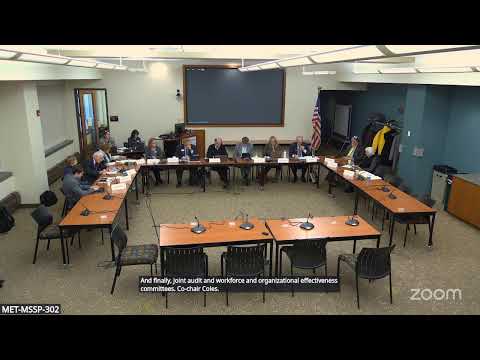
An audit presented to the Board of Trustees’ joint Workforce and Organizational Effectiveness and Audit committees found timing problems around faculty workload approvals — worsened by the systemwide switch to Workday — are the main driver of underpayments and overpayments to faculty.
An audit presented to the Board of Trustees’ joint Workforce and Organizational Effectiveness and Audit committees found timing problems around faculty workload approvals — worsened by the systemwide switch to Workday — are the main driver of underpayments and overpayments to faculty.
“Payroll continues to, more significantly impact that contingent faculty,” Baker Tilly principal Chris Jeffreys told trustees, citing scheduling delays, late hires and the inability of some faculty to verify their pay after the Workday go‑live.
The auditors outlined three broad recommendations: set consistent leadership expectations and goals to reduce late approvals and hires; expand and automate Workday reporting so employees can view detailed pay components; and tighten overpayment collection policies, including timelines for recovery.
Why it matters
Trustees and system leaders said the problems affect contingent (adjunct) faculty disproportionately and recur each semester, particularly during the start‑of‑semester payroll cycle. Vice Chancellor Eric Davis told the committee the system must reconcile the payroll calendar with academic realities so faculty are paid accurately and on time.
What the audit found
- Auditors said timing issues with approval of faculty workload are the single most common cause of under‑ and overpayments. Chris Jeffreys and Alex Ludtke of Baker Tilly said there is no single solution but multiple process improvements are possible. - The switch to Workday exacerbated faculty pay issues, auditors said; some faculty could not verify pay accuracy in the new system. - Over 55% of late class additions in the sample were introductory courses, which often led to late hires. - Forty‑two percent of outstanding, uncollected overpayments related to fiscal years 2018 through 2024 (the audit’s scope extended into FY2025), indicating some receivables are aged.
Management response and near‑term steps
Vice Chancellor Eric Davis acknowledged payroll performance worsened after Workday went live but said the system has made progress and set stabilization goals. He said the system previously had about a 2.5% error rate on total payroll transactions, which at the Workday go‑live doubled; recent performance returned toward the earlier level and leaders set a roughly six‑month stabilization window.
Davis and auditors described specific commitments and timelines made in the meeting:
- The human capital management (HCM) team expects to publish a Workday pay‑details report for faculty access by April 2025, contingent on resolving integration and duplicate‑record issues. - The system office has a draft procedure for overpayment recovery that will be circulated for feedback; publication of system guidelines on overpayment processing and timelines was promised. - The HCM team has filled a sustainment position to help develop reporting capability in Workday.
Trustees’ concerns and options discussed
Trustees and presidents emphasized timing conflicts between the payroll calendar and academic enrollment patterns. Multiple presidents said open‑access colleges see roughly 30% of enrollments add after the July 15 payroll deadline, creating recurring late additions that lead to late hires and payroll adjustments.
Trustee Janet Johnson and others urged practical fixes such as a seasonal or interim workforce to augment payroll processing during peak months, faster on‑year corrections when possible, and clearer campus‑to‑service center coordination. Baker Tilly said campuses expressed willingness to help the service center, and auditors noted potential value in greater understanding between campuses and the central service center.
Legal limits on collection discussed
Davis told trustees Minnesota law requires employee consent to certain collection actions. He said the state’s current guidance permits permissive, sometimes lengthy, repayment schedules and that the system’s proposed guidelines would set clearer boundaries. The vice chancellor cited Minnesota statute 571.922 (garnishment procedures) and a state statute referenced at the meeting concerning the state’s duty to recover public debts when discussing legal constraints on unilateral recovery actions.
External review
Chief audit officer Amy Jorgensen told trustees the Legislative Auditor has commenced a related audit that will likely use the internal audit as a foundation and probe deeper into policies, adherence and system accuracy. The committee received the Baker Tilly report for information; no formal board action was taken.
Ending note
Trustees said they expect periodic progress reports and urgent attention to reduce errors, particularly for contingent faculty, and to finalize clearer overpayment recovery practices so that processes are more consistent across the system.
Direct quotations in this article come from participants at the committee meeting, including Chris Jeffreys (Baker Tilly), Alex Ludtke (Baker Tilly), Vice Chancellor Eric Davis and Chief Audit Officer Amy Jorgensen.