Get Full Government Meeting Transcripts, Videos, & Alerts Forever!
Get email alerts on the Medicaid Reimbursement topic
No spam. Unsubscribe anytime.
Senate approves bill to set annual Medicaid provider rate increases tied to state growth
Summary
The Utah Senate on Feb. 18 approved third-substitute Senate Bill 193, which requires annual Medicaid reimbursement increases for a range of providers tied to the state's general fund growth factor and includes a one-time $15 million adjustment to begin the trajectory.
SALT LAKE CITY — The Utah Senate approved third-substitute Senate Bill 193 on Feb. 18, mandating annual Medicaid reimbursement increases for certain providers and linking those increases to the state general fund growth factor.
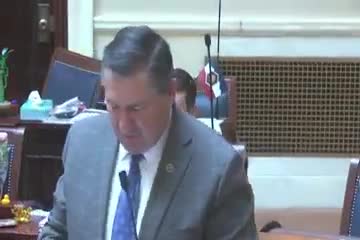
The bill, sponsored on the floor by Senator Doug Owens, requires the governor’s budget submissions to include a baseline Medicaid rate increase for specified provider categories and ties future increases to measured state growth. "This ensures consistent Medicaid reimbursement growth, helping health care providers keep pace with inflation and maintain service quality," Owens said during his floor presentation.
The measure directs annual base budget language that triggers rate increases under a graduated formula: if general fund growth is below specified thresholds funding stays level; if growth is in a middle range increases are proportional to growth; and if growth exceeds 102% funding increases at least 2% per year. Owens described a one-time appropriation of $15,000,000 to “get us on trajectory” for the listed provider categories.
Why it matters: Supporters said the change provides predictability for providers that now often rely on ad-hoc RFAs or individual budget requests to secure rate adjustments. Senator Stratton, speaking in support on the floor, said the bill “mitigates some of the pattern” that left providers without regular adjustments and called it “a step in the right direction.” Senator Escamilla added that standardizing increases that reflect cost-of-living changes would help ensure no providers are left behind.
Who it affects: Owens and supporters named a broad set of Medicaid-related providers targeted by the bill, including accountable care organizations (ACOs), behavioral health plans, air ambulance providers, private duty nursing services, intermediate care facilities for individuals with disabilities, nursing facilities, Division of Services for People with Disabilities (DSPD) providers, and professional Medicaid medical services. The sponsor said fee-for-service increases will take effect in fiscal year 2026 and that annual increases for behavior analysis services are scheduled for fiscal year 2028.
Floor process and vote: The Senate moved to substitute the bill on the floor to incorporate providers inadvertently left off earlier drafts. After floor discussion and supportive remarks from several senators, the chamber voted to read the third substitute for a third time. Third substitute Senate Bill 193 passed with 23 yea votes, 0 nay votes and 6 senators absent.
Budget and implementation details: The sponsor said the bill includes a one-time, $15,000,000 initial appropriation to begin aligning rates across affected programs and that ongoing increases would be embedded in the base budget moving forward. Several senators emphasized that final appropriation levels remain subject to the legislature’s annual budget process and review by the Social Services Appropriations Committee.
Dissent and oversight: Floor discussion featured few objections; senators who spoke supported the predictability the bill offers to providers and the budget office. Supporters noted that the rate-setting approach retains legislative oversight and that appropriations committees will still review the actual dollar amounts during the budget process.
Votes at a glance (other measures on the floor Feb. 18): - Senate Bill 93 (Juvenile justice career training): Read third time and passed, 23–0, 6 absent. - First substitute Senate Bill 57 (Newborn relinquishment; extends safe-haven period 30→90 days): Passed, 24–0, 5 absent. - First substitute Senate Bill 238 (Abandoned aircraft amendments, substituted): Passed, 21–0, 8 absent. - First substitute Senate Bill 203 (Judicial standing amendments): Passed to third read, 19–6, 4 absent (see separate record for full debate). - Third substitute Senate Bill 121 (Property loss related to homelessness compensation enterprise fund): Passed, 15–7, 7 absent. (These tallies reflect roll-call tallies recorded on the Feb. 18 Senate floor.)
What comes next: With the Senate approval, the bill will move to the next step in the legislative calendar (conference or concurrence as required) and would ultimately be subject to appropriation and implementation details worked out in the coming budget cycle.
Reporting note: Floor quotes and vote tallies are drawn from the Feb. 18 Senate floor transcript.