Get Full Government Meeting Transcripts, Videos, & Alerts Forever!
Get email alerts on the Tax Increment Financing topic
No spam. Unsubscribe anytime.
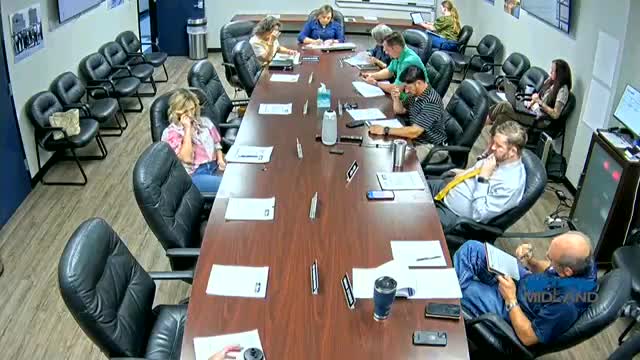
Midland TIF board approves final downtown project and financing plan, sends recommendation to city council
Summary
The Midland Tax Increment Financing board on Tuesday approved a final project and financing plan for the city’s downtown reinvestment zone and recommended that city council adopt an ordinance formalizing the plan.
The Midland Tax Increment Financing board on Tuesday approved a final project and financing plan for the city’s downtown reinvestment zone and recommended that the city council adopt an ordinance formalizing the plan.
The plan sets a city cap of $124,000,000 over a 30-year term and formalizes interlocal agreements with other taxing jurisdictions that cap their participation: the county at up to $24,000,000, the hospital district at up to $14,000,000 and the college at up to $15,000,000. Board members approved the recommendation by voice vote; the motion was made and seconded and carried on ayes recorded by the chair (board vote recorded as unanimous on the meeting record).
The board’s decision follows a presentation from a consultant who reviewed downtown tax-base trends and the financing plan. “There are two ways to create increment — new construction or annual appreciation,” the presenter said, describing the financing mechanics that feed a TIF fund. He and staff told the board they expect it could take roughly three to five years before the district generates meaningful incremental revenue unless new development accelerates or appraisal values change.
Why it matters
A TIF (tax increment financing) or tax increment reinvestment zone channels growth in property tax revenue above a base year into a restricted fund used for public improvements, development grants and other eligible costs in the district rather than to the general tax rolls. Board members emphasized that the plan is intended to be flexible so the TIF board and city council can respond to the market and tailor assistance project-by-project.
Key details and discussion
- Current base and short-term outlook: Staff reported a net decline of roughly $9,000,000 in taxable value from 2023 to 2024 after some large valuation protests and adjustments. The biggest single reduction discussed was a contested valuation on a southwestern AT&T building that the board said had been valued at about $18,000,000 in 2023 and later adjusted to about $2,500,000 after protest, which contributed substantially to the drop.
- Existing set-aside: The board was told approximately $400,000 remains set aside from an earlier TIF fund; staff said that money is still earmarked for downtown use and offered to provide a balance via email.
- Plan caps and term: The final project and financing plan presented allocates an overall city cap of $124,000,000 over a 30-year term. County, hospital district and college interlocal agreements were presented as caps rather than immediate contributions and were described as not-to-exceed commitments over the 30-year period.
- Eligible uses and flexibility: The plan lists broad eligible categories consistent with Chapter 311 of the Texas Tax Code, including public infrastructure (streets, utilities, parking), development grants, streetscape and public facilities. The presenter repeatedly emphasized flexibility, saying savings in one category can be reallocated to cover overruns in another without a public hearing, while increases in total cost would require an amendment and additional approvals.
- Approval path and oversight: Board members asked how disbursements would be approved. Staff and the presenter said every proposed disbursement will first be considered by the TIF board and then forwarded to city council; the presenter noted that any recommended disbursement will require council approval by resolution.
- Process and timing: Board members and staff noted the TIF is not yet producing incremental revenue. The presenter said the board should prepare priorities and programs now so that, when projects or funds materialize, the board will be ready to act. The board also discussed outreach and looking at other cities’ downtown TIF programs as examples.
Vote and next steps
The TIF board voted to recommend approval of the final project and financing plan and will forward that recommendation to the Midland City Council for an ordinance to adopt the plan. The board’s action does not itself change tax bills; it authorizes the plan and the financing framework and creates the governance path for future project approvals and disbursements.
Quotes from the meeting
- “There are two ways to create increment — new construction or annual appreciation,” the presenter said, summarizing how a TIF fund builds value.
- “The legal term is tax increment reinvestment zone, but it’s the TIF act,” a presenter said while explaining terminology and statutory requirements for the board.
Closing note
Board members and staff agreed the plan is intended to be a flexible, implementing tool. Staff committed to provide follow-up materials requested during the meeting — including a detailed property-level spreadsheet showing valuation changes and a breakdown of the earlier $400,000 set-aside — and to present the board’s recommendation to city council for final adoption.
Votes at a glance
- Final project and financing plan (TIF): Motion to recommend approval to the city council; motion moved and seconded (movers not specified in the meeting record); vote recorded as ayes and carried; outcome: recommended to city council for ordinance adoption.
(For full evidence and meeting excerpts, see the provenance section below.)