Get Full Government Meeting Transcripts, Videos, & Alerts Forever!
Get email alerts on the Legislation Health Workforce topic
No spam. Unsubscribe anytime.
Representative introduces bill to cap loan forgiveness for biomedical technicians in rural counties
Summary
Representative introduced House Bill 88 proposing a loan-forgiveness program (up to $30,000 per recipient, five recipients annually) for biomedical technicians in underserved rural counties; committee discussed scope, residency and fiscal placeholder needs.
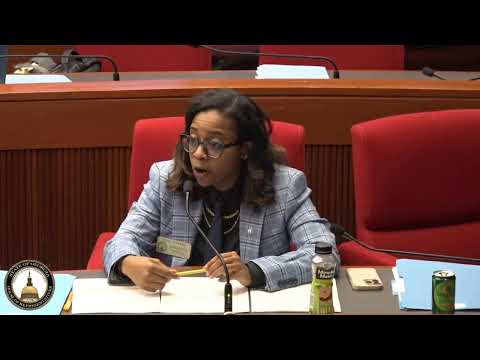
Representative (author of HB 88) introduced House Bill 88 to the House Higher Education Committee on Feb. 19, proposing student loan forgiveness for biomedical technicians who work in underserved rural counties (populations under 50,000).
The presenter said HB 88 largely mirrors HB 72 (discussed earlier in committee) but focuses on biomedical researchers and technicians. Under the bill, recipients must be Georgia residents and work in an approved rural county; the program would be capped at five recipients per year with a maximum award of $30,000 per recipient. The sponsor gave a maximum fiscal note of $150,000 per year (5 × $30,000), and referenced modest administrative costs (author recalled roughly $9,000).
Committee members asked clarifying questions about the role of biomedical technicians and whether the work would include research related to zoonotic diseases and variant tracking; the sponsor, who identified professional experience in biomedical research, said that such work (for example, avian flu and zoonotic transmission study) is within the scope of biomedical research supported by the bill.
Why it matters: The measure aims to incentivize placement of trained biomedical technicians in underserved rural research facilities, an area the sponsor described as having workforce shortages. The bill includes residency and service requirements intended to direct benefits to Georgia communities.
Ending: The sponsor was advised to work with the Appropriations Committee to secure a budget placeholder; committee members gave the bill an initial hearing but did not vote to advance it at the Feb. 19 meeting.