Get Full Government Meeting Transcripts, Videos, & Alerts Forever!
Get email alerts on the Education Dual Enrollment topic
No spam. Unsubscribe anytime.
Georgia Student Finance Commission reports growth in dual enrollment; outlines application and eligibility process
Summary
GSFC President outlined expansion of Georgia’s dual enrollment program, growth in expenditures and enrollment, and described the multi-step online application and approval process that involves students, parents, high schools and institutions.
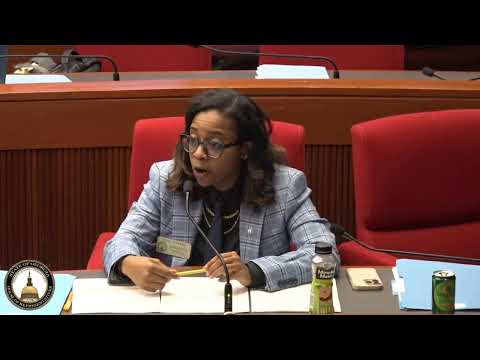
Pamela Riley (President, Georgia Student Finance Commission) briefed the House Higher Education Committee Feb. 19 on the commission’s annual dual enrollment report and explained how students apply and become eligible for the program.
Riley said expenditures have grown 84% since fiscal year 2016 and that the program is “looking at exceeding the a hundred million dollar mark in this current fiscal year.” She reported a 20% increase in student participation from 2023 to 2024, with 57% of courses taken at Technical College System of Georgia (TCSG) institutions, 37% at University System of Georgia (USG) institutions and 6% at private institutions.
Nut graf: The commission emphasized both program growth and process controls: dual enrollment applicants must attend a participating Georgia high school, obtain high-school approval through the counselor’s office, apply and enter a participation agreement, and be accepted by the chosen postsecondary institution. High schools can approve, edit or reject course selections and must sign the parent participation agreement.
Riley described outcomes: 92% of dual enrollment courses in fiscal 2024 received a passing grade; 70% of dual enrollment students enroll in a HOPE-eligible postsecondary institution within one year of high school; and 86% persist into a second year. She added that 60% or more maintain a HOPE GPA after their first postsecondary year, and that Zell Miller recipients retain eligibility at higher rates.
Riley also described GSFC’s online Georgia Futures application and dashboards used by students, high schools and institutions to track application status and approvals. She said the commission prepares an annual report covering 2016–2024 and now includes a new reporting section required by Senate Bill 86 on CTAE courses.
Committee members asked operational questions including whether non-Georgia residents who attend Georgia high schools can participate (Riley said yes, if they meet program requirements and attend a participating Georgia high school), and sought clarification that dual enrollment can create multiple funding impacts: QBE/FTE payments to the high school, tuition payments to the postsecondary institution and formula funding covered by the state.
Ending: Riley offered to provide more refined data on specific population questions and to meet individually with members. The commission did not propose statutory changes at the hearing; the presentation served as background for upcoming bills addressing dual participation and funding.