Get Full Government Meeting Transcripts, Videos, & Alerts Forever!
Get email alerts on the Education Ai topic
No spam. Unsubscribe anytime.
Emory researcher urges state colleges to adopt AI literacy, workforce integration
Summary
Dr. Joseph Sutherland of Emory described how artificial intelligence (AI) and large language models are reshaping education and workforce development, urged statewide strategy and expanded access, and described Emory initiatives including faculty hires and workforce outreach.
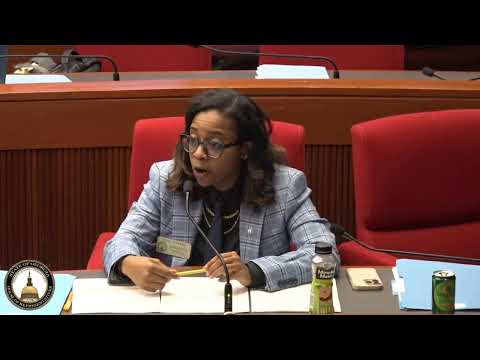
Dr. Joseph Sutherland, founder of the Center for AI Learning at Emory University, told the Georgia House Higher Education Committee on Feb. 19 that artificial intelligence is “changing everything that we do, right before our eyes” and urged state leaders to build clear strategies and wider access to AI tools across higher education.
Sutherland said Emory has hired 46 tenure-track faculty focused on AI applied to domain areas such as health care and law, and described the center’s outreach across the state. “I think we’re at the beginning of this technological revolution,” he said, and argued that integrating AI into vocational and academic programs will raise productivity and worker pay.
Why it matters: Sutherland framed AI as both an opportunity and a risk for higher education. He told committee members that many faculty and local business leaders lack confidence using AI and recommended statewide coordination so institutions do not each “whip out [their] own personal credit cards” to adopt tools. He said lack of broadband access also risks leaving regions behind.
Sutherland explained how modern chatbots work and how large language models (LLMs) are effectively advanced autocomplete: “A large language model is not intelligent in any sort of way. It is not reasoning. It is not thinking,” he said, adding that the models predict subsequent words based on training text. He also cautioned against overreliance on software that claims to detect use of LLMs, saying reliable detection requires a watermark that most student work will not include.
He described classroom and workforce experiments. In a randomized study comparing traditional instruction, tutoring and an LLM trained on course material, groups using the chatbot saw a 63% increase in final scores, he said, attributing gains to higher engagement. In a separate call-center pilot, new hires using LLM assistance reached the performance level of the best employees within months.
Sutherland also noted medical applications, saying AI systems that pre-read scans could help areas with radiologist shortages; he gave a nationwide estimate of about 120 million scans per year. He described Emory’s work on diagnostic tools and on training programs for local employers, funded in part by a Rowan Foundation grant and partnerships with the Georgia Chamber of Commerce, and said his team conducted workshops for roughly 2,500 Georgians across 22 communities.
Questions from committee members focused on classroom integrity, student learning and socialization. One lawmaker described a child finishing a homework assignment in minutes and asked whether students are in fact learning; Sutherland recommended new pedagogies that require students to critique multiple AI-produced drafts rather than simply submitting a single essay. Another lawmaker asked how freshmen curricula might incorporate AI; Sutherland answered that the first step is “having a clear and well articulated strategy” so faculty know what curricula and tools to develop.
The presentation closed with Sutherland’s call for statewide literacy programs, vocational partnerships and efforts to expand broadband to avoid a two-tier access gap. He asked lawmakers to consider workforce development programs that pair AI with Georgia’s existing domain strengths.
Ending: Committee members thanked Sutherland and said they might invite him back; no committee action was taken on policy during the presentation.