Get Full Government Meeting Transcripts, Videos, & Alerts Forever!
Get email alerts on the Local Housing Tax Policy topic
No spam. Unsubscribe anytime.
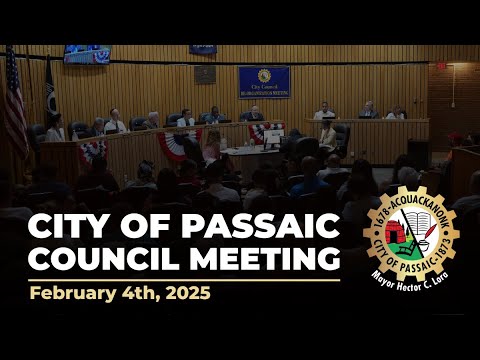
Passaic council introduces tax‑exemption ordinance to incentivize home improvements amid rent stabilization debate
Summary
The council introduced an ordinance to provide five‑year tax exemptions on assessed value from eligible residential improvements — capped amounts and limited to improvements, not additional dwelling units — intended to encourage property rehabilitation while maintaining rent stabilization limits.
The Passaic City Council on Feb. 4 introduced an ordinance amending chapter 2‑75 to create a five‑year tax exemption on assessed added value for qualifying residential improvements, seeking to encourage owners to rehabilitate aging housing stock while the city maintains rent stabilization measures.
Business administrator Rick (last name not specified in the record) and mayoral staff framed the ordinance as an incentive limited to improvements rather than full abatements of existing property tax. The administration said the exemption applies to new assessed value from eligible improvements, not to reduce a property's current tax base. The exemption would cap qualifying assessed added value at amounts consistent with state guidelines (the discussion referenced a $25,000 cap for dwellings as embedded in the state guidance used to draft the ordinance).
"This in turn would also incentivize the property owner to rehabilitate that old housing stock to balance, right, the quality of life and the affordability for our residents," the business administrator said, describing the change as intended to pair with the city's rent stabilization policy.
Council and administration repeatedly distinguished an exemption under the state statute from an abatement: an abatement reduces current assessed taxes, while this exemption prevents the immediate taxation of the newly assessed improvement for five years, after which the assessed value would be added back. The administration said the city drafted the ordinance within existing state statute limits and invited council members to consult the municipal attorney and state code text embedded in the ordinance backup.
Mayor (first name Laura given in the record) framed the proposal as part of a longer push to reduce the tax penalty on making aesthetic or modernization repairs. "If I bought a home, I'm gonna live there for 30 years, why shouldn't I make it as nice as possible?" the mayor said, arguing the measure would help residents keep properties in better condition without immediate tax increases tied to improvements.
The ordinance text — introduced as item 21 on the agenda — was advanced to second and final reading at the council's next meeting, scheduled for Feb. 20. During the meeting the council approved a motion to set the ordinance down for second reading; the roll call on that motion recorded yes votes from Councilman Love, Councilwoman Mello, Councilman Schwartz, Councilman Garcia and Council President Schaer.
Council members asked several practical questions that the administration addressed: the cap applies to assessed added value (not total dollars spent), the exemption applies only to "improvements" as defined in chapter 2‑75 (the ordinance does not permit creation of additional dwelling units or added floor area), and an owner cannot file a tax appeal during the five‑year exemption period without risking the exemption. The administration said the city chose the exemption approach so improvements would not be penalized by immediate assessment increases while still ultimately adding to the tax base when the five‑year term completes.
The administration also said it continues to pursue legislative changes at the state level to expand local authority, including seeking a moratorium on assessment for purely aesthetic repairs; however, the current ordinance was drafted to fit within existing state limitations.
Votes at a glance: the motion to set proposed ordinance (chapter 2‑75 amendments) for second and final reading on Feb. 20 passed on a council roll call with all five council members recorded as yes. Several consent and routine agenda items were also approved by roll call during the meeting; the council passed a separate motion earlier in the meeting on proposed ordinance 24‑76‑25 by unanimous roll call.
The ordinance introduction is intended to encourage limited, defined improvements to Passaic's aging housing stock while preserving the city's rent stabilization policy; councilmembers were invited to review the draft and follow up with the administration and municipal attorney prior to the Feb. 20 second reading.