Get Full Government Meeting Transcripts, Videos, & Alerts Forever!
Get email alerts on the Assessment Appeals topic
No spam. Unsubscribe anytime.
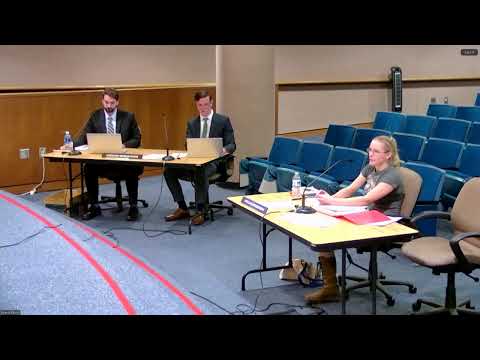
Assessment appeals board hears Simi Valley homeowner contest $600,000 reassessment after 2021 purchase
Summary
Robert G. Purdum told the Ventura County Assessment Appeals Board No. 2 on Dec. 9 that he paid $535,000 for a Simi Valley single‑family home on April 13, 2021 and later found extensive unseen defects that required substantial repairs.
Robert G. Purdum told the Ventura County Assessment Appeals Board No. 2 on Dec. 9 that he paid $535,000 for a Simi Valley single‑family home on April 13, 2021 and later found extensive unseen defects that required substantial repairs.
The county assessor’s office presented its appraisal concluding the sale price did not reflect fair market value. The assessor said a revised appraisal placed market value near $600,000 as of the April 2021 date; the assessor earlier had briefly enrolled a larger value and then revalued after receiving additional information from the applicant.
The case turned on who bore the evidentiary burden and on whether the April 2021 transaction should be treated as an arm’s‑length sale. Assessor’s witness Joe Phillips described follow‑up inspections and comparable sales the office used to arrive at a $600,000 opinion. Assessor appraiser Zachary Clifford told the board the assessor relied on comps in the subject neighborhood and adjusted for condition, lot utility and living area.
Purdum described costly hidden defects he discovered after closing: rotted plumbing and floor framing, a failing septic/cesspool that required connection to sewer, dry rot and mold behind bathrooms and other structural repairs. He provided a list of contractor invoices and an itemized cost summary stating out‑of‑pocket hard costs of about $63,527 and a broader estimate (including his unpaid labor) approaching roughly $170,000.
The assessor disputed that the purchase price should automatically carry the day’s value. The assessor cited Revenue and Taxation Code guidance on the purchase price presumption and explained its appraisal used comparables sold within months of the subject date, with adjustments for condition and usable lot size. The assessor’s written materials also note that one analyst considered the subject in "fair" condition and that the comparable sales range produced a reconciled value near $600,000.
Board members asked detailed questions about the appraisal comparisons, the presence or absence of interior inspections before and after sale, and whether the seller faced exigent circumstances that would make the sale non‑arm’s‑length. Purdum testified he knew the seller, had limited access to the property before close and that the seller had been in a distressed situation; the assessor said there was no litigation or documentation presented to prove the seller was pressured or that exigency overcame the arm’s‑length presumption.
After evidence and questioning, the board concluded the applicant had met the burden of production required under the board’s hearing procedures and property tax hearing rules. The board then heard the assessor’s case in full and announced it would retire to closed session to deliberate. No final vote or change to the enrolled value was announced at the hearing; the clerk said the board’s decision would be communicated to the applicant once the board completes deliberations.
The hearing record includes the assessor’s statement that the office considered Revenue and Taxation Code standards and property tax rules in reaching its valuation. The applicant said he intends to rely on his contractor invoices, the condition photographs and a fee appraisal he provided to the assessor as evidence that the purchase price did not represent fair market value as of the April 13, 2021 date.
The board’s next step is closed‑session deliberation; the clerk indicated the applicant would be notified in writing of the board’s determination when that action is taken.