Get Full Government Meeting Transcripts, Videos, & Alerts Forever!
Get email alerts on the Economic Development Cooperatives topic
No spam. Unsubscribe anytime.
Limited cooperative association bill fails on floor after lengthy debate; 7‑8 roll call
Summary
Bill 365-37COR, which would create a for‑profit Limited Cooperative Association (LCA) framework in Guam, failed 7‑8 after debate on statutory scope, federal preemption, taxation and governance safeguards.
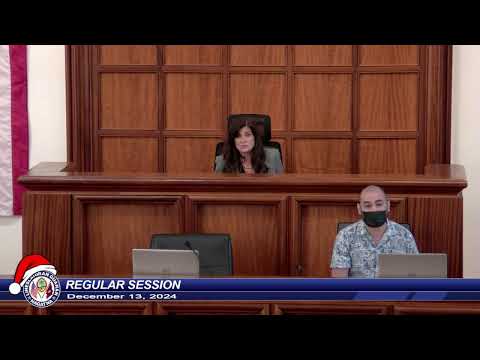
The 37th Guam Legislature debated Bill 365-37COR on Dec. 13, a substitute measure that would create a statutory framework for Limited Cooperative Associations (LCAs) in Guam law. The sponsor, identified in the transcript as Senator Paris, moved to accept a substitute and then to place the bill in the third‑reading file. After floor debate and a roll‑call vote, the measure failed 7 ayes to 8 nays.
The substitute bill would add a new chapter to Title 18 creating a for‑profit LCA model based on the Uniform Limited Cooperative Association model code. The sponsor said the chapter provides a statutory regime for filing, naming, membership rules, governance, distribution of profits and losses, board and officer duties, dissolution, registered agents and other corporate‑style requirements; the substitute explicitly states that nonprofit cooperatives currently governed under chapter 13, title 18, Guam Code Annotated are not affected.
Supporters and testimony cited at the public hearing — including written testimony from the Guam Economic Development Authority (GEDA) and the Department of Revenue and Taxation (DRT) — argued the LCA model would let patron members retain control while allowing investor members to provide capital, and could help small businesses, housing coops, community solar projects and worker cooperatives. The sponsor proffered a floor amendment adding legislative intent language clarifying the statute is intended to create a for‑profit LCA model and not to change nonprofit cooperative law; that amendment passed without objection.
Opponents on the floor raised several concerns. Questions from senators focused on specific provisions, including:
- Section 17103(b), which in the substitute bill states that lacking some characteristics described in subsection (a) does not prevent formation of an LCA; one senator asked whether this language would permit entities to organize without exhibiting core cooperative characteristics.
- Provisions on electronic‑signature law that reference the federal Electronic Signatures in Global and National Commerce Act (15 U.S.C. §7001). A floor question noted the supremacy clause and asked how local law could “supersede” federal law; the sponsor replied that the federal statute includes language allowing states to modify certain provisions by statute and that the bill preserves specified restrictions.
- Registered‑agent and dissolution mechanics: senators sought clarification on the duties and continuing authority of a registered agent during administrative dissolution and on whether multiple sections created inconsistent resignation standards. The sponsor and other senators explained dissolution and winding‑up duties are detailed in article 12 of the bill and that registered agents may need to facilitate post‑dissolution wrap‑up filings.
DRT told the committee in written testimony that LCAs would be treated similarly to corporations for tax filing and business privilege tax purposes (with exceptions for exempt farmers' and fishermen's cooperatives), and asked for a 60‑day implementation window; the substitute bill incorporates timing language in response.
Floor advocates pointed to cooperatives such as Mondragon (Spain) and long‑running U.S. examples (Park Slope Food Coop, PCC Community Markets) as models of resilient cooperative structures and cited testimony from local entrepreneurs who said cooperative ownership can improve business longevity.
After debate, the sponsor moved the bill into the third‑reading/voting file. A roll‑call vote followed: the bill received seven ayes and eight nays and therefore failed. The transcript shows the final tally only and does not record full, named vote assignments for every senator in the excerpt provided.