Get Full Government Meeting Transcripts, Videos, & Alerts Forever!
Get email alerts on the Residential Property Classification topic
No spam. Unsubscribe anytime.
Revenue panel defines 'residential real property' and sends bill to Senate after technical amendments
Summary
Senate File 153, which implements a voter-approved constitutional amendment creating a residential property class, was amended for implementation details and passed unanimously out of the Revenue Committee; the committee revised definitions to align with deeded real property and removed an arbitrary 35‑acre cap.
Senate File 153, a bill intended to implement a voter‑approved constitutional amendment that creates a separate class for residential real property, passed the Senate Revenue Committee after technical amendments clarifying definitions and implementation steps.
Senator Larry Barlow, the bill sponsor, told the committee the bill "goes into the statutes, and it creates that 4th class in the statutes" and that the text seeks to give effect to the constitutional change while leaving assessment‑rate decisions to the legislature. He recommended modest, implementable definitions and noted selectors such as number of families and acreage could affect the state's information systems.
Brenda Henson, director of the Department of Revenue, warned the committee that classification language must align with legal definitions of "real property" and urged caution because implementation must be ready for the 2025 tax year. "Real property means land and appurtenances, including structures affixed thereto," Henson said, adding that titled assets such as mobile homes and trailers are legally personal property and should not be classified as real property for the new residential class.
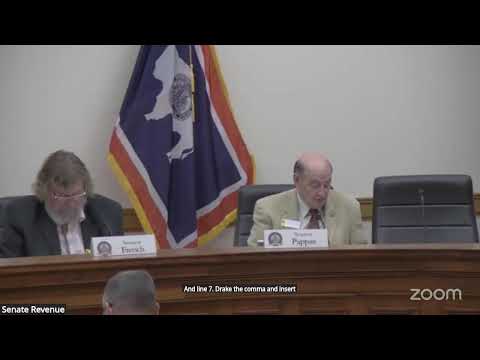
Converse County Assessor Dixie Huxtable urged removing a specific "up to 35 acres" phrase and instead using a formulation that includes associated residential land, saying the 35‑acre cap would create ambiguity for larger parcels. Senator Pappas offered an amendment to change the threshold from four families to three, strike "land up to 35 acres," and remove an explicit reference to mobile homes and trailers in the definition; the committee adopted the amendment.
Committee members discussed the potential need for an owner‑occupied subclass and the operational questions that would follow if the legislature sets a different level of assessment for owner‑occupied properties. Director Henson said if the legislature adopts a different level of assessment for an owner‑occupied subclass, the state and assessors would need an application and notification process for roughly 173,000 owner‑occupied homes (based on an approximate 72% owner‑occupancy rate in the U.S. Census figure referenced in testimony). Henson recommended leaving the rate unchanged for 2025 to avoid overburdening assessor offices during implementation.
After adopting the sponsor and Senator Pappas technical amendments, Senator French moved the bill and Senator Hyde seconded. The roll‑call recorded five ayes and no nays; the committee clerk reported "We have 5 aye, mister chairman." The committee advanced the bill to the next stage.
The amendments aim to align statutory language with existing property classification systems, avoid creating system‑level obstacles for the 2025 assessment year, and preserve room for further policy debate on assessment rates or a future owner‑occupied subclass.