Get Full Government Meeting Transcripts, Videos, & Alerts Forever!
Get email alerts on the Local Enforcement Timetable topic
No spam. Unsubscribe anytime.
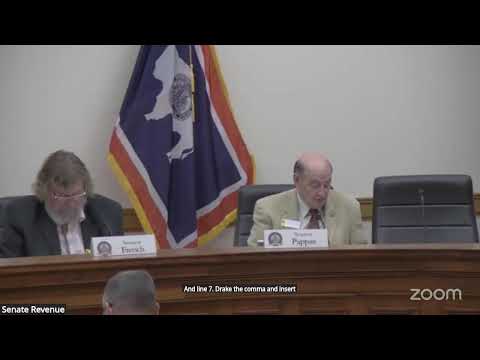
Senate Revenue Committee approves change from 30 days to 30 working days in enforcement bill
Summary
The Wyoming Senate Revenue Committee approved an amendment to Senate File 85 to clarify that localities have 30 working days, rather than 30 calendar days, to resolve violations; the bill then passed the committee on a 3–2 roll-call vote.
The Senate Revenue Committee on an early agenda item amended and passed Senate File 85, a measure on constitutional enforcement of localities, on a 3–2 vote.
Senator Daniel French, who offered the language change, said the committee should modify the timeline that local governments have to resolve violations. "I would like my amendment is to change 30 to — right behind 30 to add 'working,' so it would state 30 working days instead of just 30 days," Senator French said during the committee meeting.
The change was adopted by the committee. After the amendment passed, the committee moved the bill. Senator French moved the bill; Senator Eyde seconded. During a roll-call vote on the amended measure, Senator Case voted no, Senator French voted aye, Senator Eyde voted aye, Senator Pappas voted no and Chairman McEwen voted aye. The committee clerk announced "You have 3 aye and 2 no, Mr. Chairman," and later stated, "Senate file 85 has passed the committee."
The amendment narrows the original 30-day period to 30 working days. Committee discussion surrounding the amendment focused on giving local governments additional days by excluding weekends; no further changes were recorded in the transcript. The committee did not record any additional conditions or directives tied to implementation in the excerpted discussion.
The committee followed its usual procedure of amendment, motion, and roll-call. No further amendments or cross-references to other statutes were recorded in the transcript excerpt.
With passage out of the Revenue Committee, the bill will proceed to the next stage of the legislative process, subject to further amendment or debate on the chamber floor.