Get Full Government Meeting Transcripts, Videos, & Alerts Forever!
Get email alerts on the Animal Control topic
No spam. Unsubscribe anytime.
Lake Jackson council pauses new animal ordinance, forms subcommittee to rewrite rules on roaming and nuisance animals
Summary
After weeks of public comment, Lake Jackson city council agreed to pause enforcement of ordinance 2292 and asked staff and a volunteer subcommittee to redraft the city—s animals code, with a target to return recommendations within about 45 days.
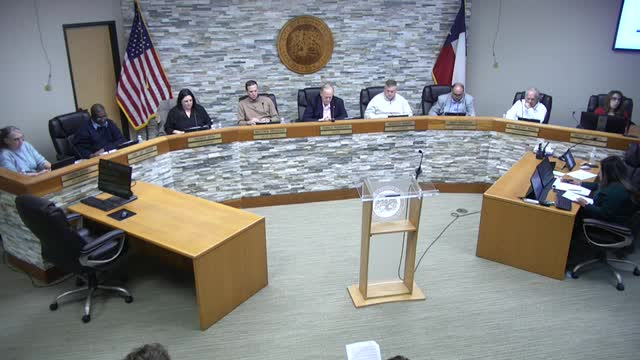
Lake Jackson City Council on Jan. 23 agreed to pause enforcement of parts of ordinance 2292 and asked staff, the city attorney and a volunteer review group to redraft portions of the city—s animals code that residents and animal-welfare groups say created unintended consequences.
Council and staff said the council will pause the recently adopted language that expanded the definition of animals running at large and related enforcement provisions while a small group of citizens, animal-welfare representatives and staff refine wording and propose compromises.
The pause followed more than an hour of council discussion and public comment. Council members and staff described two separate goals: (1) respond to immediate complaints about animals coming onto private property; and (2) develop a longer-term plan to address unowned or feral cats citywide, with a focus on trap-neuter-return (TNR) and nonprofit-led programs. Staff said the city will help enable nonprofit programs where the city is permitted to assist, including applying for grants that nonprofits cannot access directly.
City Manager Modesto Mundo summarized the administration—s view that the revised code addressed both immediate nuisance concerns and a larger problem of feral and unowned cats. He said staff convened a volunteer group after the Jan. 6 meeting and that the group had 11 participants who discussed both short- and longer-term approaches. Sherry (city attorney) and the police chief also briefed that small group, he said.
Several residents and animal-welfare advocates urged changes to the ordinance language. Becca Meservi warned that a 45-day referendum window referenced in the city charter would begin after final passage and asked the council to be mindful of that schedule. Nancy Merle, who described having spayed, neutered and rehomed hundreds of cats in Brazoria County, said the ordinance as drafted defined —unrestrained— animals too broadly and could allow seizure of animals that are not nuisances. Skyler Miller of the SPCA of Brazoria County urged clearer language to distinguish owned animals from community or cared-for feral cats and suggested better reunification tools such as microchipping. Other speakers urged a phased approach and protections for long-time outdoor pets.
Council members identified specific sections they want revisited, including the —at-large—/unrestrained language (section 10.1 in the ordinance), nuisance definitions, and repeat-offender provisions. Councilmember Swazo (transcript reference) recommended putting the current ordinance —on pause— while staff and legal review the suggested revisions and return a reworked draft. Councilmembers emphasized the need to make enforcement language clear so police and animal-control staff have appropriate tools but so that residents who are not the target of enforcement are not inadvertently penalized.
Council direction (not a formal vote) was to have staff and legal prepare revised language based on public and stakeholder input, vet it with the volunteer subcommittee, and return to council with recommendations targeted for roughly 45 days. Staff asked residents who want to join or be informed of the subcommittee meetings to email the city secretary.
The council and speakers repeatedly distinguished between immediate enforcement of nuisance complaints (for example, animals repeatedly entering private property and causing harm) and a larger community strategy to reduce feral cat populations through TNR and nonprofit-driven services. Several speakers and staff said the city would not lead a TNR program but could support and apply for funding where appropriate.
The pause means the previous ordinance version governs enforcement while staff and the subcommittee draft revised language. Councilmembers said they expect follow-up meetings with staff, the city attorney and police to try to produce clearer, more narrowly targeted enforcement language that balances private-property rights, animal welfare and practical enforcement.
Ending: Councilmembers thanked speakers for attending and asked staff to schedule the subcommittee meetings and communicate how residents can participate.