Get Full Government Meeting Transcripts, Videos, & Alerts Forever!
Get email alerts on the Gender Definitions topic
No spam. Unsubscribe anytime.
Committee approves bill to define "male" and "female" in Wyoming law after hours of testimony
Summary
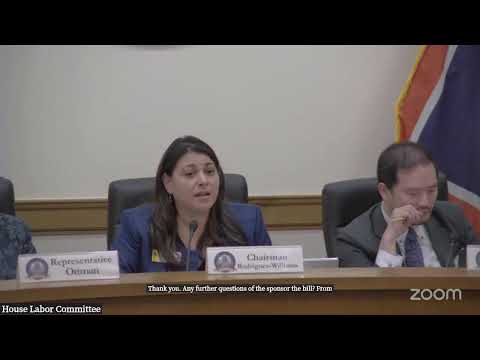
House Bill 32, titled a "woman act," passed the Labor, Health & Social Services Committee after extended testimony and a committee amendment, with the committee forwarding the measure to the full House by a roll-call vote of 7 ayes, 1 no (absentee), and 1 excused.
House Bill 32, titled a "woman act," passed the Labor, Health & Social Services Committee after extended testimony and a committee amendment, with the committee forwarding the measure to the full House by a roll-call vote of 7 ayes, 1 no (absentee), and 1 excused.
The bill’s sponsor, Representative Veil (House District 38), described the measure as "simplif[ying] and defin[ing] male and female" and said the language would provide the judiciary a uniform definition to use when statutes refer to those terms. "This proposed legislation simplifies and defines male and female," she said during her presentation.
The committee heard more than an hour of public testimony, largely split between supporters who said the bill protects single-sex spaces and opponents who said it would harm transgender people and raised questions about enforcement. Dr. Rich Guggenheim, director of legislation for Gays Against Groomers, told the committee he supported the bill and argued it was necessary to "define women because we cannot protect what we cannot define." In opposition, Sarah Burlingame, executive director of Wyoming Equality, warned of unintended consequences and asked how the state would carry out enforcement and who would be asked to undergo medical verification.
Transgender residents and allies also testified in opposition. "For the past four years, I have been in this beautiful building with you all using the women's restroom with no problem, with no issue whatsoever," said Santi Morello, communications coordinator for Wyoming Equality and a transgender woman, describing her experience using public facilities. Grayson Sanchez Hall, a trans man, described safety concerns about being treated as in the "wrong" restroom in either sex-segregated space.
Committee members asked the sponsor about scope and application. Representative Yin questioned which existing laws would be affected beyond prisons. Representative Veil said she did not know of a standing statute that currently regulates bathroom use but argued the bill would provide a clear definition for courts and for future bills that might address related rules. The sponsor also said the bill’s definition would apply "notwithstanding any other provision of law," language she said was meant to make the definition generally available to the judiciary.
An amendment proposed by Representative Clauston, offered to refine language judges could rely on, was moved and adopted by the committee before the final roll call. The amendment was discussed as coming from legal advice to strengthen the definition's legal standing.
Formal action: Vice Chairman Otman moved the bill out of committee; Representative Guggenmoss seconded the motion. Representative Clauston moved the sponsor’s amendment; it was seconded and adopted. Clayton called the roll; the committee reported seven aye votes, one no (an absentee vote by Representative Yen) and one excused member. The committee chair announced the bill had passed the committee.
The bill record shows substantial public debate and sharply contrasting views. Supporters said the measure protects privacy and single-sex facilities; opponents warned it raises enforcement and civil-rights concerns and pressed for clarity about implementation and possible impacts on transgender residents. The committee’s passage means the bill will be scheduled next for consideration by the full House.
Votes at a glance: House Bill 32 — Passed committee, 7–1 (1 excused).