Get Full Government Meeting Transcripts, Videos, & Alerts Forever!
Get email alerts on the Rural Health Transformation topic
No spam. Unsubscribe anytime.
Rural Health Transformation committee endorses DHHS plan, asks for bill drafts on fitness, nutrition, PA compact and pharmacist authority
Summary
A legislative committee endorsed the Department of Health and Human Services’ preliminary rural health transformation plan with 23 clarifications and asked Legislative Council to draft bills on four policy items to strengthen the state’s federal application.
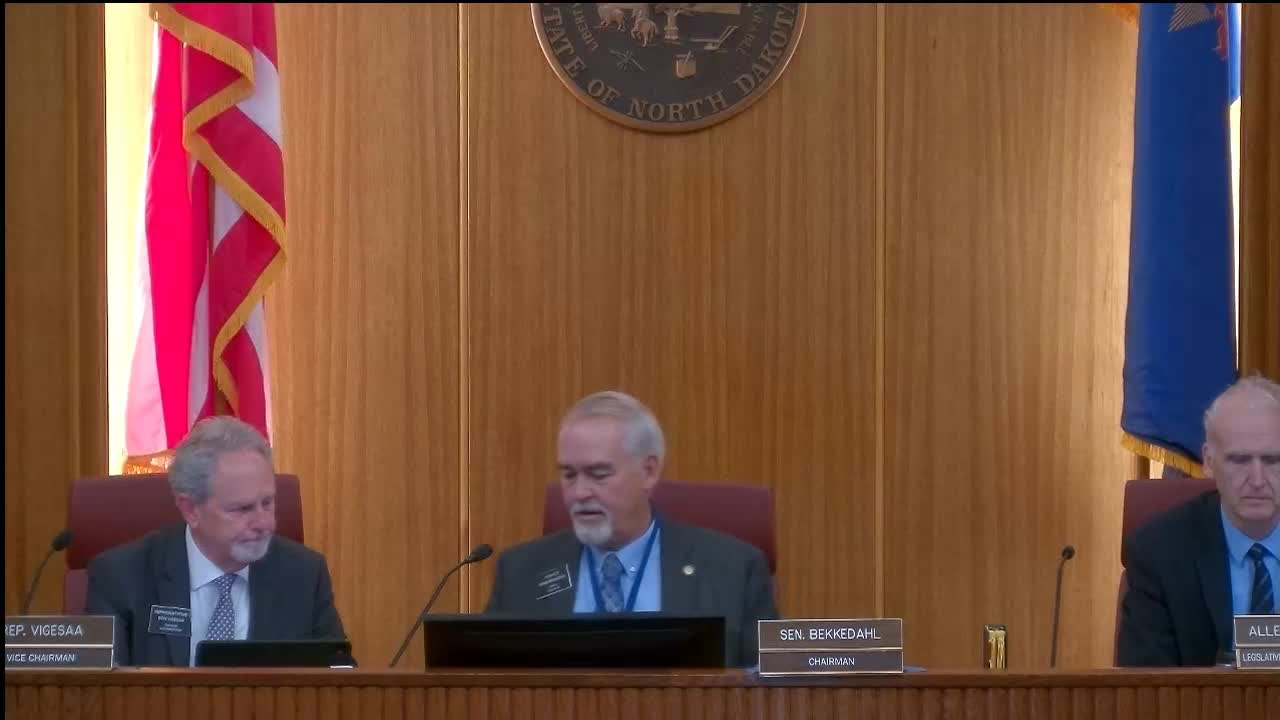
The Rural Health Transformation Committee voted to endorse the Department of Health and Human Services’ preliminary plan for the state’s federal rural health transformation application and asked Legislative Council to draft bills on four policy items the committee identified as likely to strengthen the state’s application.
The motion, read by Legislative Council staff, asked that the department include 23 clarifications and additions — spanning grocery and nutrition programs, dentistry and optometry, pharmacy and electronic medical record interoperability, workforce supports, mobile clinics and FQHC expansion, emergency communications upgrades, ventilators with remote monitoring, and metrics to prioritize underserved areas. Committee members then moved that Legislative Council prepare bill drafts requiring schools to adopt the Presidential Fitness test, requiring nutrition continuing medical education for physicians, joining the Physician Assistant licensure compact, and expanding pharmacists’ prescriptive/testing authority for review next week.
Why it matters: The federal opportunity requires states to show commitments and policy actions in addition to program proposals; the committee’s endorsements and requested bill drafts are intended to improve the state’s competitiveness for multi‑year federal funds that would finance rural health initiatives.
Committee discussion and department role Members spent much of the meeting reviewing and adding ideas to the draft application that DHHS staff presented. Sarah Aker, identified as the DHHS presenter, answered procedural and eligibility questions and said the plan was written with enough flexibility to allow a range of provider types and services to be included if the state is awarded funding. She also said DHHS would follow up with the Centers for Medicare & Medicaid Services (CMS) on whether grants could be provided as upfront payments rather than exclusively as reimbursements, and would report back to the committee.
Topics discussed included expanding support for rural grocery stores and food‑bank distribution to increase access to healthy food and potential SNAP electronic benefit adjustments; adding dentistry and optometry to workforce and mobile clinic strategies and school‑based sealant/education programs; improving bidirectional data exchange between pharmacies and medical providers; expansion of Federally Qualified Health Centers and mobile units; equipment modernization including ventilators with remote monitoring; emergency response communications upgrades; and options for helicopter or fixed‑wing air ambulance support in underserved western counties.
Workforce proposals drew sustained attention. Committee members proposed scholarships targeted at students from rural areas who commit to practice in those communities after graduation, relocation and recruitment supports for providers, and stronger “grow‑your‑own” pipelines through local colleges, extension programs and high‑school health occupation pathways. Aker said CMS has raised questions about whether some scholarship or recruitment uses could be considered supplanting and that DHHS had asked CMS for clarification.
Policy items and next steps As part of improving the state’s application score, the committee asked Legislative Council to draft four separate bills for committee review next week: (1) require North Dakota schools to adopt the Presidential Fitness test; (2) require nutrition continuing medical education (CME) for physicians; (3) join the Physician Assistant licensure compact; and (4) expand pharmacists’ ability to order/perform a narrow set of approved point‑of‑care tests and give pharmacists limited prescriptive authority tied to those tests and to explicit training requirements. Committee members discussed but did not advance a draft to eliminate the nursing home/basic care bed moratorium and declined to advance a dental‑hygienist scope‑of‑practice expansion at this time. A proposed telehealth licensing/registration approach was deferred for further work with licensing boards.
Votes at a glance - Motion endorsing DHHS preliminary plan with 23 clarifications/additions — outcome: approved (motion read and passed; motion carried). - Motion instructing Legislative Council to draft separate bills for (1) Presidential Fitness requirement for schools, (2) nutrition CME for physicians, (3) joining the PA compact, and (4) expanding pharmacists’ testing/prescriptive authority — outcome: approved (roll call recorded; motion carried).
Implementation questions and procurement Committee members and DHHS staff flagged implementation issues that could affect how quickly funds could be obligated and spent if the award is received. Aker and other staff noted state procurement rules, IT procurement timelines and program integrity requirements could slow implementation; several members asked Legislative Council and the Office of Management and Budget to work with DHHS to identify narrowly tailored, time‑limited procurement or administrative changes that could speed up implementation for this specific federal program without broadly gutting procurement safeguards.
What’s next DHHS will continue to consult CMS on outstanding technical questions (including reimbursements vs. upfront grants, and certain allowable uses). Legislative Council will prepare the four requested bill drafts for the committee to review next Tuesday. Committee members said they expect to reconsider the application text and the draft legislation at that meeting before any potential submission to Legislative Management for consideration during the special session.