Get Full Government Meeting Transcripts, Videos, & Alerts Forever!
Get email alerts on the Medicaid Oversight topic
No spam. Unsubscribe anytime.
Legislative auditors say Medicaid inspector general failed to provide adequate oversight; committee opens bill file
Summary
A Legislative Auditor General presentation found the Office of Inspector General did not meaningfully implement prior recommendations and lacks board oversight; the committee opened a bill file to consider structural or oversight changes after the OIG responded to the findings.
Legislative auditors told the Rules Review and General Oversight Committee on Nov. 6, 2025, that the Office of Inspector General (OIG) has not adequately fulfilled its legislative mandate to oversee the state Medicaid program.
Presenters from the Office of the Legislative Auditor General summarized an audit that concluded the OIG focused heavily on compliance and claims audits but rarely examined program performance and recipient outcomes consistent with its $5 billion program oversight role. Auditor testimony said OIG reporting contained repeated identical numbers across annual reports, math errors and undocumented methodology changes, and that the office’s return on investment (ROI) for recoveries failed to consistently recover the state’s funding of the office in five of nine years examined.
Auditors outlined three structural options for the legislature: 1) keep the OIG intact but add an oversight board (least structural change); 2) split functions so program integrity remains and audit moves to an independent audit entity such as the Office of the Legislative Auditor General; or 3) dissolve the OIG and reassign program integrity and audit functions to separate entities. Auditors recommended the committee consider the options and possible statutory changes.
Interim Inspector General Neil Erickson and policy analyst Elise Snapper told the committee the OIG is undergoing immediate management changes and has implemented a new case management system intended to improve reporting. Erickson said he was appointed interim inspector general three weeks earlier and that prior senior managers had resigned. Snapper cautioned that moving audit functions out of the OIG could jeopardize federal funding that currently flows to program integrity functions; she estimated more than $500,000 per year could be at risk for positions funded by federal match if functions were restructured.
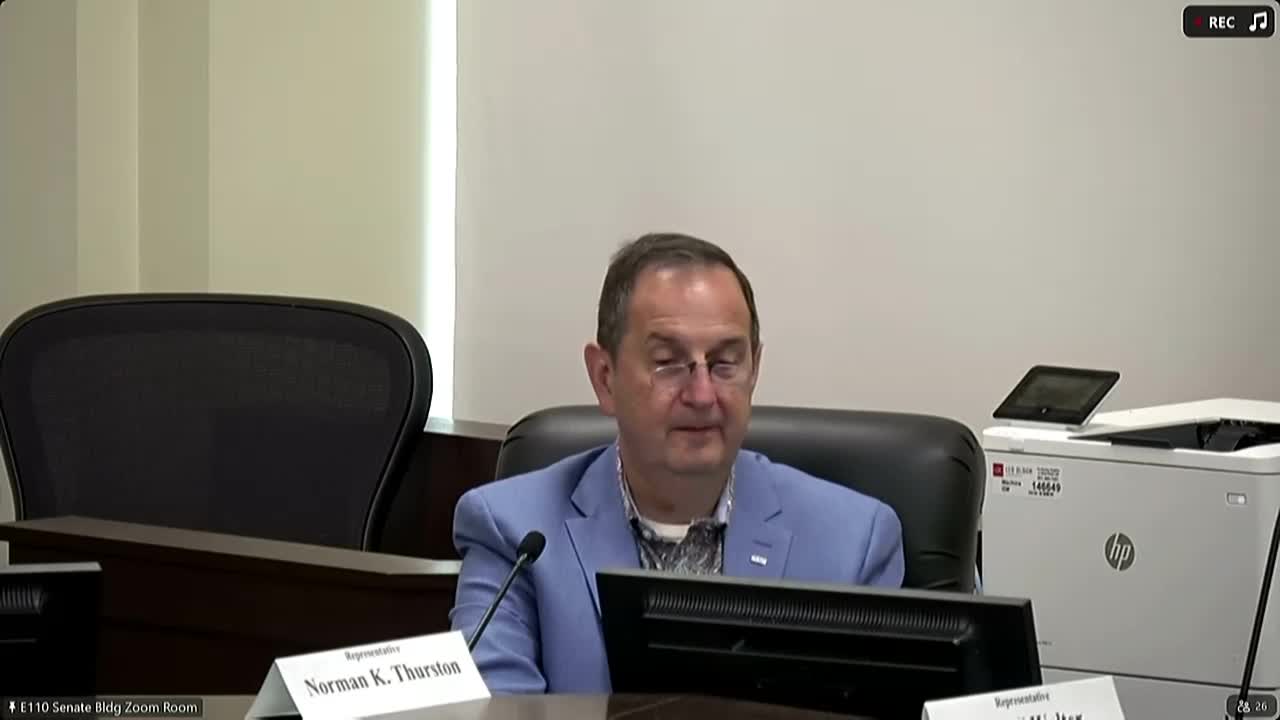
Representative Thurston asked which structural options were likely to be most effective; auditors said options 2 or 3 would likely be more effective than simply adding oversight. Several legislators queried whether housing the OIG in the attorney general’s office would be feasible; auditors said some states use that model but that it required further legal and financial analysis.
After discussion, Representative Thurston moved and the committee voted to open a committee bill file to pursue work on the audit recommendations and possible structural options. Committee members said the issue needs more study and that staff should return with draft options and cost estimates for the legislature to consider before session.