Get Full Government Meeting Transcripts, Videos, & Alerts Forever!
Get email alerts on the Parking And Curb Management topic
No spam. Unsubscribe anytime.
Supporters urge local option for automated curb enforcement to reduce double parking
Summary
Witnesses, including a company executive and local residents, testified in favor of H.4402 and S.2639 to authorize automated curb enforcement and streamline parking violation procedures, citing reduced double parking, improved safety, and a local opt-in approach with privacy safeguards.
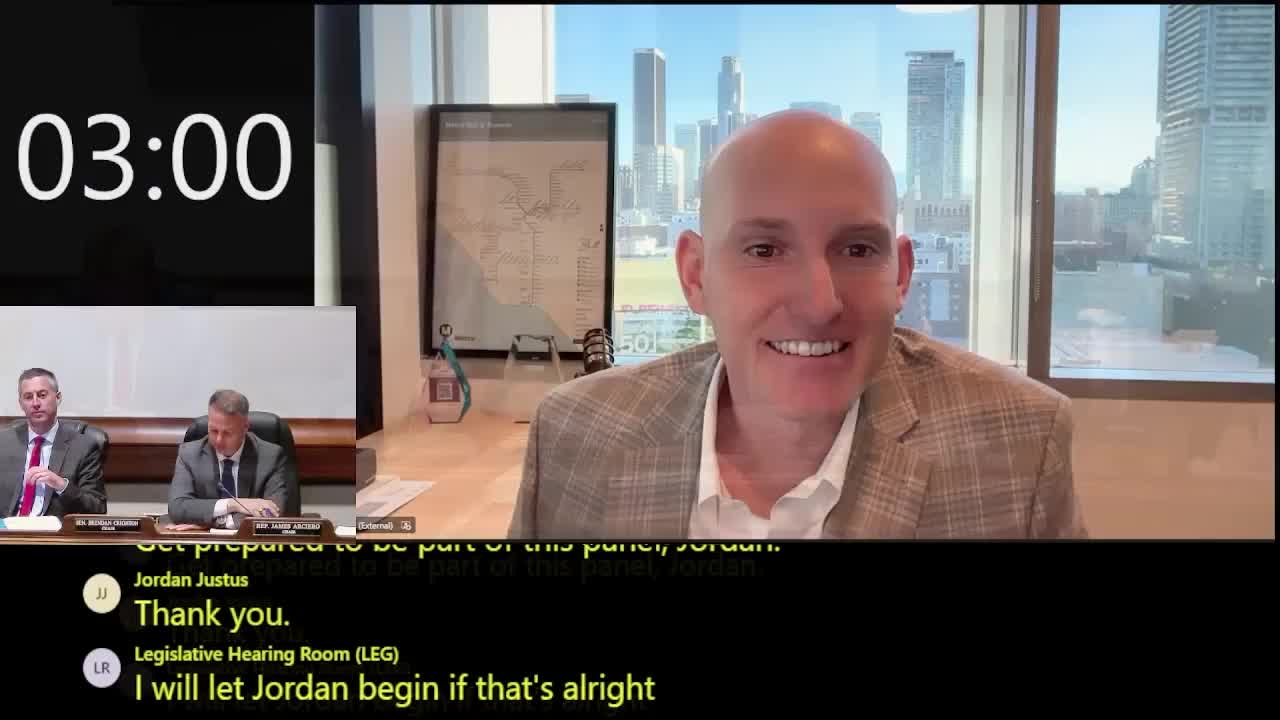
Jordan (Automotus) and a second panelist testified in support of H.4402 and S.2639, bills that would authorize automated curb enforcement and update parking violation procedures for Massachusetts municipalities. Jordan described the bills as “a necessary step forward for Massachusetts cities to be able to follow cities and other states' leads in managing the curb for the 21st century.”
Jordan, identifying himself as the CEO of a company that helps cities manage commercial activity in the public right-of-way, said automated curb management systems in other cities have sharply reduced double parking and congestion. He cited examples: “In the city of Pittsburgh they've been able to effectively eliminate double parking reducing it by 97%,” and Philadelphia’s center city “has reduced traffic by 52% through automating curb management targeting commercial activity.” He said H.4402 and S.2639 include safeguards for privacy and public notification and are designed as a local opt-in rather than a statewide mandate.
Margo Zuckerman, a South End resident and a former MBTA employee, also supported the bills, describing daily safety and congestion impacts from double parking in Boston. “About one third of traffic is caused by double parked vehicles,” she said, adding that automated curb enforcement could help achieve goals in Boston’s Go Boston 2030 plan on safety, access, climate and equity. Zuckerman noted conversations with Boston officials and stressed that the legislation would let cities implement solutions by passing a local ordinance rather than using the more cumbersome home-rule petition route used by Somerville.
Committee members asked clarifying questions about how the proposals compare to existing local programs; witnesses reiterated the bills are intended to make it easier for municipalities to adopt automated curb management while protecting civil liberties. The hearing did not include a committee vote on either bill.