Get Full Government Meeting Transcripts, Videos, & Alerts Forever!
Get email alerts on the Public Employee Protections topic
No spam. Unsubscribe anytime.
Committee votes to open bill file to expand protections for public employees against licensing retaliation
Summary
The Rules Review and General Oversight Committee voted unanimously to open a committee bill file to consider adding threats to professional licensure to the definition of retaliatory actions under the Utah Protection of Public Employees Act.
The Rules Review and General Oversight Committee voted Nov. 6, 2025, to open a bill file to consider amendments to the Utah Protection of Public Employees Act that would broaden the definition of retaliatory action to include threats or actions targeting a professional license.
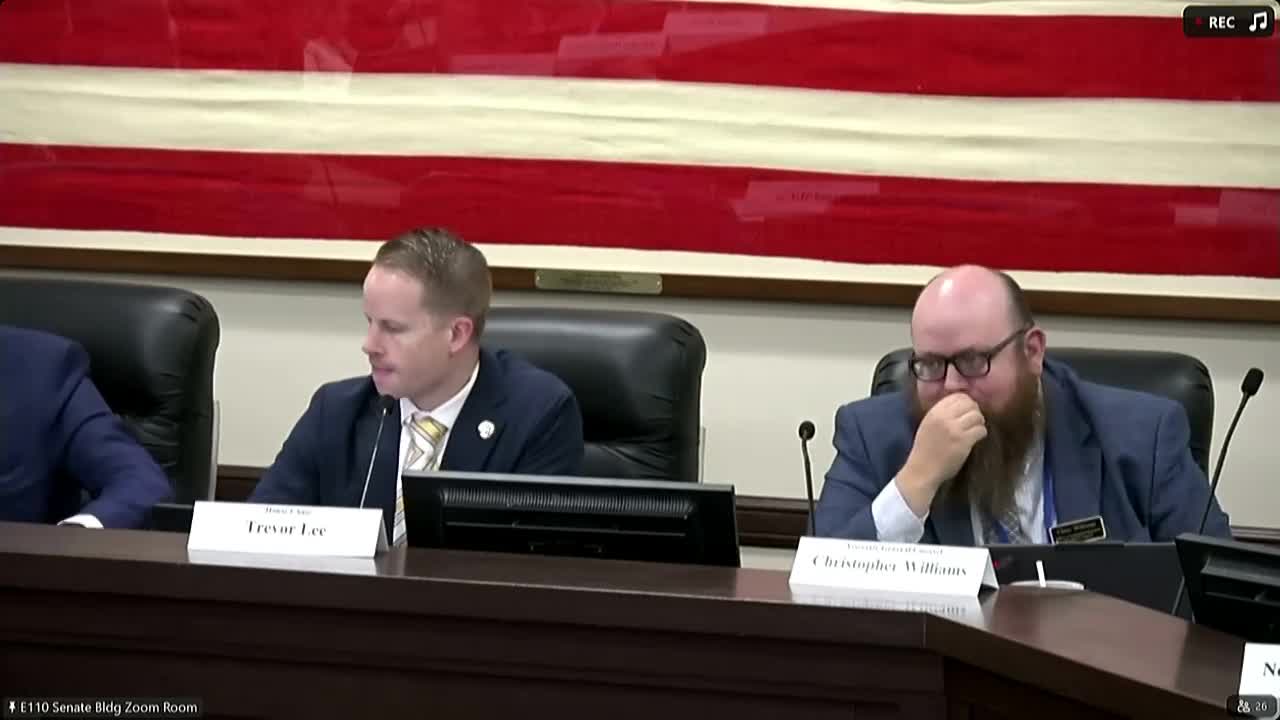
Chris Williams of the Office of Legislative Research and General Counsel briefed the committee on the existing statute, noting that in recent years the legal definition of retaliatory action had been narrowed to a set of employment actions — dismissal, reductions in compensation, failure to promote and similar steps. Williams told the committee the statute allows public employees to report "waste or misuse of public funds, violations of suspected law, gross mismanagement, abuse of authority, or unethical conduct" without fear of retaliation, and statute requires the committee to prepare legislation that reauthorizes administrative rules each year.
Chairman McKay moved to open a bill file to add licensing threats and other similar actions to the statutory list of retaliatory acts. Representative Thurston suggested the language explicitly cover ‘‘referring employees to disciplinary review by their professional licensing board’’ and urged precision in the bill to avoid unintended consequences.
Senators and representatives voted in favor; committee minutes show the motion passed unanimously. Committee members said the change is intended to protect employees such as medical professionals and educators from retaliation that would be disguised as licensing complaints.
Members emphasized the need to work with the attorney general’s office on any language so the statute does not invite unmanageable litigation or a presumption of retaliation that is difficult for employers to rebut. The committee chair noted previous rounds of litigation when protections were broader and said the bill should balance employee safeguards with employers' ability to manage personnel.
The committee formally opened the bill file for drafting and directed staff to pursue working language with the AG's office and stakeholders.