Get Full Government Meeting Transcripts, Videos, & Alerts Forever!
Get email alerts on the Coastal Development Permit topic
No spam. Unsubscribe anytime.
Mendocino County approves after‑the‑fact permit for yurts, tree thinning at Getchell Gulch property
Summary
The Mendocino County Coastal Permit Administrator approved an after‑the‑fact coastal development permit for a property at 46885 Getchell Gulch Road, allowing several yurts and site work subject to conditions protecting nearby stream habitat and requiring building permits and a revegetation plan.
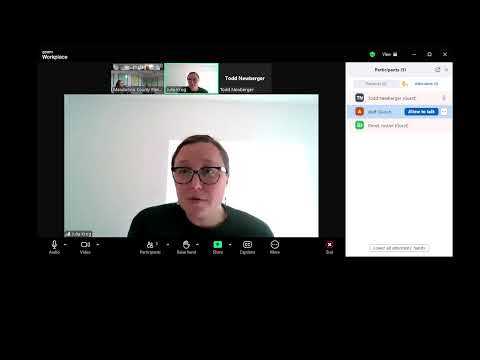
Julia Krog, Mendocino County Planning and Building Services director and the coastal permit administrator, approved coastal development permit CBP2019‑0041 for owner‑applicant Chester Davis at a county hearing. The authorization covers existing and proposed small structures and site work at a 7‑acre parcel on Getchell Gulch Road and is subject to findings and multiple conditions intended to protect a nearby stream and other biological resources.
The permit responds to a county code complaint about unpermitted development and documents the staff recommendation to legalize two residential yurts with a bathroom addition, one storage yurt, a solar powerhouse and panels, a greenhouse, a propane tank, a storage container, a septic system, two water tanks, underground utilities, removal of approximately 12 trees, and removal of an unpermitted fence. Future work noted in the application includes a deck addition, a flagstone path and a possible remodeling of the bathroom to a laundry room. The parcel was listed in the staff report as 46885 Getchell Gulch Road, assessor's parcel number 144‑060‑14, in the coastal zone.
Staff planner Shelby Miller told the administrator that two biological reports, including a reduced buffer analysis, supported the finding that the after‑the‑fact development could avoid impacts to environmentally sensitive habitat areas (ESHA) with implementation of best management practices. The California Department of Fish and Wildlife (CDFW) recommended that the landowner obtain a Lake and Streambed Alteration Agreement for ongoing domestic water diversion; staff included that requirement as a condition of approval. The California Coastal Commission had requested clarifications about what development was existing versus proposed and flagged construction within the 100‑foot stream buffer, a factor that makes the project appealable to the Coastal Commission under California Coastal Act section 30603.
As conditions, the county added requirements intended to protect the stream and restore vegetation. Condition 22 requires the landowner to submit, before issuance of a building permit associated with the coastal development permit, a revegetation plan prepared by a qualified ecologist or biologist. The plan must include color photos documenting baseline vegetation, a five‑year invasive species removal program, planting of locally native species along the creek bank to stabilize soil and filter sediment, performance criteria and alternatives, and annual reporting to the county planning division. Condition 9 requires the property owner, within 90 days of the CDP issuance, to obtain building permits for all previously unpermitted structures associated with the CDP, except where exempted by the building code, and to meet applicable uniform building code requirements for habitable uses.
Owner‑applicant Chester Davis spoke at the hearing. Davis described a long, frustrating permitting process and said he has managed invasive species on the property for decades. "This is a ridiculous amount of time spent on doing this… to me, it's a farce, absolute farce," Davis said, adding he has been working to remove scotch broom and pampas grass and to manage the property for fire safety. The administrator acknowledged staff turnover during the permitting process and said she would approve the project with the staff report findings and the memorandum changes discussed at the hearing. "I am going to approve the project subject to the findings and conditions within the staff report, including the additional condition, recommended by staff in the memorandum dated for today's meeting," Julia Krog said.
The decision is subject to two appeal periods described at the hearing: a 10‑calendar‑day period to the Mendocino County Board of Supervisors and a subsequent 10‑working‑day appeal period to the California Coastal Commission. Staff noted the project's appealability because some after‑the‑fact development appears within 100 feet of the on‑site stream.
The permit approval authorizes legalization of the listed development only as conditioned; it does not itself represent approval of any future building permits, which must be secured and comply with building code requirements.
Votes at the hearing were spoken on the record by the coastal permit administrator; no separate roll‑call vote by a multi‑member body was recorded. The project record includes the two biological studies referenced by staff and correspondence from CDFW and the Coastal Commission requesting additional mitigation and monitoring.