Get Full Government Meeting Transcripts, Videos, & Alerts Forever!
Get email alerts on the Indigenous Education topic
No spam. Unsubscribe anytime.
American Indian Parent Advisory Committee votes non‑concurrence, urges Brainerd Public Schools to fix hiring, data and Indigenous Peoples Day implementation
Summary
The district's American Indian Parent Advisory Committee (APAC) presented a unanimous vote of non‑concurrence to the Brainerd School Board and issued four recommendations citing statutory hiring requirements, inaccurate student data, gaps in Indigenous Peoples Day instruction and a need for sustained leadership training.
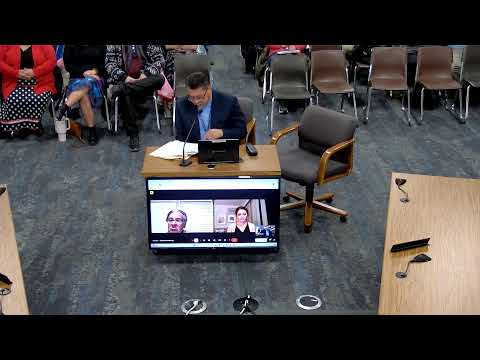
The American Indian Parent Advisory Committee (APAC) told the Brainerd School Board on Feb. 10, 2025, that it had voted unanimously to record a finding of non‑concurrence and submitted four interrelated recommendations asking the district to improve compliance with state statute, data access and accuracy, hiring practices for Indigenous positions and supports for Indigenous Peoples Day instruction.
APAC members told the board the committee had used the statutory rubric and updated 2023 state guidance when evaluating district practice and concluded the district had not met several statutory requirements. "We have voted non‑concurrence unanimously as a committee and have a series of recommendations," said Charles Blacklance, an APAC member and parent. "This is fundamentally about system change that is rooted... and supported from the very top leaves of leadership."
Why it matters: Minnesota statute requires meaningful APAC engagement in Indigenous education hiring and program evaluation, and districts must respond in writing to APAC recommendations within 60 days. APAC said statutory obligations are intended to improve outcomes for American Indian students and that the Board's written response is required under state rules.
Key findings and recommendations
1) Hiring and APAC involvement: APAC cited Minnesota Statute 124D.25, subd. 9, which instructs districts to give hiring preference and to provide procedures for APAC involvement in recruitment, screening and selection for Indigenous education positions. APAC said it was not included in the hiring process for the district's American Indian language and culture teacher and described the posting and internal recruitment as appearing to align with a specific candidate. The committee called for full APAC involvement in future Indigenous hires.
2) Data access and accuracy: APAC said it had difficulty obtaining timely, accurate student data required to make informed recommendations, and that the district's recent data‑request policy changes created barriers. APAC reported a discrepancy between early data provided (66 of 201 Indigenous students coded as receiving special education) and later figures it corroborated (99 of 293), a difference the committee said meant roughly 92 students were not initially accounted for. APAC also flagged apparent omissions in disciplinary reporting (the district reported four disciplinary actions for Indigenous students while committee members identified additional known incidents) and noted limitations in FastBridge and Minnesota Report Card outputs that prevented disaggregated analysis. The committee recommended the district strengthen procedures for timely, transparent data access and correct identified inaccuracies.
3) Indigenous Peoples Day instruction: APAC referenced Minnesota Statute 120A.42, which requires at least one hour devoted to observance of Indigenous Peoples Day through professional development or student instruction. APAC said the district chose classroom instruction rather than staff professional development but gave teachers less than a month to prepare after the district's committee first met on Sept. 13, 2024. While APAC recognized some classroom successes (it cited sixth‑grade work at Forest View Middle School), it recommended better planning, training and resources to ensure every student receives the required hour of instruction.
4) Leadership training and continuity: APAC said the burden of educating new district leaders about statutory requirements has repeatedly fallen to volunteer committee members. To create sustainable progress, APAC recommended systemic leadership training so new administrators and board members do not need to be re‑taught foundational requirements each transition.
Evidence and outcomes: APAC members said they used the statutory rubric and state guidance to arrive at their vote. The committee presented specific data points and requested clearer access to the six categories of information it typically reviews (testing, attendance, graduation rates, student counts, disciplinary data and school‑climate measures). APAC requested the Board and district address the items in the recommendations over the next year and provide the required written response within 60 days.
Board response: Board leadership acknowledged receipt of APAC's presentation and the statutory response requirement. The board noted the legal requirement to respond in writing within 60 days and said it would take the recommendations under advisement and prepare a written reply within the statutory window.
Context and background: APAC members said the committee has used the rubric and voted on district compliance annually for seven years. The committee emphasized the statutory basis for APAC participation and expressed that the non‑concurrence vote is aimed at system change rather than individual criticism.
Ending
APAC concluded by saying the recommendations are interrelated and resolvable within a year if the district commits to procedural changes. The board must provide a written response to the committee's recommendations within 60 days under state procedures.