Get Full Government Meeting Transcripts, Videos, & Alerts Forever!
Get email alerts on the Historic Preservation topic
No spam. Unsubscribe anytime.
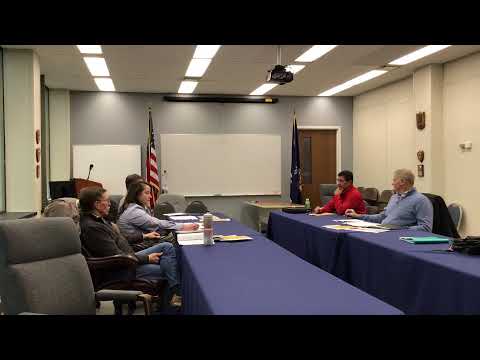
Jamestown commissioners review draft local preservation ordinance; raise questions on consent, costs and staffing
Summary
At a Jamestown Planning Commission meeting, members reviewed a 50-page draft local preservation ordinance (LPO), discussed how it would enable local landmarking and a preservation commission, and raised concerns about property-owner consent, incentives, enforcement capacity and staffing.
Jamestown Planning Commission members discussed a draft local preservation ordinance during a recent meeting, reviewing the ordinance's purpose, how local designation would be created and what impacts it could have on property owners and development.
The draft ordinance is intended to enable local historic designation and create a preservation board or commission; passage of an LPO would also allow Jamestown to pursue certified local government status and access state preservation funds, a staff member said. "The LPO is just the enabling legislation to make anything else related to that on the local level possible," the staff member said.
Commissioners said the draft (described in the meeting as roughly 50 pages) needs clearer language on property-owner consent, incentives for owners to nominate or maintain historic properties, and how the city would staff and enforce any new rules. One commissioner asked whether local nomination would require property-owner consent; staff answered that national designation typically requires owner consent and that the local draft’s consent provisions were not clear in the version they had on hand.
Members raised several recurring concerns: potential effects on commercial development downtown; whether existing national historic districts would automatically become local districts (staff said they would not unless the commission chose to adopt them locally); how a local designation would interact with building-code processes and variance requests; and the upfront and long-term costs for property owners seeking to comply with design standards.
Commission discussion repeatedly stressed incentives and outreach. Commissioners noted that historic tax credits are federal/state programs and are not created by a local ordinance, but an LPO combined with a city-certified local government designation could make state preservation funds and grant programs more accessible and could justify a point person to help property owners access incentives. "If the city became certified...then the city has access to state funds that are allocated every year for historic preservation in certified local government communities," a planning staff member said. Commissioners suggested that a neutral, local point person could help owners understand tax-credit eligibility and variance procedures.
Staff also described the sequence of steps that would follow adoption: establish the ordinance, form a preservation board or commission, and then accept nominations from the community for individual landmarks or local districts. Staff said nominations would be required for local designation unless the newly formed commission voted to adopt existing national listings as local designations.
Several commissioners urged public education and outreach before or alongside legislative action. Commissioners recalled past examples, such as Jamestown’s Local Waterfront Revitalization Program (LWRP), where adoption and practical implementation were separated in time; members said implementation and enforcement can lag after passage unless funding and staffing are assigned. Commissioners expressed concern about current staffing and backlog in code enforcement and suggested the city would likely need grant funding or certification to support any new preservation workload.
There was no formal vote on the ordinance at the meeting. Commissioners agreed to continue working with council staff and to request that the council consider returning the draft to the planning commission for detailed review and public input. The commission chair said she would send an email to commission members and that a joint work session or a housing-committee work session might provide an initial forum for further discussion.
Votes at the meeting were limited to routine business: the commission moved to approve the October meeting minutes; a voice vote in favor was recorded but no roll-call tally was provided in the transcript.
The commission noted an upcoming presentation on a housing assessment at the next meeting and discussed options for a field trip to municipalities with local preservation ordinances to study pros and cons before recommending action.
Ending: Commissioners asked staff to refine the draft’s public-facing explanation of benefits and impacts, clarify whether local designation would require property-owner consent, and prepare information on funding and staffing routes (including certification and grant options) for subsequent meetings.