
District safety staff: social-media threats often false; recommend graded responses, consistent messaging and reporting channels
Get AI-powered insights, summaries, and transcripts
Sign Up Free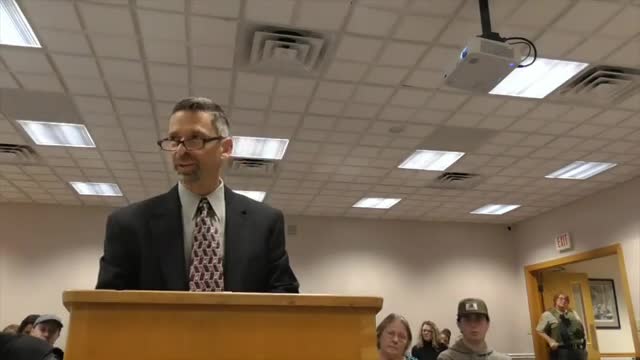
Summary
District safety staff summarized a RAND report and urged graduated responses, consistent messaging and stronger reporting channels to limit disruption from social-media threats to schools.
District safety staff briefed the Franklin County School Board on social-media threats to schools and summarized six key takeaways from a RAND Corporation report funded by the U.S. Department of Homeland Security, urging measured, coordinated responses to reduce needless disruption.
The presenter said the district's single largest challenge is an "unverified social media threat that ends up being nothing," and described a familiar cycle: a post circulates, law enforcement is pulled into multiple inquiries, and schools and families experience a disruptive "game of telephone." The speaker recommended a graduated response that starts with lower-intensity measures such as soft lockdowns and can be scaled up quickly if investigation warrants.
The speaker listed the six RAND recommendations, saying the district already follows many of them: 1) adopt a graduated, law-enforcement-coordinated response to avoid needless full lockdowns; 2) habituate students and staff through drills and routine responses to reduce fear and trauma; 3) establish a strong reporting culture for students, parents and staff and promote anonymous reporting via the Safe TN app; 4) acknowledge there is no single national or statewide standard for these threats and adapt protocols locally; 5) emphasize the potential legal consequences of threat-making to students and families; and 6) share responsibilities between educators and law enforcement during threat investigations.
"One way to strike this balance is to work closely with law enforcement to identify less overt response options that start at a lower intensity and can be scaled up rapidly as a threat investigation proceeds," the presenter said. The speaker also urged consistent social-media messaging across schools and police and recommended preloading social posts and updates that can be edited during an incident to avoid misinformation.
The presenter warned students and families may not appreciate that social platforms monitor and report threats to law enforcement. "Right now, the students are finding out by getting arrested," the speaker said, arguing that clearer communications about consequences could deter false posts. The presenter recommended periodic parent-facing materials explaining how to report threats online, why to "report it, don't repost it," and suggested sharing preparedness videos such as a parent-reunification example from Adams 12 School District.
Why it matters: Unverified online threats can trigger major responses from schools and public safety agencies, producing stress for students and families and drawing scarce emergency resources. District staff told the board that scaling responses, consistent messaging and promoting anonymous reporting can limit unnecessary disruption while preserving safety.
Sources: Presentation by district safety staff citing a RAND Corporation report (funded by the U.S. Department of Homeland Security) and the district's own safety practices as recorded in the Franklin County School Board meeting transcript.