Get Full Government Meeting Transcripts, Videos, & Alerts Forever!
Get email alerts on the Tribal Sovereignty Ukb topic
No spam. Unsubscribe anytime.
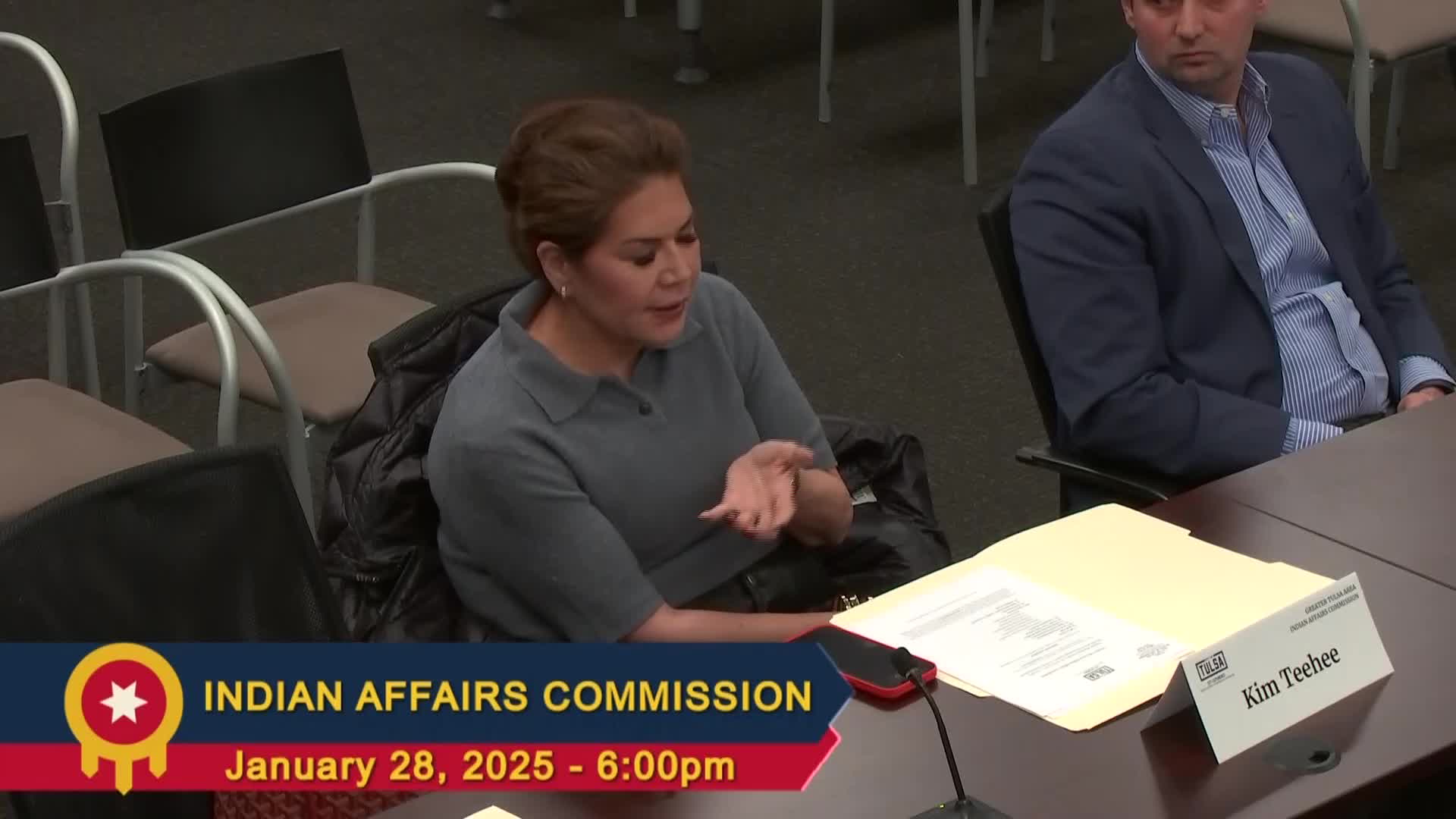
Commissioners raise alarm over Department of the Interior opinion on UKB land-into-trust in Cherokee Nation reservation
Summary
Members of the Greater Tulsa Area Indian Affairs Commission discussed a solicitor opinion issued late by the previous federal administration that the United Keetoowah Band (UKB) may take land into trust and have exclusive jurisdiction for a 76-acre parcel, calling the opinion unprecedented and potentially disruptive to tribal sovereignty.
At the Jan. 28 meeting the commission discussed a recent Department of the Interior solicitor opinion issued near the end of the prior administration that found the United Keetoowah Band (UKB) may have land taken into trust within the Cherokee Nation reservation and asserted exclusive jurisdiction over a roughly 76-acre trust parcel.
Commission members said the opinion was issued without taking account of ongoing federal court cases and congressional actions they consider relevant. They described the solicitor’s view as legally novel and said it could set a precedent that would affect intertribal relations and jurisdictional boundaries if implemented.
The commission noted the opinion applies to the Department of the Interior and that new administrations commonly review and sometimes withdraw opinions issued at the end of a prior administration. Commissioners said the department had not yet implemented the opinion and that tribal governments and advocacy groups are pursuing withdrawal and legal review.
Commissioners described practical implications they have seen in litigation: where a tribe asserts authority without recognized jurisdiction, courts can find arrests or detentions unlawful and that outcome can, in turn, undermine prosecutions. The commission said those legal consequences are part of why it views the solicitor opinion as a threat to sovereignty and stable intertribal jurisdictional arrangements.
Members referenced other regional examples where competing jurisdictional claims produced difficult results and said the issue requires monitoring and coordinated legal response. The commission did not take a formal vote at the meeting but emphasized that it will follow developments and coordinate with tribal legal counsel and elected leaders.