Get Full Government Meeting Transcripts, Videos, & Alerts Forever!
Get email alerts on the Federal Grants topic
No spam. Unsubscribe anytime.
Tulsa tribal commissioners warn federal grants freeze could disrupt services to tribal members
Summary
Commissioners at the Greater Tulsa Area Indian Affairs Commission discussed a recent federal grants freeze and a temporary injunction through Feb. 3, and urged tribal leaders to track evolving guidance from the Office of Management and Budget and federal agencies to avoid service interruptions.
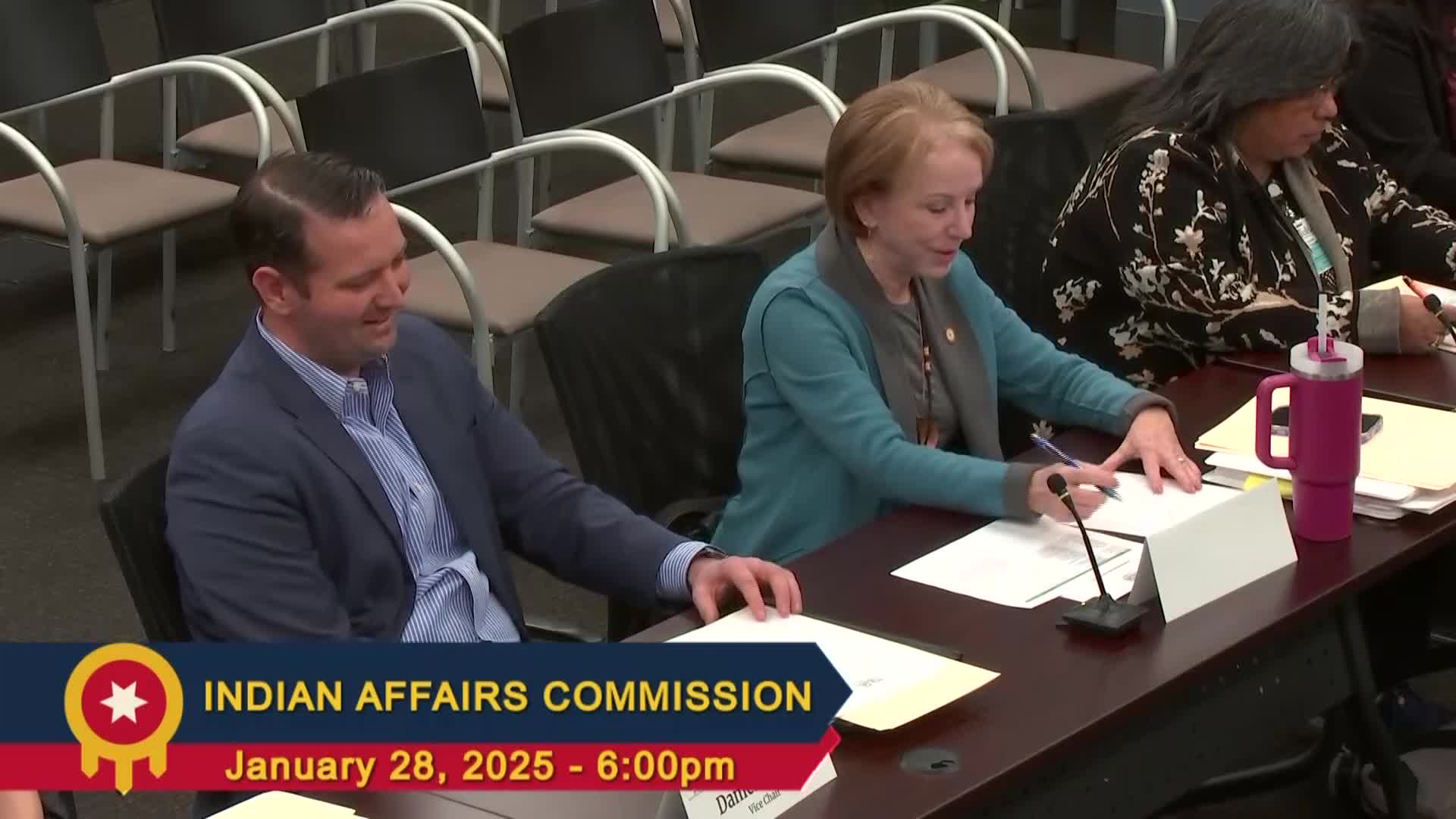
At its Jan. 28 meeting, the Greater Tulsa Area Indian Affairs Commission discussed uncertainty caused by a newly announced federal pause on some grants, noting an emergency court order has temporarily blocked the freeze through Feb. 3.
Commission members said early confusion about the scope of the pause — initially reported as a blanket halt on federal grant drawdowns — has been narrowed by an Office of Management and Budget memo to apply only to programs tied to a set of recent executive orders. Commissioners emphasized that the situation remains fluid and that local tribal programs should plan for continued scrutiny even if direct freezes are avoided.
The commission said elements of tribal funding are treated differently. Self-governance funds and some longstanding compacts appear less likely to be affected, but programs linked to environmental initiatives, renewable energy or other areas called out in the executive orders may face additional review or delays. Members raised particular concern about environmental and renewable-energy grants administered by tribal environmental departments, which could fall under the narrower designation in the OMB guidance.
Commissioners also described operational problems that have already occurred: some agencies’ portals for finalizing award drawdowns were inaccessible for parts of the day, effectively preventing grantees from obtaining funds even where an injunction was in place. That delay, they said, illustrates how administrative steps at grant-making agencies can produce immediate funding disruptions for tribes, non‑profits and local programs.
Commission members reported outreach to federal lawmakers and said they expect local members of Congress are monitoring the issue. The commission urged tribal leaders to stay informed, to document any agency-level denials or misunderstandings, and to notify commission staff so the commission can escalate issues when an agency or program appears to misunderstand tribal eligibility or the legal status of tribal citizens.
The commission also noted a coordinated regional response: a draft educational letter is being prepared for federal officials to explain how tribal programs operate and why certain categories of tribal funding should be preserved or exempted from cuts. The commission said it favored education-first approaches rather than reactive filings, but it did not announce any formal resolution or vote on the matter.
Background: commissioners said a federal judge issued a temporary injunction blocking the administration’s freeze until Feb. 3; on that date the court could lift or extend the injunction. The commission emphasized that the injunction’s temporary nature means tribal leaders should monitor developments closely in the coming days.
The commission closed the discussion by urging members and tribal constituents to flag any on-the-ground problems that appear to stem from agency-level confusion so the commission or tribal attorneys can intervene or provide clarifications.