Get Full Government Meeting Transcripts, Videos, & Alerts Forever!
Get email alerts on the Digital Governance Ai topic
No spam. Unsubscribe anytime.
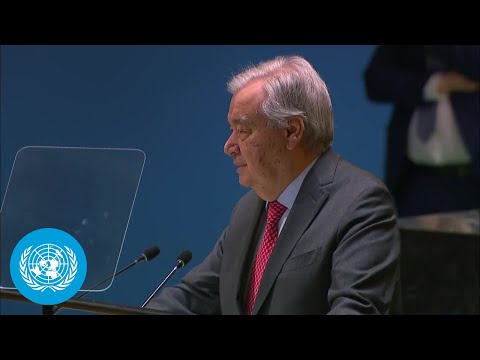
Guterres urges global AI panel, multistakeholder dialogue and new UN digital office
Summary
Secretary‑General António Guterres backed the Global Digital Compact's AI recommendations, asked the General Assembly to start a global dialogue on AI governance, and urged full resourcing for a newly established UN office for digital and emerging technologies to help developing countries use AI for sustainable development.
António Guterres told the General Assembly that the technological revolution offers unprecedented opportunity but requires careful global governance.
Referencing the Global Digital Compact, Guterres said the United Nations must act rapidly and decisively on artificial intelligence in three ways. First, he said “everyone must have equal access to the latest AI knowledge and insights” and called for an independent international scientific panel on AI to bridge knowledge gaps. Second, he urged a global dialogue on AI governance “to protect human rights while promoting innovation,” and said he looks forward to working with Spain and Costa Rica as co‑facilitators to begin that process. Third, he said the UN must support developing countries in leveraging AI for sustainable development and will present a report on voluntary financing models and capacity building to help that effort.
To coordinate UN system action on digital and emerging technologies, Guterres said a new United Nations office for digital and emerging technologies will support member states and existing mechanisms. He thanked the General Assembly for establishing the office and urged member states to “resource it fully.”
Guterres framed these measures as necessary to ensure AI advances benefit broader development goals — reducing poverty, improving health and education, and accelerating scientific discovery — while guarding against harms such as algorithmic bias and data privacy violations.