Get Full Government Meeting Transcripts, Videos, & Alerts Forever!
Get email alerts on the Peace And Conflict topic
No spam. Unsubscribe anytime.
UN chief urges immediate ceasefires, pushes peace and protection agenda across multiple conflicts
Summary
United Nations Secretary‑General António Guterres urged immediate ceasefires and stronger protection for civilians in Gaza and other conflict zones, called for renewed diplomacy in Ukraine and Sudan, and said the UN will prioritize conflict prevention and peacebuilding in 2025.
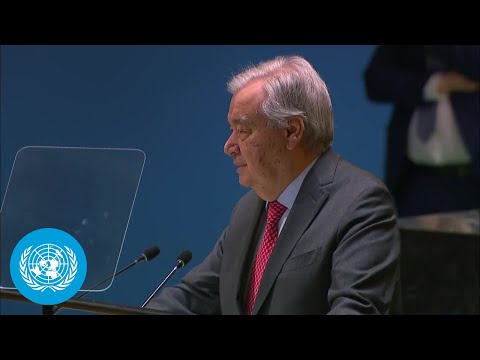
Secretary‑General António Guterres told the United Nations General Assembly that ending active hostilities and protecting civilians will be a top priority for the UN in 2025.
Guterres said negotiators are “in the final stages of a ceasefire and hostage release deal in Gaza,” urged “an immediate ceasefire, the immediate and unconditional release of the hostages,” and called for measures to ensure the delivery of life‑saving aid and protection of civilians. He singled out UNRWA, saying, “I want to once again salute the backbone of humanitarian response, our colleagues in UNRWA.”
The secretary‑general framed those calls as part of a wider push for peace across several regions. He warned that conflicts are “multiplying, becoming messier and deadlier,” and said the nuclear threat is “at its highest in decades.” On Israel and Palestine, Guterres asked whether the region will move toward a two‑state solution “in line with UN resolutions, international law, and previous agreements” or toward “steady annexation by Israel and the denial of the Palestinian people's rights and dignity.”
Guterres also addressed other active theatres. He said the war in Ukraine requires “no effort for a just, lasting, and comprehensive peace in line with [the] UN Charter, international law, and the General Assembly resolutions.” He described Sudan as producing “widespread bloodshed, the world's largest displacement, and famine,” and said the UN is engaging parties to protect civilians and de‑escalate the conflict. He described ongoing work with partners in the Sahel to address terrorism and violent extremism, noted that armed gangs continue to destabilize Haiti, and listed Myanmar, the Democratic Republic of the Congo and Yemen among other countries where the UN must keep working for peace.
The secretary‑general said the Pact for the Future will guide the UN’s 2025 priorities on conflict prevention, mediation, peacebuilding and peacekeeping, and on increasing the meaningful inclusion of women in political and peace processes. He also urged agreements on nuclear disarmament, stronger strategies to prevent chemical and biological weapons use, and rules to prevent an arms race in outer space and on lethal autonomous weapons.
Guterres said he will visit Lebanon “in a visit of solidarity with the Lebanese people and our peacekeeping forces” and described supporting Lebanese and Israeli security as a priority that could help the region flourish.
The address combined immediate appeals to halt violence with longer‑term proposals to strengthen mediation, peacekeeping and international legal norms, which the secretary‑general presented as central to the United Nations' purpose.