Get Full Government Meeting Transcripts, Videos, & Alerts Forever!
Get email alerts on the Prison Emessaging topic
No spam. Unsubscribe anytime.
Hundreds of callers urge lawmakers not to cut free prison e‑messaging from budget
Summary
Advocates, formerly incarcerated people, correctional staff and family members told the Appropriations Committee that removing subsidized e‑messaging and tablet services would isolate people in custody, harm children and families, and undercut rehabilitation and reentry.
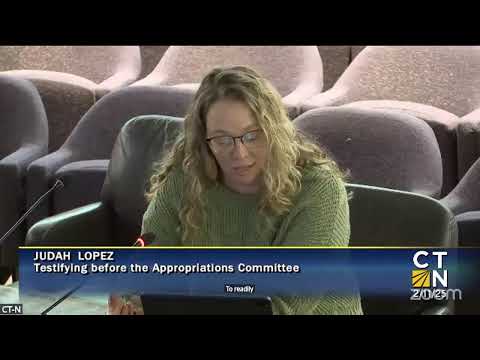
Speakers at the Appropriations Committee public hearing mounted a sustained and emotional opposition to a line in the governor’s proposed FY26–27 budget that would eliminate state support for free electronic messaging and subsidized tablets for people in Connecticut prisons.
Formerly incarcerated witnesses, family members and correctional staff described how e‑messaging shortens geographic and scheduling barriers, helps children maintain contact with parents, supports reentry planning and — in several witnesses’ accounts — reduces violence and the risk of recidivism.
"Texting is everything," said Jeffrey Perry, a formerly incarcerated man who testified he saw e‑messaging become a “connection for individuals to be able to…be connected with their families.” He said telephone calls are not an adequate substitute because younger family members and children rely on text communication.
Why it matters: Many witnesses argued that the state’s proposed savings would amount to a cut to rehabilitation and public safety. Several speakers also criticized the role of private telecom vendors and urged the state either to negotiate lower fees or to provide an in‑house solution rather than shifting costs onto low‑income families.
Key testimony and examples
- Family members and former inmates gave consistent accounts that e‑messaging is a lifeline for children and caregivers who cannot travel for in‑person visits. Tracy Bernardi Guzman, a reentry case manager and Smart Justice leader, told the committee her mother paid “hundreds of thousands of dollars” to maintain contact before free messaging was adopted and urged lawmakers not to reverse that progress.
- A number of DOC clinicians and advocates said e‑messaging has mental‑health benefits. Christina Welty Lake, a licensed clinical social worker, said isolation can worsen psychiatric symptoms and said removing messaging would exacerbate crises that already strain staff.
- Several witnesses criticized the private vendor model. Anna Van Cleave, associate professor and director of the Criminal Defense Clinic at UConn School of Law, said the contracted vendor (named in testimony as JPay) and its private equity ownership set prices that bear little relation to delivery costs and that tablets and messaging should not be monetized.
- Lived‑experience witnesses said free e‑messaging supported reentry planning: James Pender, released in November after 30 years, said free messages allowed him to coordinate employment, housing and phone service ahead of release.
Representative testimony quotes
- Jeffrey Perry (formerly incarcerated): “You know, we have telephones. Everybody understands. Yeah. We have a phone. But texting is everything.”
- Anna Van Cleave (UConn School of Law): “Communication with the outside world should be the last thing that a state prison system monetizes.”
- Tracy Bernardi Guzman (Smart Justice leader, reentry case manager): “E messaging has provided the perfect way for people that are incarcerated today to stay in touch with their families…This connection is a lifeline.”
Discussion vs. formal action
This hearing functioned as public comment on the governor’s budget; no committee vote was taken. Witnesses urged the Appropriations Committee to retain subsidized e‑messaging in the final budget or to require the vendor to provide free messaging if the state is to keep a contracted service.
Clarifying details drawn from testimony
- Several witnesses said the state currently provides a limited number of free messages or subsidized tablet features; one witness described the current allotment as “10 messages” in the context of restrictive housing, though implementation and daily availability vary by facility. - Anna Van Cleave cited a 2023 Prison Policy Initiative survey (cited in testimony) describing national average prices of roughly $0.27–$0.30 per message in other jurisdictions; she urged the state to avoid passing similar costs to families.
Speakers (selected)
Donna Rescisco — former ESPN executive and family member, testified about the burden of charging families for messages Jeffrey Perry — formerly incarcerated, testified about the role of e‑messaging in rehabilitation and family contact Tracy Bernardi Guzman — Smart Justice leader, reentry case manager, testified about family cost burdens and children’s need to text Barbara Fair — director, Stop Solitary CT, opposed cuts and linked messaging to mental health Anna Van Cleave — associate professor, UConn School of Law, spoke about privatized vendor pricing and the Prison Policy Initiative findings Herbert Boyd — volunteer and person in long‑term recovery, testified in favor of retaining free messaging James Pender — recently released, said free messaging helped him prepare for reentry Alyssa Hughes, Christina Capitan, Jacqueline Barnes, and many family members and advocates also testified against the cut
Proper names and authorities referenced
- other: Governor Lamont FY26–FY27 biennial budget proposal (referenced by many witnesses) - statute: PROTECT Act (referenced in testimony as an existing law related to restrictive housing and communications enforcement) - other: Prison Policy Initiative 2023 survey (referenced by Anna Van Cleave in testimony about messaging prices)
Proper names (from transcript)
[{"name":"JPay","type":"business"},{"name":"Securus","type":"business"},{"name":"Department of Correction","type":"agency"},{"name":"Governor Lamont","type":"person"}]
Ending
Witnesses urged lawmakers to preserve subsidized e‑messaging, to renegotiate vendor contracts or to develop a state‑run alternative; the Appropriations Committee did not act at the hearing. The budget decision remains pending as the legislature considers the governor’s biennial proposal.