Get Full Government Meeting Transcripts, Videos, & Alerts Forever!
Get email alerts on the Eminent Domain Energy Collector Systems topic
No spam. Unsubscribe anytime.
Committee passes bill adding limits on eminent domain for energy collector systems with 66% agreement threshold
Summary
The committee voted unanimously to advance Senate File 181, which establishes conditions and sideboards for using eminent domain to acquire rights for energy collection systems, including a requirement that land‑use and compensation agreements cover at least 66% of affected land or landowners before condemnation can proceed.
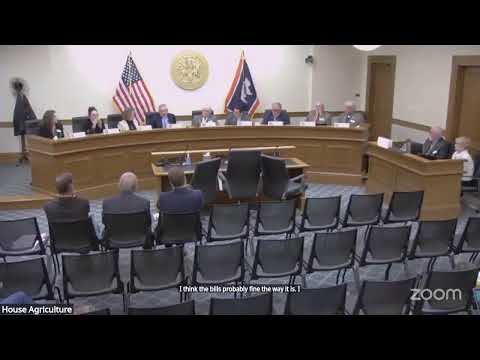
Cheyenne — The Agriculture, State & Public Lands & Water Resources Committee voted unanimously, 9–0, to pass Senate File 181, a bill that places new conditions on condemnation for energy collector systems while preserving a path to use eminent domain in defined circumstances.
Senator Barry Craigo, sponsor, described the proposal as a compromise protecting private property rights without banning eminent domain entirely. “This is a private property rights bill,” Craigo said, noting the bill creates “sideboards” — including a requirement that either agreements cover at least 66% of the land area affected or at least 66% of the landowners (if three or more owners are involved) before a collector‑system condemner may file a condemnation action.
The bill contains several provisions laid out for committee review: a cross‑reference to existing eminent domain statutes, a requirement that compensation include improvements to property when calculating fair market value, protections for preexisting easements (to prevent converting an easement granted for one purpose into an easement for a transmission line without meeting the bill’s new requirements), and a clause requiring easements to specify liability and reclamation responsibilities. Senator Craigo also explained the bill includes a grandfathering carve‑out for facilities that were exporting energy from Wyoming prior to the bill’s effective date.
Representatives and witnesses discussed several elements during public comment. Connor Nicholas of Bud Fallon Law Offices, representing landowners, said his clients supported the 66% threshold and favored notice to counties so local officials could consider zoning and health, safety and welfare implications. Jim Maggagna of the Wyoming Stock Growers Association recounted the bill’s lineage to earlier interim work and said the measure strikes a balance between private property rights and preventing one landowner from holding up projects that other landowners want.
Cindy Delancey, a Cheyenne lawyer who represents industry clients on these matters, urged technical revisions for statutory consistency and questioned whether the bill is addressing a widely documented abuse of eminent domain: she noted that Wyoming has extensive energy infrastructure and that cases invoking eminent domain are rare. Delancey suggested aligning the bill’s language on public use/public interest and necessity with existing statute and expressed concerns that subsection D’s compensation language might legislate a floor price rather than allow appraisers and evidence to determine fair market value.
Supporters said the 66% threshold reflects committee interim work and is intended to prevent single holdouts from blocking projects while still allowing projects where the majority of affected owners agree. Opponents focused on drafting details and urged clarifying conforming edits rather than wholesale rejection. The committee moved the bill forward without amendment; the final roll call vote was 9–0 (Ayes: Banks, Davis, Eklund, Johnson, Otman, Provenza, Schmidt, Strauch, Chairman Winter).