Get Full Government Meeting Transcripts, Videos, & Alerts Forever!
Get email alerts on the Service Animals In Training topic
No spam. Unsubscribe anytime.
Wyoming committee advances bill to extend protections to service dogs in training, raises penalties for injuring them
Summary
The Agriculture, State & Public Lands & Water Resources Committee voted to advance Senate File 147, which would classify animals being trained as service or assistance animals, increase penalties for injuring or killing a service animal and make the bill effective immediately.
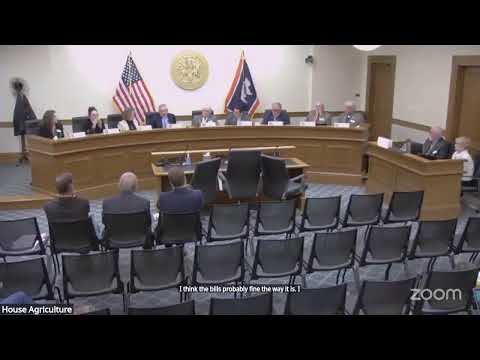
Cheyenne — The Agriculture, State & Public Lands & Water Resources Committee voted 8–1 to advance Senate File 147 on a voice and roll-call combination vote after debate over penalty levels and prosecutorial concerns.
Senator Lynn Hutchings, sponsor of the bill, told the committee the measure “specifying that the rights and obligations applicable to service and assistance animals apply to service and assistance animals that are being trained,” and would increase the penalty for injuring or killing a service animal. Hutchings said Wyoming statutes on the subject “have not been updated since 1977.”
The bill would add language to existing law to treat animals that “are being trained to work, provide assistance, or perform tasks for the benefit of a person with a disability” the same as fully placed service animals. Hutchings and multiple witnesses cited the Americans with Disabilities Act and its implementing regulation (CFR 36.104) as the model for the statutory language.
Michelle Warner, co‑founder and chief executive officer of Canines for Mobility in Cheyenne, testified the organization has placed dozens of service dogs and is accredited by Assistance Dogs International. Warner told the committee trainers do not bring very young puppies into public; she said dogs typically go into public training at about 5 to 6 months after housebreaking and vaccinations. “We do not take our dogs out in training until they are housebroken and have had all of their shots,” Warner said.
Adrienne Unerdle, a resident of Evanston who lives with multiple sclerosis and testified virtually, said she supports the bill because it would allow people who train their own service dogs to do so closer to home. Unerdle told the committee she must travel long distances to train a dog outside Wyoming and said service dogs function as “a medical device” and “our lifeline.”
Committee members questioned whether raising the penalty to a felony would make prosecutors less willing to file charges. Representative Mark Provenza asked whether local prosecutors had declined to bring misdemeanor charges in the past; Warner replied that “local authorities have been unwilling to press charges,” and that incidents involving trainers’ dogs being baited or nipped were common enough to affect dogs’ confidence. Provenza argued that a stiffer penalty could discourage prosecutions. Hutchings said she was seeking a stronger deterrent and noted the existing misdemeanor penalty (six months and a smaller fine) had not been updated in decades.
Representative Johnson and others suggested crafting graduated penalties or reserving felony-level penalties for repeat offenses; Hutchings and others agreed to continue work on the penalty language if the committee advanced the bill. Representative Johnson moved and the committee approved making the bill effective immediately; Representative Banks seconded the motion. On the final roll call for passage out of committee, the tally was: Banks — Aye; Davis — Aye; Eklund — Aye; Johnson — Aye; Otman — Aye; Provenza — Aye; Schmidt — Aye; Strauch — Aye; Chairman Winter — No. The committee announced the bill would advance with the amendment in place.
Amendment activity: Representative Provenza moved to strike the enhanced penalty language (removing the amended sentence that increased jail time and fines). The amendment was seconded and failed on a 4–4 recorded hand vote. Committee discussion reflected a split between members who wanted stronger deterrence and members worried about prosecutorial reluctance to pursue felony charges.
The committee record shows witnesses and members requested additional follow‑up about comparative penalties in other states and whether restitution mechanisms could better compensate handlers; Senator Hutchings and proponents offered to work with members between readings.
If enacted, the bill would add “service animals in training” to Wyoming statutory protections and raise the criminal penalty for knowingly injuring or killing a service dog; the bill text as presented raises the possible fine up to $5,000 and extends potential jail time beyond the existing six‑month misdemeanor range. The bill’s proponents also noted the cost to replace or retrain a working dog can exceed $20,000–$25,000, though the legislation as written does not direct penalty revenues to handlers.
Votes at a glance
- Motion to move SF 147 forward: moved and seconded; advanced to committee consideration. - Amendment to strike enhanced penalty language: moved by Representative Provenza, seconded; failed on a 4–4 recorded hand vote. - Motion to make bill effective immediately: moved by Representative Johnson, seconded by Representative Banks; passed. - Final committee vote on SF 147 (with amendment and immediate effect): 8–1 (Ayes: Banks, Davis, Eklund, Johnson, Otman, Provenza, Schmidt, Strauch; No: Chairman Winter).