Get Full Government Meeting Transcripts, Videos, & Alerts Forever!
Get email alerts on the Administrative Citations topic
No spam. Unsubscribe anytime.
Saint Paul council adopts charter change to allow administrative citations, creates advisory committee to guide equity
Summary
The City Council voted unanimously to adopt a charter amendment allowing administrative citations and approved a one‑year legislative advisory committee to advise on equitable implementation and fines-and-fees frameworks.
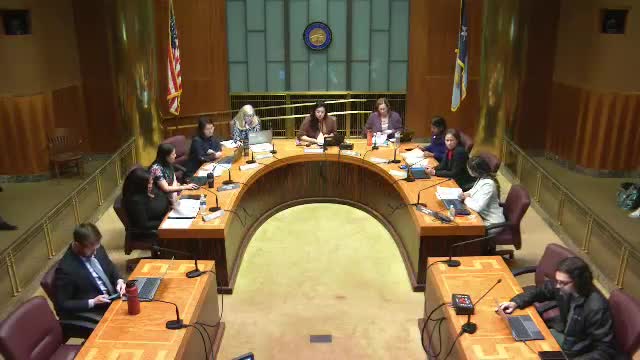
The Saint Paul City Council on Jan. 22 adopted a charter amendment to enable administrative citations for violations of city ordinances and approved a companion resolution creating a short‑term legislative advisory committee to advise on equitable implementation.
Councilmembers said the changes aim to provide enforcement tools short of criminal prosecution while centering equity. Councilmember Buie described the resolution as “a commitment from council to establish a legislative advisory committee” and said members will include labor and reparations‑commission representation as well as city staff.
The council suspended rules and approved the resolution establishing the committee by unanimous voice vote, then took a roll call to adopt the charter amendment (ordinance 25‑2). The roll call on the ordinance showed seven votes in favor, none opposed.
Proponents said the advisory committee will be time‑limited and task‑focused. Councilmember Yang said she supported the resolution and stressed the need for clear timelines and that the committee be “goal oriented” and not permanent. Councilmember Johnson said the committee provides an opportunity to center equity “in everything we do, including how we make policy.”
Councilmembers and staff said the council will follow the charter change with ordinance‑level work to set fine structures, ability‑to‑pay measures and appeals processes. Councilmember Naker said the advisory committee should work in parallel with ordinance drafting so rulemaking and adoption proceed without unnecessary delay. Buie said the committee will have a one‑year term and a clear, limited task to advise the council as it writes implementing ordinances.
The record includes an excerpt read into the record from Kevin Reese, identified as a partner on past fines‑and‑fees work, who said Saint Paul has “some of the most progressive policies in the country” but that “they often look better on paper than in practice.” Buie said the advisory committee is intended to help ensure policy is “progressive in action as well as intent.”
Next steps described by councilmembers include rulemaking by staff with additional public input and subsequent ordinance drafting to set the specific administrative citation fines, appeals and operational details.
Actions: The council adopted the companion resolution establishing the legislative advisory committee and adopted ordinance 25‑2 (charter amendment) by unanimous votes.
Ending: With the charter change now in the city charter and the advisory committee approved, councilmembers said staff will return with draft ordinances and rulemaking for public review and committee input.