Get Full Government Meeting Transcripts, Videos, & Alerts Forever!
Get email alerts on the Constable Salary Grievances topic
No spam. Unsubscribe anytime.
Salary grievance panel recommends county review after constables say they were excluded from pay chart
Summary
A Williamson County salary grievance committee voted to recommend that the commissioners court consider higher pay for three county constables after the officers and public speakers said the elected constables were excluded from a law-enforcement pay chart, producing pay compression where subordinates earn more than chiefs.
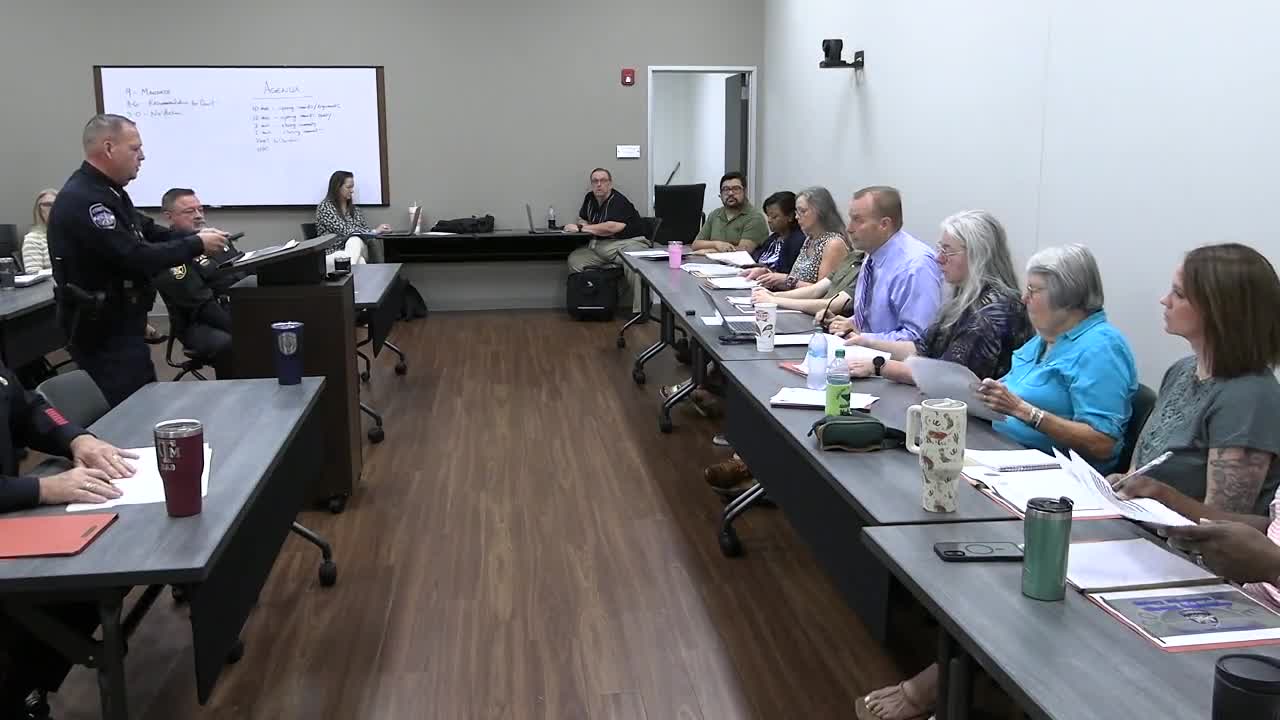
A nine-member salary grievance committee on Aug. 8 recommended that the Williamson County Commissioners Court consider raising pay for three elected constables after the officers and several public speakers said the constables had been excluded from the county’s law-enforcement pay chart, producing a pay gap in which some subordinate officers earn more than their elected chiefs.
The recommendation follows public comments from residents and business owners and presentations by the three constables — Paul Leal (Constable, Precinct 4), Kevin Wilkie (Constable, Precinct 3) and Jeff Anderson (Constable, Precinct 2) — who asked the committee to direct the commissioners court to raise each constable’s salary above their highest-paid deputy. The committee’s votes on the three separate grievances were 6–3, 7–2 and 7–2 in favor of recommending adjustments; the recommendations will be forwarded to the commissioners court, which makes final budget and salary decisions.
Why it matters: The constables said the county’s “L-chart” for law-enforcement pay created large disparities because deputies and sergeants on that chart received scheduled steps and increases while the elected constables were left on a separate pay schedule. Public speakers and the constables said the gap undermines leadership, risks retention and treats elected law officers differently despite their continuing law-enforcement duties.
Leaders, public comment and staff response
Lee Bingham, a Georgetown business owner, told the panel: “These guys are worth their money in gold. They need to be on the scale.” Keith Hagler, a Taylor business owner, said: “They’re elected officials, but they’re also law officers and they also carry badges and they carry guns and they’re… at risk every day.” Both urged the committee to correct what they called an oversight when the L-chart was adopted.
Constable Paul Leal summarized the officers’ position, telling the panel: “We are licensed peace officers. We all hold a master peace officer’s license.” He said constables assume hiring, firing and personal liability for civil writs and asked the committee to recommend a modest adjustment “to pay us 2% above our chief deputy.” Constable Kevin Wilkie described the office as a “24-hour job” and asked the committee to consider parity with the deputies. Constable Jeff Anderson cited his 37 years in law enforcement and asked for recognition of the constables’ dual role as elected officials and police leaders.
County staff and an elected commissioner described the county’s pay-setting process and the reasons for the current charts. Rebecca Clemons, the county manager, said the county used a peer group of eight counties to set elected-official pay and that law-enforcement employees are set under a separate L-chart that uses local city markets to retain deputies. “We take the median of those salaries,” Clemons said of the peer comparison process, and she noted the county adopted a three-year cycle to review salaries with employees reviewed before elected officials. Commissioner Cynthia Long emphasized that the commissioner's court — not the grievance committee — has sole authority to set the budget and salaries and urged the committee to weigh the county’s established review schedule.
Panel action and next steps
The committee’s role is advisory. For each of the three constable grievances the committee recorded a recommendation to the commissioners court (agenda item 1: Precinct 4 — recommendation 6–3; agenda item 2: Precinct 3 — recommendation 7–2; agenda item 3: Precinct 2 — recommendation 7–2). The committee will send formal letters to the commissioners court asking that each grievance be considered during final budget deliberations.
County staff estimated the immediate additional annual cost to county taxpayers for the three constables’ requested increases at about $105,000; the county’s recommendation was to approve a 2% increase already in the proposed budget in lieu of the larger adjustments the constables requested. The commissioners court will make the final decision at its regular meeting.
Context and unresolved issues
The dispute centers on a policy choice made earlier this year to target retention of rank-and-file deputies by benchmarking the L-chart to surrounding cities. That change increased pay for deputies and chief deputies and, county staff said, unintentionally widened the gap between those employees and some elected constables. County staff told the committee the constables’ offices will be included in next year’s cycle of elected-official salary reviews. The constables contend a delay would continue the current compression and asked the panel to press the commissioners court for action sooner.
The committee’s recommendation does not itself change pay. Final authority rests with the Williamson County Commissioners Court.