
Rochester City School District outlines expanded Summer 2025 programs to accelerate learning and support students with disabilities
Get AI-powered insights, summaries, and transcripts
Sign Up Free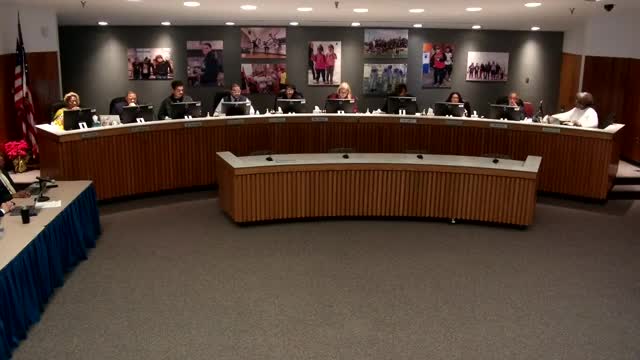
Summary
At an Jan. 14 committee meeting, district directors presented a Summer 2025 plan that includes 21 programs, targeted Tier 3 literacy support for students two grades below proficiency, paid internships for off-track high schoolers, and expanded Extended School Year services for students with significant disabilities.
Rochester City School District officials presented a Summer 2025 proposal on Jan. 14 focused on accelerating learning, expanding career and technical education (CTE) exposure and strengthening Extended School Year (ESY) services for students with severe disabilities.
The proposal, presented to the Equity and Student Achievement (ESA) committee by Director Alicia Thomas, Director of Expanded Learning, and Melissa Pittman, Director of Special Education, would fund more than 21 summer programs, add targeted literacy interventions and continue multi-year program development to improve outcomes for students off track academically.
District leaders described the plan as aligned with the RCSD strategic plan and said it prioritizes students in grades 3–8 and high schoolers who are off track. "Our mission is activating those dreams and unlocking potential," Director Thomas said, explaining summer programming aims to provide culturally relevant instruction, internships and safe, nurturing sites.
Why it matters: the plan targets multiple groups the district cited as high priority — students two grades below proficiency who need intensive literacy support, ninth-graders who are off track for credits, English learners and students with significant disabilities who qualify for ESY. District presenters said summer work is intended both to prevent learning loss and to accelerate students' progress.
Key program elements and numbers presented
- Program portfolio: The district outlined more than 21 program offerings, including Rock Explorers (K–5), Rock Star Readers (a targeted Tier 3 literacy intervention), Rock On and Rockmore Academy internships for older students, CTE-linked experiences and a Summer Language Academy for multilingual learners. - Rock Star Readers: Director Thomas described this as a "highly intensive 90-minute session" intended to serve about 200 students performing two grade levels below proficiency, combining 45 minutes of reading and 45 minutes of writing with certified reading teachers. - Rockmore Academy internships: A six-week program pairing academics with paid internships for students (noted for grades 9–10 who are off track); the model combines morning or afternoon academics with real-world paid work experience for roughly half each day. - ESY counts and participation: Director Pittman said ESY served 534 eligible students, of whom 417 participated in the most recent reporting year. Pittman described progress monitoring procedures and reported an increase in attendance among eligible students after outreach, from 77% in year 1 to 87% in year 2. - Assessments and data systems: District staff said they use pre- and post-assessments and other diagnostics (including i-Ready) and moved progress monitoring for IEP goals into the Frontline system to make data accessible to schools, principals, related-service providers and families.
Funding, attendance and staffing concerns discussed
District leaders described summer program costs and funding sources during board questions. Superintendent and Directors said the summer learning program had a $4.5 million budget in a recent year; when ESY (Extended School Year) services are included, the total district summer expenditures approached $6.6 million, driven in part by required services tied to IEPs. Director Thomas noted projected program costs are estimates that can be adjusted by a staff-reduction policy when enrollments are lower than projected.
Board members raised concerns about cost-effectiveness, attendance and transportation. Commissioner Griffin asked whether programs would be filled and how under-enrollment would be handled; Thomas said the district uses early registration and waiting lists and would adjust staffing based on enrollment. On transportation, Thomas said she is coordinating with the transportation department to ensure students are in PowerSchool and that routes and drivers will be arranged ahead of the summer.
Special-education program details
Director Pittman described ESY as services for students with the most significant disabilities when data show regression over extended breaks. She said services are determined through IEP progress monitoring and aligned with NYSED practice that students who require the equivalent of 20–40 school days to recover progress should receive ESY. Pittman described ESY as including habilitation and daily living supports, mobility and communication services, and said the district moved from paper monitoring to Frontline to track goals and provide parent reports.
Career and technical education and credentials
Board members asked about CTE outcomes and credentialing. Director Thomas said middle school CTE exposure is primarily awareness-focused and not credit-bearing, while high school CTE pathways could include high school credits and partnerships with community colleges to pursue college credit. The district also noted that hours earned toward Career Development and Occupational Studies (CDOS) credentials accumulate during summer CTE experiences.
Questions the board requested follow-up on
Board members requested follow-up data and clarity on: cost-per-student estimates tied to projected enrollments; transportation plans and driver hiring; confirmation of community partners for esports and other enrichment providers; and continuing evaluation at the end of the district's three-year program cycle to decide whether to revise or replace programs.
Ending and next steps
Directors Thomas and Pittman closed by asking for board support and said detailed documents are posted on BoardDocs. Board members noted the district will continue to monitor registration, attendance and assessment data and return with follow-up information requested during questioning.