
Matanuska-Susitna Planning Board approves two preliminary plats; staff says CCR disputes are civil matters
Get AI-powered insights, summaries, and transcripts
Sign Up Free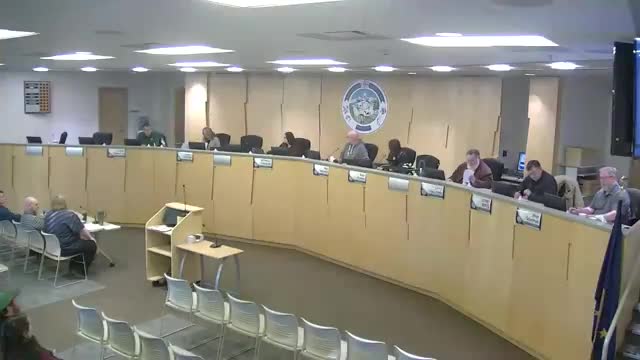
Summary
The borough planning board granted preliminary approval to the Camelot subdivision (9 lots) and a second plat (7 lots) after staff reports found each met borough subdivision standards; planning staff told residents that covenants, conditions and restrictions are private civil matters the borough will not enforce.
At its Jan. 2 meeting, the Matanuska-Susitna Borough Planning Board granted preliminary approval to two residential subdivisions after staff found both plats met borough and state subdivision requirements.
Planning staff recommended approval of the proposed Camelot subdivision, which would create nine lots on about 9.96 acres inside the City of Houston limits, and a second preliminary plat (recorded in the meeting transcript as Alhutten / “Out Hunting”) that would create seven lots on about 10.29 acres. Both approvals were contingent on staff recommendations and findings of fact.
Matthew Goddard, a borough planning technician, summarized the Camelot proposal for the board, saying, “the proposed Camelot subdivision will create 9 lots varying in sizes from 0.92 acres up to 1.13 acres” and that the petitioner had submitted a geotechnical report and traffic estimate. Goddard told the board the lots meet the borough’s minimum usable building-area and septic-area standards and that the proposed internal road does not appear to encroach on a mapped special flood hazard area, but that any work that would enter the floodplain would require additional permitting under MSB 17.29.
Josh Kraft, managing partner of Crafty Enterprises and the petitioner’s representative for Camelot, introduced himself and offered to answer questions. There were no public comments on Camelot; the board approved the preliminary plat by unanimous consent, contingent on the staff recommendations.
The second case drew public comment from nearby property owners who said recorded covenants, conditions and restrictions (CCRs) in their subdivision prohibit resubdivision and that the proposed plat would place multiple new driveways and lots adjacent to their property. One commenter, Nick Agstel, said the CCRs “clearly state that no lot shall be resubdivided, split, or broken up … so I don't understand how they would be allowed to do that.” He also expressed concern about proximity of a proposed lot to a recently drilled well and potential impacts on water.
Craig Hanson, a surveyor representing the petitioner for the second plat, told the board he had not seen a copy of the CCRs and noted the action before the board was a preliminary approval that advances the plat through the borough’s subdivision process. Planning officer Fred Wagner addressed the public’s questions about CCRs directly: “CCRs are not something… it’s a civil matter. It’s between two private entities,” Wagner said, explaining that the borough’s role is to determine whether a plat meets subdivision requirements in borough code and state statute, not to interpret or enforce private covenants.
Wagner also told residents that borough code focuses on verifying legal and physical access, adequate septic area, and other development standards, but does not require a lot to have an on-site water supply. “Our code doesn't contemplate water,” Wagner said; he said alternative water solutions (for example, hauled water) are used in some valley lots.
Staff reports for the second plat indicated the proposed lots have sufficient usable building and septic area, that legal and physical access exist, and that federal and borough agencies raised no objections at the time of the reports. The board approved the second preliminary plat contingent on staff recommendations and findings of fact; the petitioner may proceed with final platting steps subject to those conditions.
Votes at a glance: - Camelot preliminary plat (Section 27, T18N R3W, Seward Meridian): motion to approve preliminary plat contingent on staff recommendations — approved by unanimous consent. (Petitioner representative: Josh Kraft / Crafty Enterprises; staff: Matthew Goddard.) - Alhutten / Out Hunting preliminary plat (Section 6 / Section 28 references in the record; T17N R1W/R2W Seward Meridian): motion to approve preliminary plat contingent on staff recommendations and findings — motion moved by Mister Burts and seconded; approved by unanimous consent. (Petitioner representative: Craig Hanson; staff: report by borough planning staff.)
What this means: Both preliminary plats advanced after staff concluded each met the applicable subdivision standards in Alaska statutes and borough code; public objections about private CCRs and well siting were recorded at the meeting but the planning board and staff said enforcement or interpretation of CCRs is a private/civil matter for property owners to pursue. The approvals are preliminary; applicants must satisfy the staff conditions and any required permits before final plat recordation.
Planning staff noted there are no borough objections from the agencies listed in the staff reports and that public notices for the hearings were mailed (21 notices for Camelot; 73 notices for the second plat). The board also elected officers for 2025 at the start of the meeting and discussed scheduling election of a vice chair at the board’s Feb. 6 meeting.