Get Full Government Meeting Transcripts, Videos, & Alerts Forever!
Get email alerts on the Volunteer Firefighter Training topic
No spam. Unsubscribe anytime.
Subcommittee debates easing volunteer firefighter training rules to restore incentive pay participation
Summary
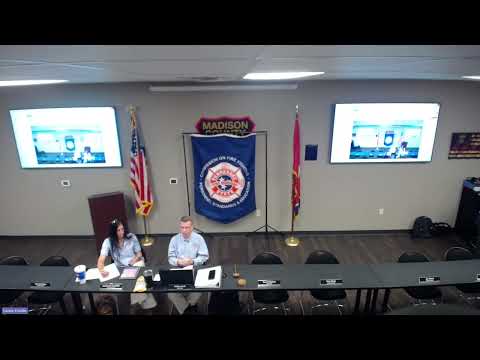
A volunteer subcommittee of the state certifying commission met at the Madison County Fire Department to discuss changes to the Volunteer Incentive Program after three years of declining participation among volunteer firefighters.
A volunteer subcommittee of the state certifying commission met at the Madison County Fire Department to discuss changes to the Volunteer Incentive Program after three years of declining participation among volunteer firefighters.
The discussion focused on how to make the program achievable for small volunteer departments and retain volunteers who are unable or unwilling to complete interior firefighting credentials such as the traditional 16‑hour rapid-entry course and the 64‑hour live‑fire course. Subcommittee members and attendees debated accepting documented department training in lieu of preapproved curriculum, creating a distinct Tennessee volunteer firefighter certificate, removing a cap on hazardous‑materials hours that could count toward the program and using waivers or phased compliance to avoid immediate loss of incentive pay.
Commission members leading the meeting said falling counts in the incentive program prompted the subcommittee. “We wanna really just dive into what things that we knew were coming, but how can we make this better for volunteers,” said a commission member who opened the session. Attendees repeatedly described time constraints at small volunteer departments, limited access to certified instructors and scheduling conflicts that make it difficult for volunteers who work full‑time outside the fire service to meet current paperwork and credentialing deadlines.
Program rules discussed at length include the annual 30 hours of training required to receive incentive pay, a 36‑month window described in current implementation, and the requirement that volunteers meet minimum firefighting training standards set by state law. A staff member read aloud language from state code during the meeting: “Any full time, part time, or volunteer firefighter … must complete a minimum of 16 hours of critical training … and within 36 months after hire or acceptance … complete [a live‑fire course offered by the Fire Services Academy],” language the group said imposes limits that are difficult to meet in some rural or small departments.
Attendees proposed several concrete changes to reduce barriers while keeping a baseline of training. Common proposals were: - Accepting documented, department‑level training for the calendar year without requiring each lesson or curriculum to be preapproved by the commission; - Creating a Tennessee volunteer firefighter certificate to acknowledge that a volunteer has met the state’s minimum training path without tying continued eligibility for incentive pay to obtaining Firefighter I credentialing at a fixed five‑year mark; - Removing the previous cap on how many hazardous‑materials hours could be applied, so departments could count a larger block of operational hazmat training where appropriate; - Allowing up to 20 of the 30 annual hours to be completed online for volunteers, a higher online‑credit share than for career personnel; and - Using waivers or phased timelines to give departments more time to meet live‑fire or Firefighter I expectations while preserving incentive eligibility.
Several volunteer training officers urged the commission to provide a ready‑made 30‑hour curriculum (slides, outlines and test material) that very small departments could adopt rather than build from scratch. One speaker suggested that a centrally produced, prepackaged class would allow departments with five or fewer members to follow the same syllabus and submit documentation more easily.
Speakers noted administrative friction in rulemaking and communication. Subcommittee members said they filed comprehensive rule changes last year that touched multiple chapters of the commission’s rules and that the administrative process—review by the secretary of state and other offices—has been slower than typical. Staff said a running list of needed fixes is being maintained and that work on waivers and website updates is underway.
The group discussed how to treat volunteers who perform non‑interior roles (drivers, pump operators, lookouts) and older volunteers who cannot safely participate in live burns. Some attendees asked for explicit recognition of support‑role training paths (driver training, rural water shuttle, pump operator) that would let those volunteers count toward incentive hours without completing interior live‑fire evolutions.
Legal staff present cautioned that any change must comply with the existing statutory provisions the commission is required to follow. Subcommittee members said they would explore options that preserve statutory minimums but allow department‑level flexibility where the law permits, including seeking targeted waivers and drafting rule amendments to clarify how the program applies from the date a volunteer first receives incentive pay.
Next steps recorded during the meeting included staff researching whether a statutory or rule waiver could be issued quickly to address immediate eligibility questions, continuing development of a public landing page and training resources on the commission website, and drafting proposed rule language to present to the full commission. The subcommittee closed after roughly 75–80 minutes of discussion and agreed to continue work on templates, communication materials and proposed rule text.