Get Full Government Meeting Transcripts, Videos, & Alerts Forever!
Get email alerts on the Utility Regulation topic
No spam. Unsubscribe anytime.
Senate approves bill letting gas, water and wastewater utilities use multiyear rate plans, sets filing requirement for large companies
Summary
Substitute Senate Bill 103 allows natural gas, water and wastewater utilities to use multiyear rate plans similar to electric utilities, includes protections for consumers and large‑load customer contracts, and requires large natural gas companies to file a rate case by Dec. 31, 2029. The Senate passed the bill unanimously.
The Ohio Senate passed Substitute Senate Bill 103 to allow natural gas, water and wastewater utilities to use multiyear rate plans similar to those used by electric utilities, and to make changes to the process for evaluating utility property and large‑load customer agreements.
Sponsor senators said the bill creates regulatory symmetry across utility types, protects consumers through true‑up mechanisms, and sets a filing deadline for the largest natural gas companies.
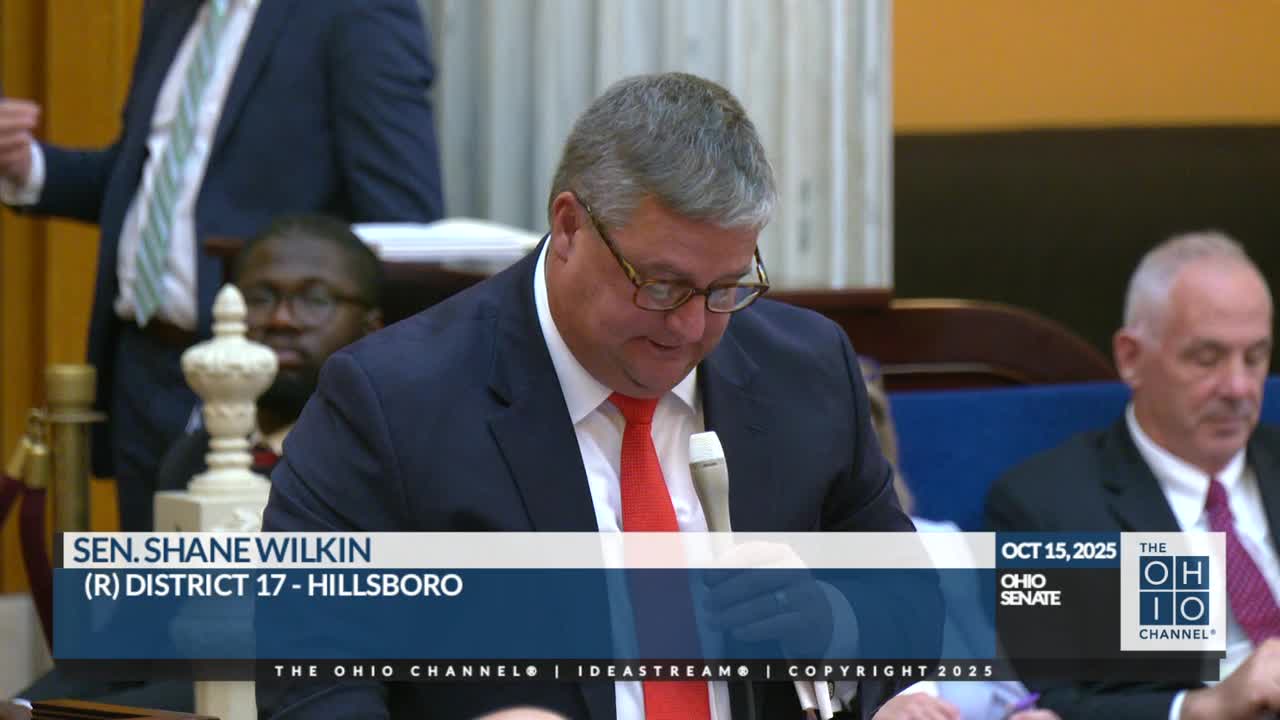
Senator Wilkin, sponsor, said the bill permits multiyear rate‑making for up to three years with true‑ups and requires each natural gas company serving 250,000 or more customers to file a rate case with the Public Utilities Commission of Ohio by Dec. 31, 2029. He said costs tied to large‑load customer agreements are to be borne by the contracting business and cannot be passed to other consumers; the bill directs PUCO to require the gas company to affirm in writing that the contract will not be used to justify future rate increases if the contract fails to deliver expected benefits. Senator DeMora (DeMauro in transcript context) and others spoke in support, saying the changes will restore trust in utility ratemaking and support economic development.
The bill also preserves existing rate‑making models for smaller utilities (those serving fewer than 250,000 customers) and maintains an infrastructure development rider capped at 1.5 per customer where applicable. Supporters told the chamber the proposal contains protections for consumers and large‑load customers while facilitating investment in utility infrastructure.
A recorded roll call showed 31 yeas and 0 nays. The Senate agreed to the bill’s title after passage.