Get Full Government Meeting Transcripts, Videos, & Alerts Forever!
Get email alerts on the Court Procedures topic
No spam. Unsubscribe anytime.
Senate passes bill to align Ohio law with court procedural rules and clarify separation of powers
Summary
Substitute Senate Bill 61 passed the Ohio Senate unanimously to amend and repeal sections of the Revised Code that overlap with Supreme Court rules of practice and procedure, aiming to modernize and clarify the boundary between substantive law and court procedure.
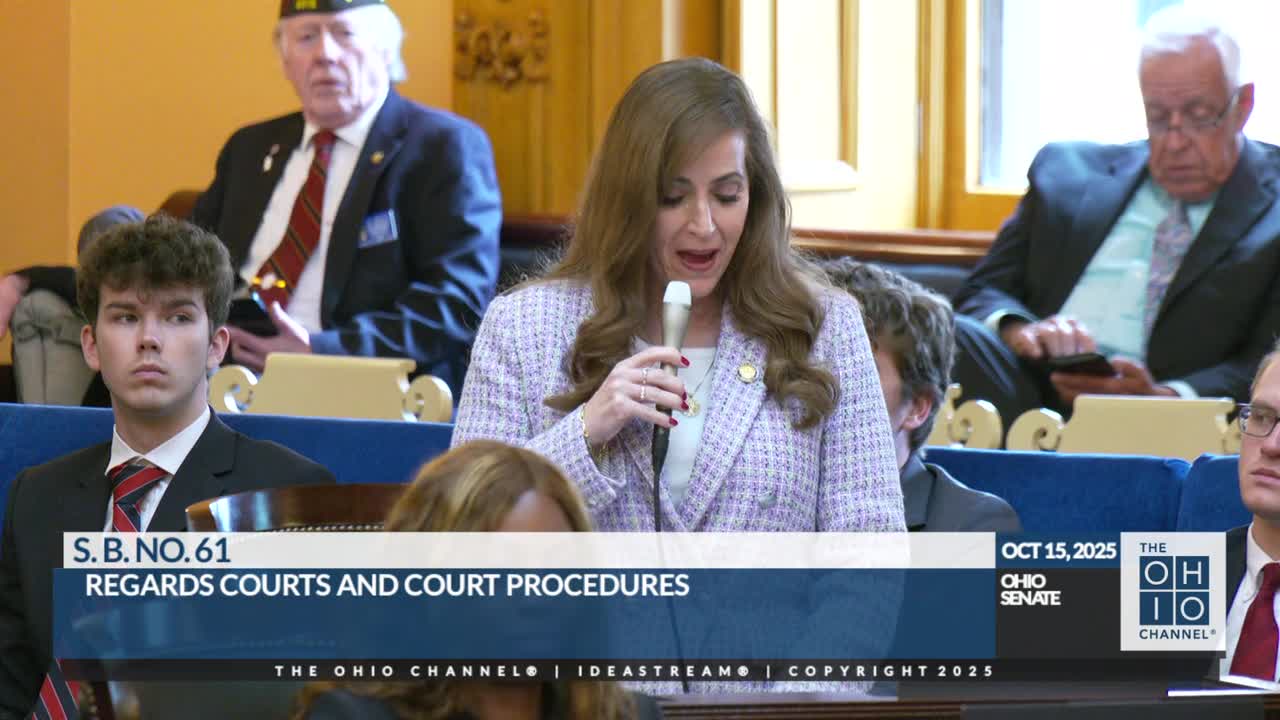
The Ohio Senate on the floor in Columbus passed Substitute Senate Bill 61 to amend and repeal sections of the Revised Code that overlap with court rules of practice and procedure, moving to clarify the separation of powers between the legislative and judicial branches.
Sponsors said the bill implements many recommendations by the Ohio Supreme Court and legal stakeholders to remove procedural rules from statute and leave them to the courts, while preserving laws that create substantive rights.
Sponsor Senator Gavarone said the legislation “ensures the separation of powers between the legislative and judicial branches” and removes statutory provisions that predate the constitutional grant giving the Supreme Court rule‑making authority. Senator Tim Manning, joint sponsor and judiciary chair, described an extended review with the Supreme Court’s staff and said the bill adopted roughly 60% of the court’s recommendations and included amendments requested by prosecutors. Senator Michele Hicks Hudson, speaking in favor, said the bill clarifies and modernizes court practice without harming judicial work.
The bill passed with a recorded roll call showing 31 yeas and 0 nays. Proponents told the chamber that the measure is noncontroversial, had unanimous committee support, and was drafted with input from the Judicial Conference and bar groups. The title of the bill was agreed to after passage.